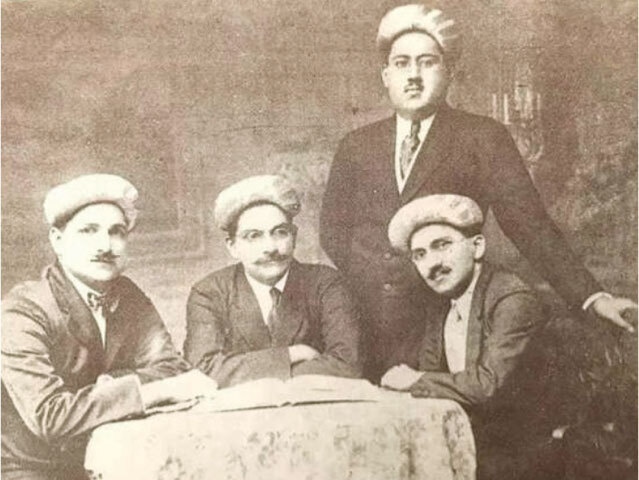
They came to Bombay with language, faith and trade running in their veins — Bohras, Khojas and Memons from across the coasts and towns of Gujarat. By the 19th century, their numbers had swelled enough to leave a mark not just on the skyline, but on the rhythms of the island’s economy.
While the Bohras and Khojas were largely Shia, and the Memons Sunni, all three were united by a Gujarati mercantile ethos that thrived in the city’s bazaars, wharves and counting houses. In an era when Calcutta [Kolkata] and Madras [Chennai] were dominated by European merchants, Bombay’s [Mumbai] trade beat to an Indian pulse, its backbone strengthened by Parsis, Bhatias, Jains, Marwaris — and these Gujarati Muslim traders.
INDUSTRIALISTS, CONTRACTORS AND SHIPPING KINGS, WHO BUILT THE CITY
Each community carved its own lane in commerce. The Khojas, led by families such as the Currimbhoy Ebrahims, moved early into the cotton mill industry, operating over a dozen mills at their peak — a homegrown industrial empire in a field the Parsis had pioneered.
The Bohras ran bustling hardware stores and took on major public works contracts, building parts of the very city they lived in. Among them was Sir Adamjee Peerbhoy, who rose from humble beginnings to own India’s largest leather tannery, employing thousands and securing government contracts that stretched across the seas.
From Sir Adamjee Peerbhoy’s contracts to the Currimbhoy mill empire and Ismail Yusuf’s fleet, Gujarati Muslim networks turned dockside wagers into industrial muscle. Journalist-historian Danish Khan traces how trade routes, sectarian suits and diaspora capital re-wired the city’s fortunes…
The Memons, for their part, were giants of the sea. The family of Sir Ismail Yusuf owned one of Western India’s most successful indigenous shipping companies — proof that Indian entrepreneurs could navigate both literal and colonial currents.
Many among these communities expanded into glassware, furniture, automobiles, engineering and even the nascent film industry. Their reach extended well beyond Bombay: the Laljees helped develop the port of Aden, Memons flourished in South Africa, and Khojas transformed Zanzibar’s commercial landscape.
TIDES OF MIGRATION
Long before Bombay became the hub, the coasts of Gujarat had sent their sons and goods across the Indian Ocean. But as the city’s docks, markets and courts grew, it became a pivot in a far-reaching network of trade and travel. Sectarian legal disputes among Khojas and Bohras played out here, their outcomes echoing in communities settled as far away as East Africa and Southeast Asia.
While early settlers were still closely identified with towns such as Surat, Rander or Kathiawar, identities have since loosened, though not disappeared. The Kutchi Memons, for example, still carry their place of origin in their name.
Many families took Bombay as a stepping stone, moving on to Singapore, Burma and Japan, carrying with them both their business acumen and their ties to home.
INDUSTRY AND IMAGINATION
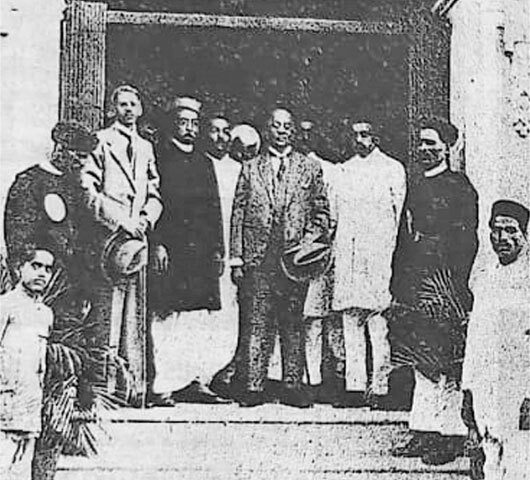
Their influence was not only in ledgers and warehouses. The Chinoy brothers — Sir Sultan and Sir Rahimtoola — brought beam wireless communication to India, securing the patent from its Italian inventor, Guglielmo Marconi and forming a company with Bombay’s leading industrialists, including the Wadias and Sir Purshottamdas Thakurdas. Their enterprise helped link India to the wider world by airwaves — decades before radio became commonplace.
The Bohra firm ES Patanwala introduced Afghan Snow in 1919, celebrated as India’s first beauty cream. Its reputation was such that it sponsored the inaugural Miss India pageant in Bombay in 1952, won by classical dancer Indrani Rahman. The brand became a staple of elite gatherings, acclaimed by celebrities of the era. Its visibility was enhanced through lavish social events and endorsements by leading stars, giving homegrown cosmetics a glamour that rivalled imports.
Umar Sobhani, the Memon “cotton king”, left a more political imprint. During the Swadeshi movement, his Elphinstone mill compound became the stage for one of the earliest bonfires of foreign cloth — symbolic defiance in the fight for economic independence.
THE TYABJI LEGACY
Among the Sulaimani Bohras, the Tyabjis stood out — a clan whose members, including the Fyzees, Latifis and Hydaris, spanned continents from Istanbul to London, Bombay to Le Havre. In the 19th century, brothers Camruddin and Badruddin Tyabji were among the first Indians to study law in England.
The family’s legacy branched into administration, literature, science and activism: Sir Akbar Hydari, a distinguished statesman; Atia Fyzee, a pioneering feminist and writer; Salim Ali, the nation’s most celebrated ornithologist; Danial Latifi, an influential lawyer and activist; and historian Irfan Habib.
From mill compounds to courtrooms, beauty counters to shipyards, these communities shaped Bombay’s commercial and cultural soul. Their stories of enterprise, migration and identity are reminders that cities are built as much by merchants as by monarchs.
The writer writes on South Asian mercantile history and Muslim capitalism, and is currently working on a book tracing the intersecting histories of trade, law and community in colonial Bombay
This piece was originally published in the Indian daily Mumbai Mirror and has been reprinted with permission
Published in Dawn, EOS, August 24th, 2025