380 cases of communicable diseases recorded in KP’s flood-hit districts


 0
0
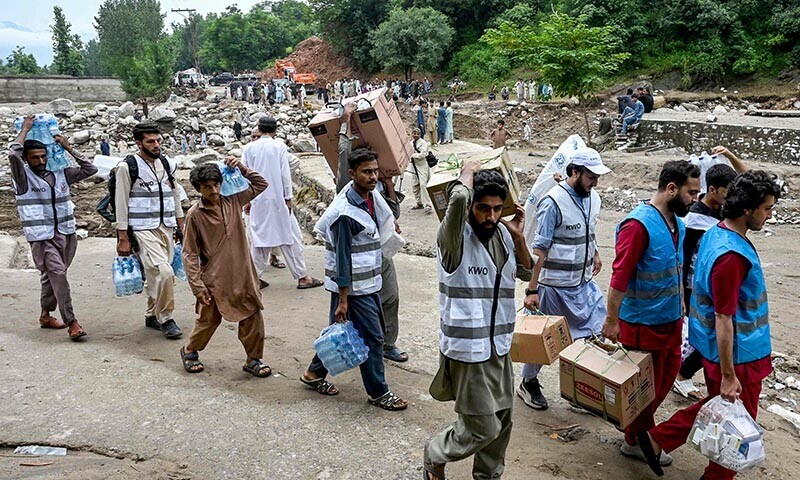

PESHAWAR: Health department has documented 380 cases of communicable diseases among children under five in flood-affected districts including acute respiratory infections and acute watery diarrhoea besides damage to health facilities.
To address the health needs of affected population, a health sector cluster coordination meeting has been convened with partner organisations at 11am today (Monday) to streamline response efforts, according to officials.
Dr. Shahid Yunis, the director-general of health services of Khyber Pakhtunkhwa, meanwhile responded to a report titled “flood-hit KP turns to donors for disease prevention,” published in this newspaper on Sunday and clarified that response efforts had already begun, with neighbouring districts deploying human resources and supplying sufficient medicines to help people in calamity-hit districts.
“World Health Organisation being mandated as technical agency for health emergency will be the co-chair and other UN agencies and partner organisations are members of the health emergency cluster,” he said.
DG health says cluster meeting will streamline response efforts in affected areas
During the cluster meeting, health department will present to partner organisations the latest updates and ongoing response activities. The department will ask development partners to share a ‘5 W matrix’ for the support according to their area of work and activities to coordinate their activities.
The report compiled by Integrated Disease Surveillance and Response System (IDSRS) of public health section at directorate-general health services (DGHS), said that flash floods also damaged 21 health facilities partially and one fully. Most of the acute watery diarrhoea (AWD) and acute respiratory infection (ARI) cases were recorded in Swat district.
According to it, a few cases of scabies and bone fractures were also recorded while awareness campaign against dengue and other vector-born ailments was in progress in the affected areas. “The lady health workers and other staffers are busy in scaling up awareness about the causes of dengue fever and informing people how to avoid mosquito-bites,” said the report.
Officials said that in the areas where health facilities suffered damage, nine medical camps were also set up where doctors examined patients and gave them free medicines. A total of 296 injured persons were reported. A total of 5,627 patients have been examined at medical camps.
Officials said that the challenges posed by flood included ARI, AWD and threats of emergency of vector-borne diseases and snakebites. They said that people needed to clean drinking water to stay safe from water and food-borne diseases.
The department has announced health emergency enabling healthcare workers to remain present at their duty places and ensure good hygiene practices, vaccinate people and take preventive measures to reduce the risk of spread of diseases.
Provincial Doctors Association said its members were receiving patients with AWD and ARI at the camps established in flood-hit areas. A press release said that most of the diseases were caused by contaminated water that warranted provision of clean water to people.
PDA said that its members were working on the directives of health department to ensure that needy people got healthcare services.
Published in Dawn, August 18th, 2025