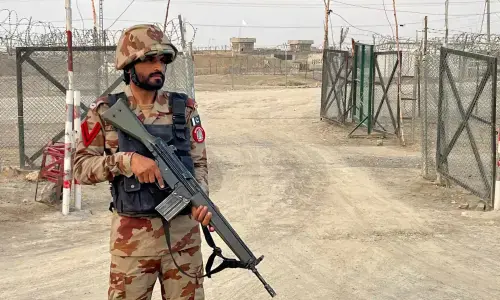
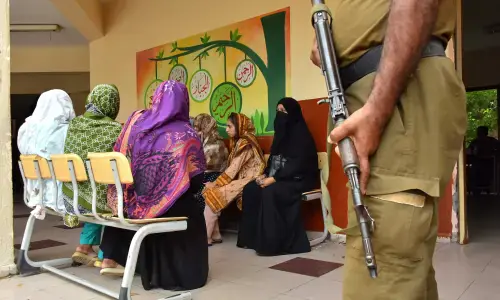
WITH the resumption of Operation Sarbakaf, the people of Bajaur are reeling once more. It is not just a military offensive; it is tantamount to the reopening of old wounds. Once more, the thunder of artillery and helicopter gunships echoes through valleys in which the sound is all too familiar. Once more, families are rushing to load belongings onto trucks, tractors and whatever transport they can find. They do not know when — or if even — they may return. According to local estimates, some 2,000 families have already fled the region and hundreds more continue to leave as curfews take hold in Lowi Mamund and War Mamund. Schools are being converted into makeshift shelters. Some have taken refuge with relatives. Each family is a household uprooted, a livelihood lost, a child pulled from school. The trauma from displacement is not something easily measured. It lingers long after the dust has settled, in the form of destroyed homes, lost income, disrupted education and deep mistrust towards all sides of the conflict. For many in Bajaur and the wider ex-Fata region, this is a cycle they know too well: clear the area, live in camps, return to damaged towns and brace for the next round. With each repetition, citizens lose more faith in the state’s ability to bring lasting peace.
The state is duty-bound to protect citizens from militant violence. But protection should not be at the expense of dignity and survival. Military operations in populated areas must be accompanied by meticulous planning for civilian evacuation, shelter and sustenance. The complaints of local leaders — that residents were not consulted and displaced families lack basic facilities — must be heeded immediately. A policy that wins battles but alienates the very people it seeks to defend is self-defeating. Long-term peace in Bajaur will not be secured by firepower alone. The ‘hold’ and ‘build’ stages of counterterrorism have too often been neglected, leaving vacuums that militants exploit. This time, security gains must be followed by investment in infrastructure, livelihoods, political inclusion, and most importantly, by addressing grievances that feed resentment. The people of Bajaur deserve the assurance that their displacement will not become a recurring chapter in an endless war. Without breaking this cycle, the burden they bear today will become the burden of yet another generation.
Published in Dawn, August 13th, 2025