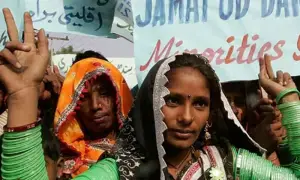
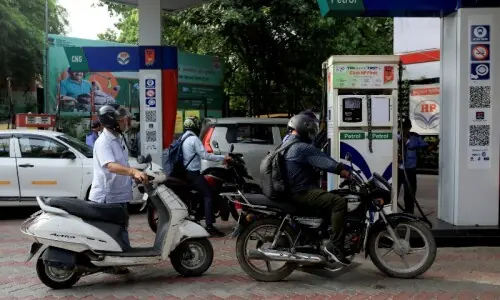
The Sindh Workers Welfare Board (WWB) on Sunday decided to extend its upcoming electric bikes scheme beyond women to industrial workers from minority communities.
The move coincides with the National Minorities Day, which is celebrated on August 11 every year. It commemorates the historic speech by Muhammad Ali Jinnah, the founder of Pakistan, made on Aug 11, 1947, where he emphasised equal rights for all citizens regardless of religion.
According to a statement, Sindh Labour Secretary Rafique Qureshi underscored the symbolic significance of this step, noting that “the white stripe in Pakistan’s flag represented minorities and their equal rights”.
Religious freedom remains a challenge in Pakistan, with recurring incidents of mob attacks, forced conversions and blasphemy cases, as noted by the European Union’s Sebastien Lorion.
Just last month, State Minister for Religious Affairs and Interfaith Harmony Kesoo Mal Kheal Das acknowledged that religious minorities in the country face administrative and governance issues.
According to Kheal Das, the law for the establishment of the National Commission for Minority Rights has been approved by both houses of the parliament and awaits presidential assent.
An EU-funded project for strengthening minority rights is being implemented in Punjab and Sindh by the Parliamentarians Commission for Human Rights in partnership with the Centre for Social Justice.
In July, a group of non-Muslim senators wrote to Senate Chairman Yousaf Raza Gilani, calling for the formation of a minority caucus in the House to represent their rights.
Last year, the founding chairman of the Pakistan Minorities Movement Peter Charles Sahotra had said minority communities face insecurity and discrimination in Pakistan and called upon the government to ensure their rights as provided in the Constitution.
Health insurance ramped up, solar-powered homes
The WWB also announced various other steps for the welfare of workers.
“The Workers’ Accidental Health Insurance Scheme will now provide annual health coverage worth Rs0.7 million, along with access to treatment in 270 hospitals nationwide,” it said.
The WWB also announced a major housing shift, replacing workers’ flats with fully solar-powered homes. Schools under the board will be solarised as well, with students receiving two sets of uniforms each year.
In line with Sindh Chief Minister Murad Ali Shah’s directives, the death grant will be increased to Rs1m, while the marriage grant will be raised from Rs0.3m to Rs0.5m, the Sindh labour secretary said.
“The board is digitising all its operations to ensure fair and transparent service delivery to workers,” Qureshi noted.
The WWB, following its formal approval, will invest Rs3 billion in the Securities and Exchange Commission of Pakistan (SECP) and approved Shariah-compliant Sukuk bonds to further strengthen the institution’s financial standing and expand facilities for workers.