LAW: LOCKED OUT OF JUSTICE
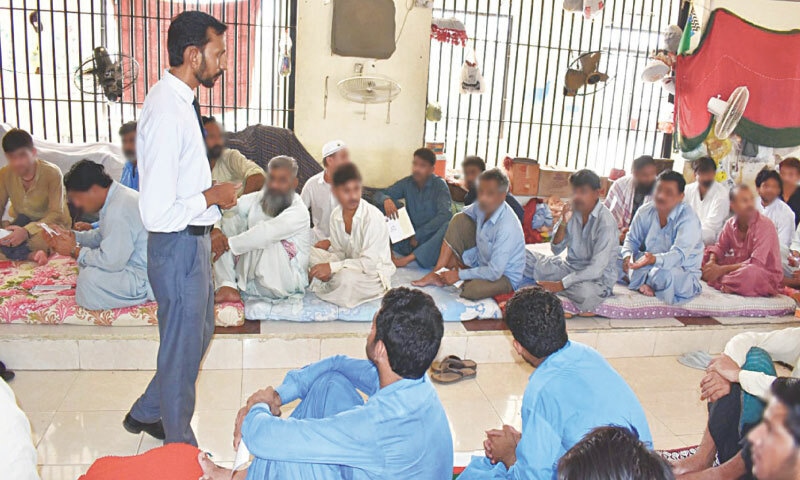


Naheed, a Hafiz-i-Quran from Mirpurkhas and mother of two, has spent the last eight years within prison walls awaiting a decision on her pending appeal. Her embroidery and crochet work, sold through a prison-run sewing centre, sustains her children on the outside.
The failure of her case is not rooted in legal ambiguity — it lies in the systemic absence of legal representation, because the lawyer, assigned to her by the Committee for the Welfare of Prisoners (CWP), stopped coming after the programme was suspended. Her case, like hundreds of others, is a casualty of silence.
LEGACY OF LEGAL ACCESS… NULLIFIED
Launched in 2004 under Justice (retd) Nasir Aslam Zahid and later codified under Section 55 of the Sindh Prisons & Corrections Services Act 2019, CWP operated in 22 jails over two decades. According to CWP’s consolidated report, it has handled 52,682 legal aid cases, conducted 46,370 interviews, and secured 6,354 acquittals, 6,299 bail grants, and 1,922 sentence remissions since its inception.
However, in February 2025, with the arrival of the new chairperson, there has been a clear pivot in the organisation’s objectives. Lawyers have been instructed to handle only the backlog of existing pending cases and are explicitly barred from initiating any new legal representation for under-trial prisoners. One explanation that was provided for the suspension of the legal aid programme was that CWS was responsible for prisoners’ welfare, which meant providing them essential goods and recreational opportunities, and not legal representation.
When the Committee for the Welfare of Prisoners programme was suspended earlier this year, legal aid for Sindh’s poorest prisoners vanished overnight. Now, over 700 cases are frozen, with women and children the hardest hit…
As a result, legal representation within Sindh’s prisons — for those who cannot afford it — has been effectively dismantled. Over 700 active cases have stalled. Appeals remain unfiled, bail hearings suspended and under-trial prisoners left without counsel.
As the province’s only structured and embedded legal aid body within prisons, the CWP had bridged a critical gap for nearly two decades. Its abrupt cessation has rendered due process inaccessible for hundreds like Naheed — particularly indigent women, juveniles and first-time offenders — raising fundamental questions about access to justice under Pakistan’s legal framework.
INVISIBLE CASUALTIES
Women and children remain the hardest hit. Pakistani law allows incarcerated mothers to keep children under six with them. In Karachi and Hyderabad, an early learning centre run by CWP gave those children a chance at normalcy — play, books, structured learning. Now, that centre too stands still.
CWP also operated sewing centres at the two prisons, providing women inmates with a source of income. Many, including Naheed, used this income to support families on the outside. But legal abandonment has disrupted supply chains, halting a financial lifeline.
Adult prisoners once attended paralegal classes — the only consistent source of legal education inside jails. Today, the paralegal education programme has ceased and trained legal instructors have not returned. CWP also organised paralegal training, financial literacy sessions, and therapy interventions — all now defunct.
During Ramazan, CWP hosted what would become its final iftar under the open sky — a brief rupture in routine and a rare gesture of dignity. One elderly inmate, seated quietly among the gathering, whispered through tears: “I saw the stars for the first time in 12 years.”
Prison rules require nightly lock-ups to be documented, but prescribe no fixed hours. In practice, confinement begins by early evening and ends at dawn — sealing inmates off from light, time and sky. That iftar, briefly permitted, defied the architecture of invisibility. For once, the sky was not barred.
VISIBLE COLLAPSE
This interpretation of the term welfare, and the resultant shift in policy, has effectively frozen access to legal aid for new detainees, including indigent women, juveniles and first-time offenders. While redirecting efforts toward welfare support and other drives may appear legitimate, doing so at the cost of suspending legal representation has created a dangerous and systemic vacuum.
By June 30, all staff contracts had expired. CWP Secretary Barrister Haya Emaan Zahid, in a letter to the home department, had already warned that operations across all streams would cease, unless urgent appointments and budget approvals were made. Alas, it went unanswered.
The impact: 774 active court cases and thousands more potential ones remain frozen. The situation had already been flagged by the head of prisons in a dispatch to the CWP in April this year. “The unavailability of these services has adversely affected the legal representation of underprivileged prisoners, many of whom are unable to arrange legal assistance due to financial constraints,” it states.
With institutional clarity dissolving, the legal machinery inside jails began to unravel entirely. From Mirpurkhas to Shikarpur and Hyderabad, prison superintendents echoed the same concern.
SYSTEMIC FALLOUT
Without court-appointed counsels or a replacement structure, Sindh’s prisons are now operating without any embedded legal aid system. This is in direct contravention of Rule 55 of the Sindh Prisons and Corrections Service Rules, 2019, which mandates access to legal counsel.
According to the latest numbers issued by the head of prisons in Sindh, the province houses 26,475 inmates across 22 facilities. Of these, 21,889 are under-trial prisoners — constituting over 82 percent of the total prison population.
Female prisoners number 406 in total, including 330 under-trial prisoners. Meanwhile, 317 juveniles — 305 of whom are also under-trial — remain in custody, without a dedicated legal aid mechanism. Additionally, 57 babies currently live with their mothers inside three women’s prisons: 35 in Karachi, 11 in Hyderabad and 11 in Sukkur.
Despite this overwhelming burden, no court-directed or state-led legal aid programme remains operational in Sindh’s prisons, leaving thousands without constitutional safeguards or due process.
A CRY FOR RESTORATION
Legal aid is not a charitable adjunct — it is the gateway to every other legal right: bail, fair trial and appeal. As American jurist Justice Hugo Black famously said in 1956, “There can be no equal justice where the kind of trial a man gets depends on the amount of money he has.”
Restoring justice for Sindh’s most vulnerable prisoners demands more than intent — it requires immediate institutional action. These actions include the return of CWP’s focus on legal aid, appointment of an organisational head, renewal of staff contracts and timely approval of operational budgets from the government to resume core legal aid functions. It also requires restoration of in-prison legal aid mechanisms, including jail visits, court representation and legal clinics.
Above all, the Sindh High Court must act on the Sindh Human Rights Commission’s formal recommendation to establish a province-wide legal aid referral and coordination mechanism, embedded under judicial oversight. Without this structural intervention, the province will continue to violate both Article 10-A of the Constitution and Pakistan’s international commitments under the International Covenant of Civil and Political Rights (ICCPR) and the United Nations Standard Minimum Rules for the Treatment of Prisoners, also known as the Nelson Mandela Rules.
Until such reforms are enacted, Naheed — and thousands like her — remain locked out of justice, not only by prison walls, but by the state’s failure to guarantee their right to legal representation. Incarceration without legal recourse is not correction — it is abandonment.
The writer is an advocate of the High Court and has worked with the CWP since 2010.
He can be reached at dasoomro@gmail.com
Published in Dawn, EOS, August 3rd, 2025