Pakistan, WHO sign deal for cancer medicine
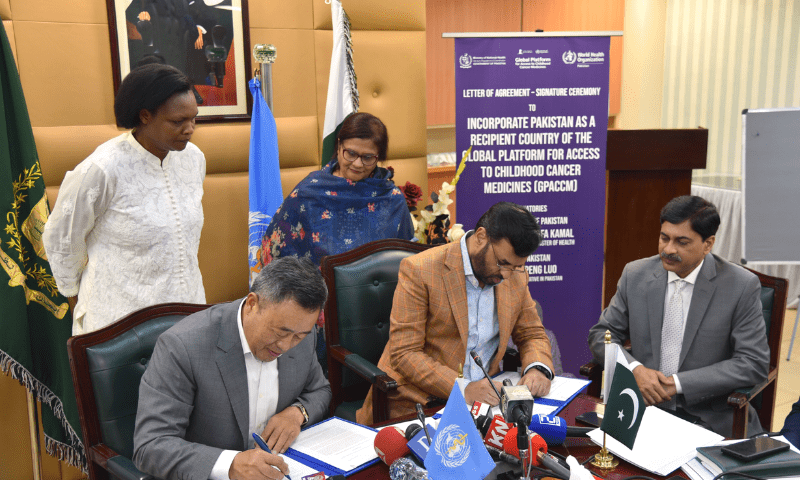
ISLAMABAD: The World Health Organisation (WHO) has signed an agreement with Pakistan to facilitate free cancer medicines for at least 8,000 children annually diagnosed with the disease.
The WHO and the Ministry of Health on Tuesday formalised the participation in the Global Platform for Access to Childhood Cancer Medicines to provide quality-assured medicines to children affected by cancer in the country, where over 8,000 new cases are diagnosed annually.
The agreement, signed by Health Minister Mustafa Kamal and WHO representative in Pakistan Dr Dapeng Luo, will remain in force till Dec 31, 2027, and may be extended by written agreement of the parties.
According to a statement, the agreement brings new hope to children suffering from the disease in Pakistan and aims to increase their survival rate from 30pc to 60pc by 2030. Limited access to treatment is one of the main factors behind the low survival rate in the country, compared to a survival rate of 80pc in higher-income countries.
“Today is a big day for Pakistan, because through this agreement, we are going to receive medicines to treat children who have cancer. This is the way forward. We are thankful to WHO, the Global Platform, Unicef, and all partners who have made this possible… If we are able to save one life through this collaboration, we are saving mankind,” said Mr Kamal.
Around 8,000 children to benefit until end of 2027
“No child affected by cancer should die because of a lack of access to treatment, including quality-assured medicines. WHO will work side by side with the Ministry of Health and partners to save lives and leave no child behind, no matter where they live or who they are,” Dr Luo said.
Pakistan is the second country in the Eastern Mediterranean Region, after Jordan, to join the Global Platform, co-founded in 2021 by St. Jude Children’s Research Hospital and WHO to provide an uninterrupted supply of certified cancer medicines to low- and middle-income countries.
The initiative works in collaboration with Unicef, which will be responsible for procuring medicines and delivering them to Pakistan.
Published in Dawn, July 30th, 2025