0
0

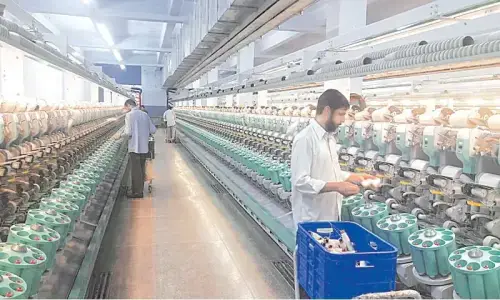
ISLAMABAD, May 17: The textile ministry has proposed to the government to reduce customs duty to zero per cent from five per cent on import of machinery and exempt duties on oil used in the manufacturing of the textile products in the next budget.
Informed sources told Dawn on Wednesday that the ministry had also proposed for withdrawal of withholding tax (1.25pc) and export development surcharge (0.25pc) on export of textile products to make them competitive in international market.
A long list of spare parts used in the textile machinery and some raw materials had also been finalised in the last textile board meeting for reduction of customs duty in the upcoming budget.
The sources said that the proposals would also be discussed with the president and the prime minister for inclusion in the next budget.
All the textile producing countries excluding Pakistan machinery import was exempted from customs duty besides having some special concessions as recently announced by governments in India, Bangladesh, China and Sri Lanka — main competitor of Pakistani textile products in international market.
Similarly, in these countries there was no levy like withholding tax and development surcharge on exportable products, which reduce the margin of competitiveness of the textile products.
According to the sources, petrol was used as a fuel for power generation in the whole chain of the textile industry — from weaving to stretching. The high oil prices in international market resulted into pushing domestic oil prices to Rs57 per litre.
The sources said that the ministry proposed to the government to allow petrol for consumption in the textile industries at basic price per litre. The current basic price of petrol per litre is Rs29.89.
On the current basic price, the petroleum development levy is Rs12.75, excise duty Rs0.88, district margin Rs1.63, dealer’s margin Rs1.87 and freight Rs3.18. With this the total price of per litre petrol stood at Rs50.20. The net cost of per litre petrol for consumer after levy of 15 per cent GST on Rs50.20 comes to Rs57.73 per litre.
Similarly, it was also proposed to the government to reduce the rate of electricity, which currently stood at Rs7 per unit inclusive of all taxes and surcharge for the industries. It was also proposed to reduce the rate of gas for use in the production of textile industries.
The sources said that the high interest rates had hampered investment in the textile expansion as against the average five per cent interest rates last year. It was proposed to the government to scale down the rate in the next budget.
According to the sources, in case the government did not consider measure for reducing the input cost of production, it would become very difficult for Pakistan to increase its share in international market.