In just over two weeks, Pakistan has endured a dual economic shock — sharply rising fuel prices and sweeping tax enforcement measures — deepening stress for citizens and businesses alike.
On July 1, petrol prices rose by Rs8.36 to Rs266.79 per litre, while diesel jumped Rs10.39 to Rs272.98. Quietly embedded in the hike was a Rs2.5 per litre “climate support levy” layered atop existing petroleum duties and dealer margins.
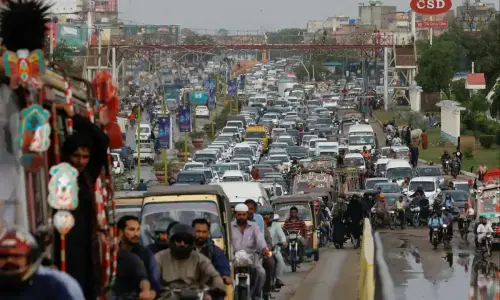
Diesel saw the steepest rise, prompting outcries from transport unions and industrial lobbies. Fifteen days later, another jolt followed. Petrol rose by Rs5.36 and diesel by Rs11.37, taking diesel to Rs284.35 per litre — a cumulative Rs21.76 increase in July alone. These successive hikes have turned fuel into a flashpoint for inflation, unrest, and financial hardship.
For Pakistan’s real economy, particularly sectors like textiles, steel, construction, and logistics, the rising cost of fuel is proving existential. Exporters report eroding competitiveness and surging freight costs. Factory closures in industrial zones like Sindh Industrial Trading Estate and Korangi seem no longer hypothetical but imminent.
Ordinary citizens and industries struggle under the weight of the new finance bill’s tax measures
Yet, even as industries struggle, the government has pressed ahead with a raft of controversial tax measures embedded in the Finance Act 2025–26. Key measures among them are Sections 37A and 37B, which empower the Federal Board of Revenue (FBR) to freeze bank accounts and arrest taxpayers without judicial oversight.
Additional pain points include a 50 per cent disallowance of tax credit on cash transactions above Rs200,000, mandatory electronic goods’ consignments not under Section 40C, and compulsory digital invoicing via SRO 709. Traders argue these measures were introduced without consultation, penalising compliant businesses rather than expanding the tax net.
For ordinary citizens, too, the squeeze is tightening. Public transport fares are rising, fuel-linked inflation is pushing up food and utility costs, and wages remain stagnant. Households already burdened by record-high electricity bills are slipping deeper into economic vulnerability.
But behind these immediate shocks lies a deeper structural crisis — one of unsustainable debt and fiscal fragility. As Pakistan enters FY26, it carries a domestic debt burden of Rs53.5 trillion (as of May 2025). The International Monetary Fund (IMF) projects this figure to swell to Rs60.86tr by the end of FY26 and Rs65.63tr in FY27, underlining an alarming debt trajectory.
As Pakistan enters FY26, it carries a domestic debt burden of Rs53.5tr as of May 2025, which may rise to Rs60.8tr by the end of FY26 according to the IMF
This is not merely a matter of accounting — it reflects a state caught in a cycle of persistent fiscal deficits, averaging 6pc to 8pc of GDP over the past five years. More than 70pc of this domestic debt is now linked to floating interest rates. Though the State Bank has slashed the policy rate from 22pc to 11pc, debt servicing in FY26 is projected at Rs7.19tr — about 41pc of the federal budget. This enormous outlay acts as a fiscal chokehold, crowding out critical public spending in health, education, infrastructure, and climate resilience.
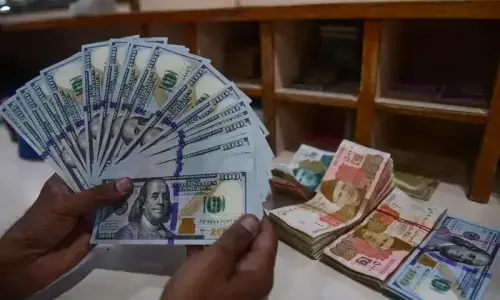
And while domestic debt is rupee-denominated, the rupee’s depreciation — 69pc from FY21 to FY25 — has inflated the nominal value of debt and worsened inflation, necessitating even more borrowing.
The energy sector compounds the burden. Circular debt stood at Rs2.4tr by the end of June 2025, driven by transmission losses, theft, underpriced tariffs, and poorly structured contracts with independent power producers — many inked under the China-Pakistan Economic Corridor. While not always reflected in official debt figures, these liabilities often materialise as sovereign guarantees or bond issuances, adding to the country’s real fiscal obligations.
The underlying problem remains unchanged: revenue generation. Pakistan’s tax system is riddled with exemptions, elite capture, and administrative inefficiencies. Large swathes of the economy remain effectively outside the tax net. Despite successive IMF programmes, the FBR has failed to transform into a credible, autonomous institution. Even in FY25, a year that saw a modest primary surplus, the fiscal deficit stood at 5.6pc of GDP — evidence of how little progress has been made.
Moody’s recently upgraded Pakistan’s rating to Caa2 with a positive outlook, citing improved liquidity and IMF support. But it also flagged a critical concern: interest payments may soon consume more than 50pc of government revenue — a threshold that endangers debt sustainability. The IMF, in its latest Extended Fund Facility review, echoed this concern, warning of Pakistan’s dangerously high gross financing needs.
The banking sector has become a pivotal player in this closed loop. Over 54pc of total bank assets are now invested in government securities. While this ensures safe, high returns for banks — who earned Rs597 billion in after-tax profits in 2024 — it comes at a steep cost. Banks’ increased lending to the state crowds the private sector and undermines economic dynamism.
The FY26 budget does attempt modest recalibration. The fiscal deficit target is trimmed to 5pc of GDP. Interest payments are projected to decline 8pc, largely on account of lower rates. But these are small adjustments. Real change requires politically difficult reforms: broadening the tax base, phasing out unproductive subsidies, restructuring state-owned enterprises, renegotiating power contracts and shifting from floating to fixed-rate debt.
Published in Dawn, The Business and Finance Weekly, July 21st, 2025