President Asif Ali Zardari has given his assent to the Finance Act 2025, which outlines the budget for the upcoming fiscal year with an outlay of Rs17.57 trillion, it emerged on Monday.
According to a gazette notification dated June 29, available with Dawn.com, the Finance Act 2025, as approved by the National Assembly, received the president’s assent on June 27. The act will be applicable from July 1, according to the information ministry.
Finance Minister Muhammad Aurangzeb unveiled Pakistan’s annual federal budget in a charged June 10 National Assembly session, outlining ambitious proposals to drive 4.2 per cent economic growth in the coming fiscal year while cutting back on overall spending and tightening tax measures.
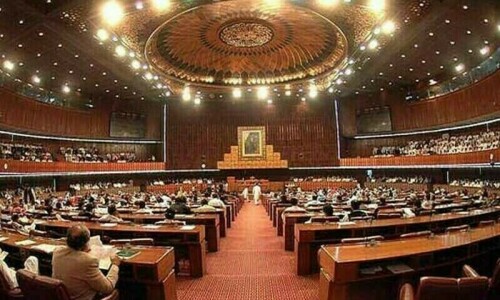
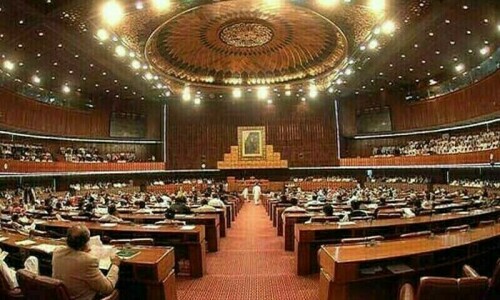
The National Assembly passed the federal budget for the upcoming fiscal year on June 26, with an outlay of Rs17.57tr, despite opposition calls for the budgetary proposals to be made public and for the passage to be delayed until public input had been sought.
The House passed it with certain amendments, incorporating around half of the suggestions put forward by the finance committees of both houses of parliament. All amendments proposed by the opposition were rejected.
Budget 2025-26
The federal budget for the next fiscal year projects an economic growth rate of 4.2pc and an inflation rate of 7.5pc. The net revenue receipts have been estimated at Rs11.07tr, with FBR collections projected to rise by 18.7pc to Rs14.13tr. Non-tax revenues are estimated at Rs5.15tr.
Key allocations include Rs2.55tr for defence, Rs1.06tr for pension expenditures, and Rs1.19tr for subsidies on electricity and other sectors. Relief measures in the budget include a 10pc increase in salaries, 7pc in pensions and tax relief for the salaried class across all income brackets.
The budget also includes Rs716bn for BISP and Rs1tr for the Public Sector Development Programme (PSDP), in which the largest allocation of Rs328bn is earmarked for transport infrastructure projects.
The PSDP for the next fiscal year has been aligned with the objectives of URAAN Pakistan, prioritising high-impact, near-completion foreign-funded projects and new initiatives of national importance.
Key infrastructure projects like Diamer Bhasha, Mohmand Dam and K-IV have been allocated Rs32.7bn, Rs35.7bn and Rs3.2bn, respectively. Besides, Rs10bn has been allocated for the lining of Kalri Baghar Feeder and Rs4.4bn for installing a telemetry system on the Indus Basin System.
The Higher Education Commission has been allocated Rs39.5bn for 170 projects. Additionally, Rs18.5bn has been earmarked in the PSDP for various education initiatives.
The agriculture sector will receive Rs4bn for 10 ongoing and five new schemes. The budget also includes incentives for the construction industry, such as a reduction in withholding tax on property purchases.