BBC investigation reveals Israel’s systematic levelling of Gaza
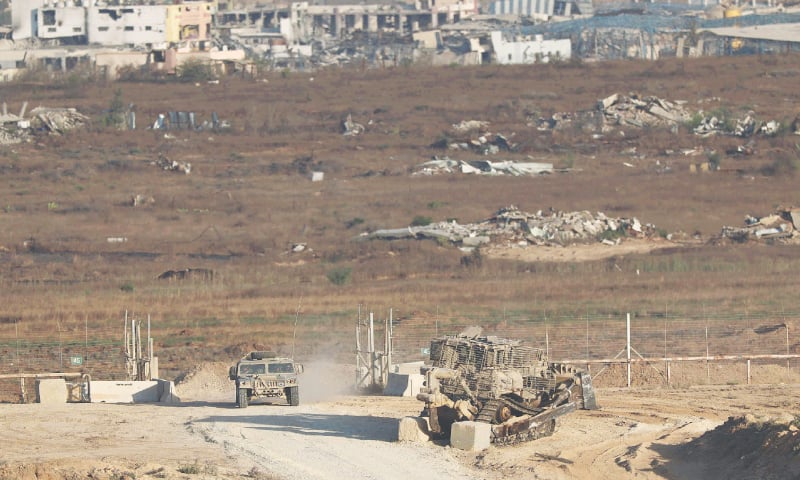


Israel has demolished thousands of buildings across Gaza since it withdrew from a ceasefire, with entire towns and suburbs — once home to tens of thousands of people — levelled over the past few weeks, the BBC reported.
According to a BBC Verify report, satellite images showed massive amounts of destruction in several areas which Israel’s military command claims to have under “operational control”.
Large swathes of it have been caused by planned demolitions, both to already damaged buildings and ones that appeared largely intact.
Verified footage shows large explosions unleashing plumes of dust and debris, as Israeli forces carry out controlled demolitions on tower blocks, schools and other infrastructure.
Multiple legal experts told the BBC that Israel may have committed war crimes under the Geneva Convention, which largely prohibits the destruction of infrastructure by an occupying power.
Rafah ‘virtually flattened’ within weeks; demolition work being offered to contractors via Facebook posts
However, it quoted an Israel Defence Forces (IDF) spokesperson as saying that it operated in accordance with international law, adding that the “destruction of property is only performed when an imperative military necessity is demanded”.
According to the report, the scale of destruction can be clearly seen in the city of Rafah, near the border with Egypt. In recent weeks, Israeli forces and contractors have levelled large swathes of Rafah.
An analysis of damage by academics Corey Scher and Jamon Van Den Hoek found the destruction in Gaza since April has been most concentrated in this area.
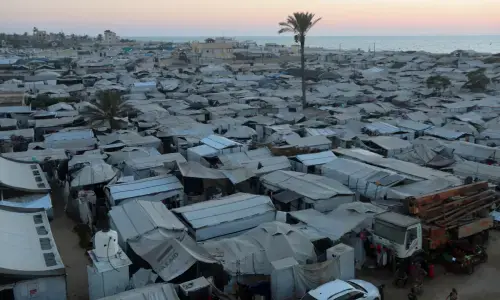
In July, Israel’s Defence Minister Israel Katz outlined plans to establish what he called a “humanitarian city” over the ruins of Rafah, with an initial 600,000 Palestinians being confined there.
The plan has been widely condemned. Former Israeli Prime Minister Ehud Olmert told the BBC that the proposal would be “interpreted as being akin to a concentration camp”.
Analysts have suggested for quite some time that Israel has been attempting to create deep “buffer zones” by destroying buildings near to the border, but some of the areas flattened recently are deep into Gaza.
BBC Verify said it presented the IDF with a list of places in which we documented demolitions and asked it to provide specific military justifications, but the IDF did not do so.
The report also identified dozens of adverts posted to Israeli Facebook groups, which were offering work in Gaza to demolition contractors. The majority of the posts have been shared by recruiters since May.
Many of the ads specify areas of Gaza where the work will occur, such as “the Philadelphi Corridor” and “the Morag Axis” – both areas controlled by the IDF.
Infrastructure demolition
BBC Verify said it had identified footage of infrastructure being demolished in 40 locations since the ceasefire ended in March. Video footage shows schools — like a school in Tel al-Sultan — being levelled, along with residential and municipal buildings.
Tel al-Sultan was one of Rafah city’s most vibrant neighbourhoods. Its densely packed streets were home to Rafah’s only specialised maternity hospital and a centre caring for orphaned and abandoned children.
Satellite images showed that much of the area had already been heavily damaged by Israeli bombing and artillery fire, but dozens of buildings had withstood the barrage.
But by July 13, the destruction had escalated, with even the shells of damaged buildings swept away and entire blocks torn to the ground. The hospital is one of a handful of buildings left standing.
Similarly, demolitions are now under way in the adjacent Saudi neighbourhood — once home to the city’s largest mosque and several schools.
Israeli demolitions are also visible in other parts of the strip which appear to have avoided heavy damage during earlier bombardments.
The farming town of Khuza’a is located about 1.5km (0.9 miles) from the Israeli border.
Before the war the town had a population of 11,000 people and was known for its fertile farmlands and crops such as tomatoes, wheat and olives. Satellite imagery from May shows many of the buildings in the town remain standing, but by mid-June, Khuza’a was largely razed by the Israeli forces.
A similar story emerges in the nearby town of Abasan al-Kabira, where about 27,000 people lived before the war. Photos taken on 31 May and 8 July indicate that an extensive area was swept away in just 38 days.
Published in Dawn, July 19th, 2025