Light rain turns weather pleasant in twin cities


 0
0
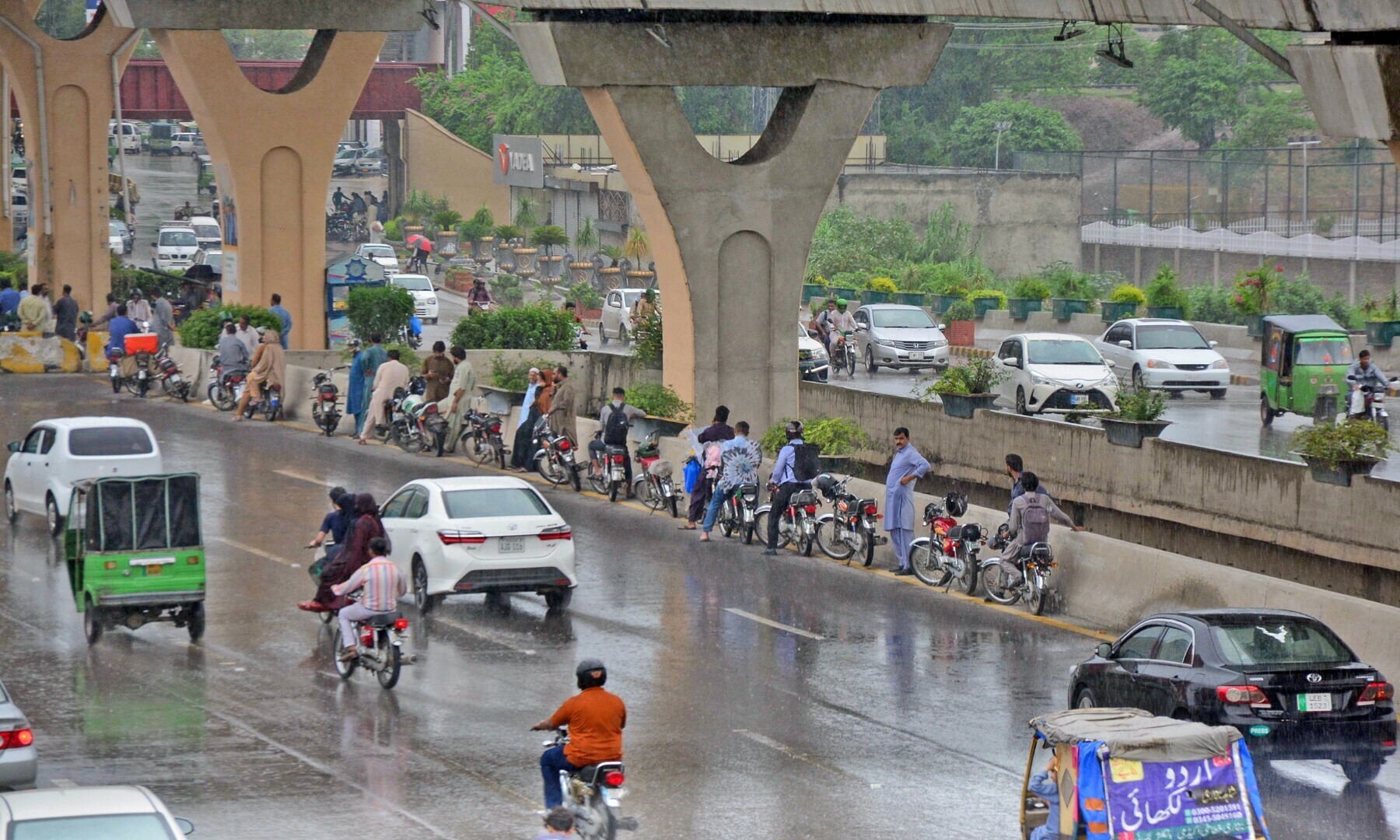

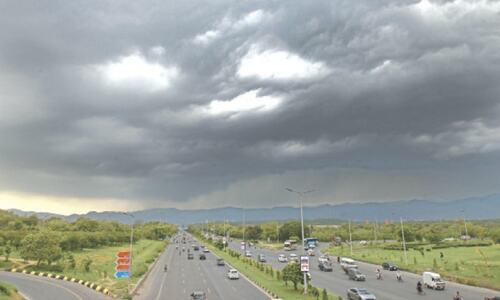
RAWALPINDI: Light rain created a slushy mess in low-lying areas of the garrison city on Tuesday. However, the rain turned the weather pleasant as the mercury dropped to 29 degrees Celsius.
The Meteorological Department recorded 3mm of rain at the Airport, 3mm at Saidpur, 5mm at Bokra and 4mm at Golra in Islamabad, while 4mm at Shamsabad, 7mm at Katcheri, 1mm at Pirwadhai and 8mm at Chaklala in Rawalpindi.
According to a Met Office official, a well-marked low-pressure area (LPA) currently lies over North Rajasthan (India) and is affecting the eastern parts of Punjab (Pakistan).
Under the influence of this weather system, strong monsoon currents are expected to penetrate the central and upper parts of the country during the next 24 to 36 hours. A westerly wave is also present over the upper parts of the country.
“Widespread rain-wind/thundershowers are expected in Punjab, Islamabad, Khyber Pakhtunkhwa and Kashmir, while scattered rain is expected in northeast/south Balochistan, southeast/upper Sindh, and Gilgit-Baltistan. Scattered heavy falls (at times very heavy) are likely in Punjab, Islamabad, upper Khyber Pakhtunkhwa, Kashmir and northeast Balochistan,” he said.
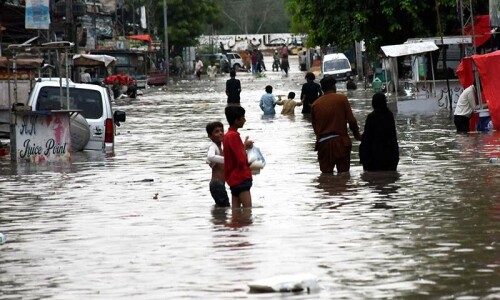
The Met Office warned of chances of urban flooding and landslides until July 17, as heavy to very heavy rains may generate flash floods in local nullahs/streams of DG Khan, northeast/upper Punjab, northeast Balochistan, Islamabad/Rawalpindi, Kashmir, Chitral, Dir, Swat, Shangla, Mansehra, Murree, Galliyat, Kohistan, Abbottabad, Buner, Swabi, Nowshera and Mardan.
It stated that landslides/mudslides may cause road closures in the vulnerable hilly areas of Khyber Pakhtunkhwa, Murree, Galliyat, Kashmir and Gilgit-Baltistan.
Heavy downpours may cause urban flooding in low-lying areas of Gujranwala, Lahore, Sialkot, Sargodha, Faisalabad, Multan, Khanewal, Sahiwal, Lodhran, Muzaffargarh, Kot Addu, Taunsa, Rajanpur, Bahawalpur, Nowshera, Peshawar and Islamabad/Rawalpindi. The public is advised to stay cautious.
Windstorms may damage loose structures such as electric poles, trees, vehicles and solar panels, as well as standing crops. The public is advised to remain cautious.
The rain started on Tuesday morning and continued till evening, varying from drizzle to moderate. However, it created a slushy mess in the low-lying areas.
When contacted, Water and Sanitation Agency (Wasa) Managing Director Saleem Ashraf said there was no report of water accumulation. He said the water level in Leh Nullah remained low due to light rain in the twin cities. He said that teams had been deployed in the low-lying areas to drain water in case of heavy rain.
He added that Wasa had already divided Rawalpindi city into seven sectors and deployed machinery and staff, as there are chances of heavy rains till July 17.
Published in Dawn, July 16th, 2025