Sultan da Khoo — A go-to hub for vehicle components


While Rawalpindi may lag behind Islamabad in development, it has steadily fostered a thriving ecosystem for diverse commercial activities over the decades.
Its bustling auto parts market — Sultan da Khoo — situated between Murree Road and Rawal Road, has become a go-to hub for new, used and refurbished vehicle components.
People looking for places to park their cars, auto mechanics busy fixing vehicles and shopkeepers inviting passersby to visit their stores are the common sights one must expect on a visit to the 35-year-old market.
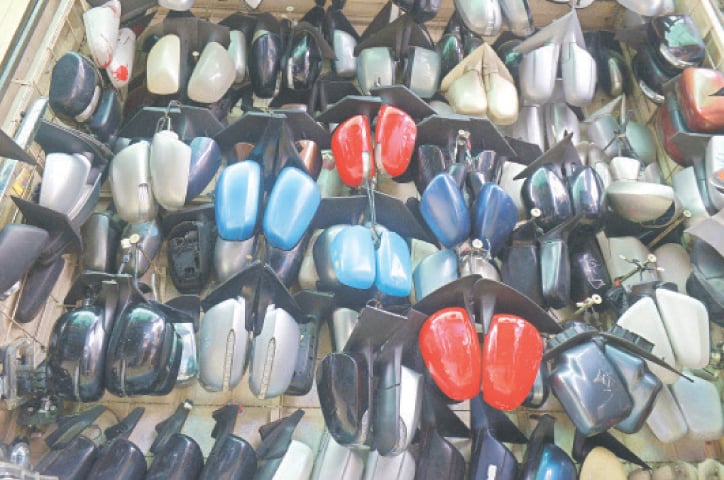
The bazaar is known for offering a wide variety of spare parts for cars and other vehicles, including both new and refurbished components.
It also sells sound systems, decorative items and tyres. With more than 700 shops operating, the market continues to expand.
“If you own an old or new car in the twin cities, you’ll likely need to visit this market at least once a year,” said Muhammad Waseem, a visitor searching for side mirrors for his 2018 Suzuki Swift.
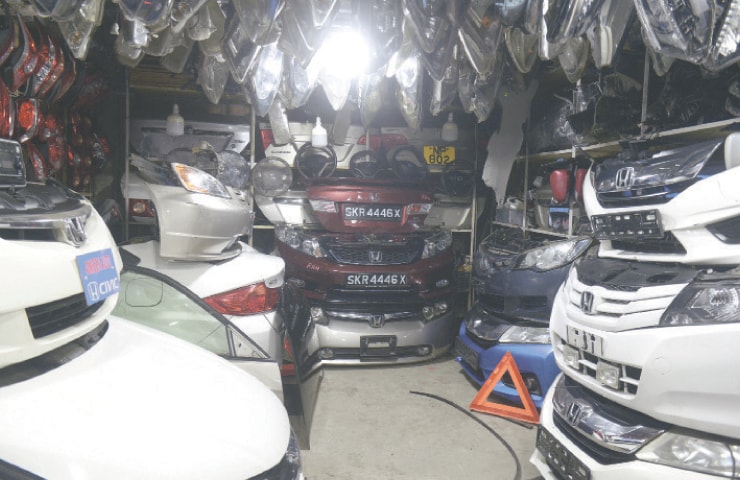
He said that used original parts were available in good condition, while new ones were expensive. “You can find axles, connecting rods, electrical wiring, doors and windshields at lower prices,” he added.
Nadeem Shah, a visitor from G-11, said he had come to buy an engine for his Honda Civic and was able to find one at a reasonable price. “You can find everything here,” he said.
He said that a friend recommended the market after buying a door for his Toyota, which had been damaged in an accident last month. “I came here with my mechanic and found exactly what I needed,” he said.
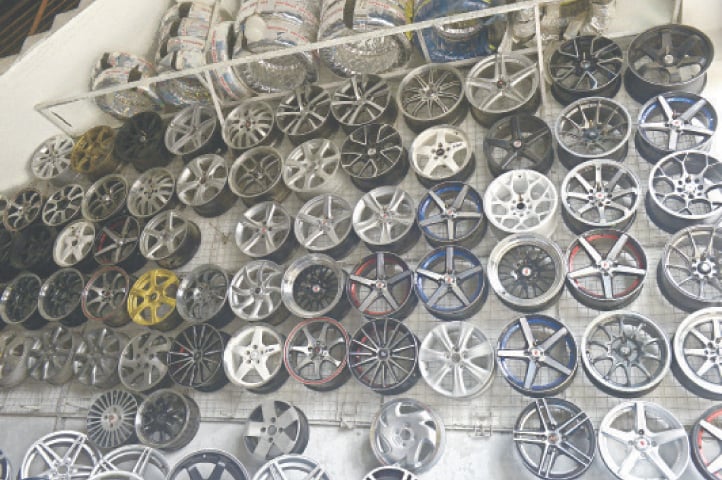
However, some people alleged that many shopkeepers and stallholders buy vehicle body parts from thieves and resell them at low prices. The president of the market’s traders association, Haji Shahzad, dismissed these claims as baseless.
“Most spare parts come from containers arriving at the Karachi port. Traders buy them from registered dealers and sell them here with minimal profit,” he explained.
He said the bazaar was established in the 1980s. “Back then, diesel engines were commonly installed as people preferred replacing petrol engines with diesel ones, which were cheaper. Such parts were readily available here,” he said.
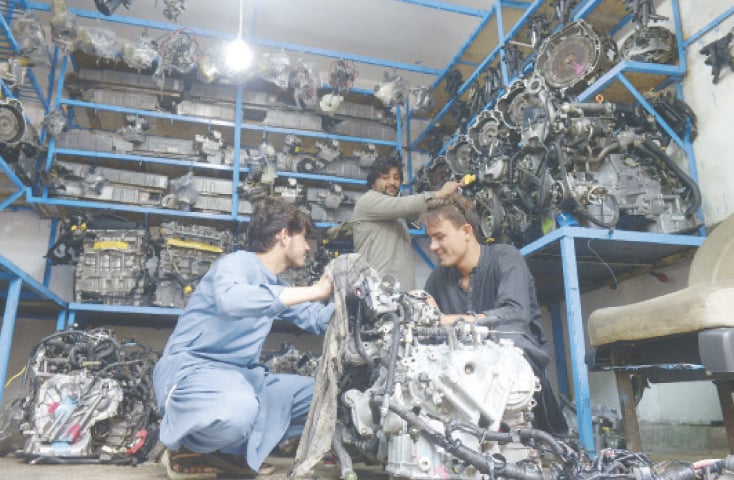
The market has since grown, with more than 700 shops now operating. “Most shopkeepers deal in tyres, body parts, engines, axles and other types of car components,” he said.
Muhammad Jamil, a shopkeeper, said, “We import spare parts from abroad, and prices vary between local and imported items. Since many people come looking for used parts, we also offer refurbished and repaired ones.”
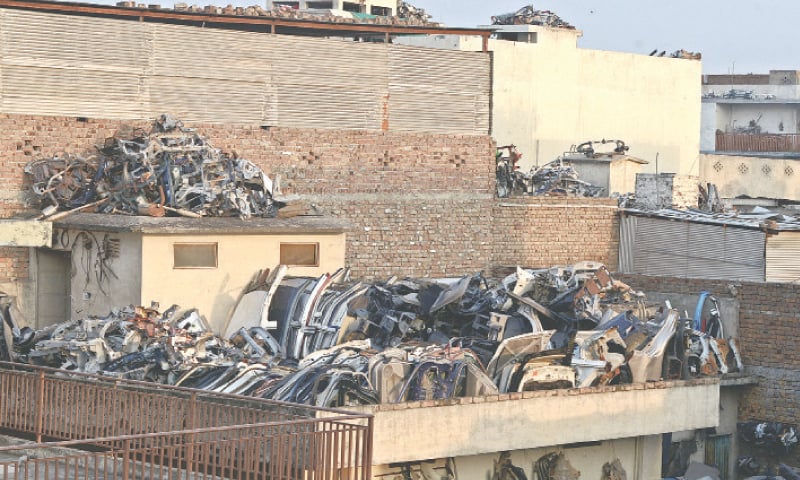
He said that vehicles damaged in accidents are often sold off and junk dealers buy them for a low price and resell the parts in the market.
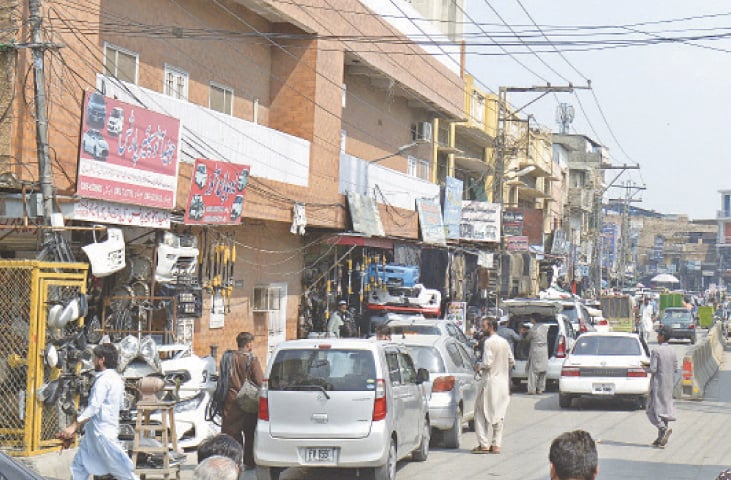
On the downside, the presence of numerous mechanic shops has created traffic congestion, as vehicles are parked along the main road for repairs, causing problems for commuters. Heavy traffic on this road is now a daily issue.
“Residents face great difficulty using the main road, as the market is expanding continuously. Many have moved to other areas due to the congestion and noise pollution,” said Muhammad Imran, a resident of Amarpura.
Farhan Ali, a resident of Glass Factory, said, “People park their cars in our residential streets to visit the bazaar, which causes us problems. The junk stored on shop rooftops contributes to the spread of dengue every year, as rainwater collects in tyres and parts, becoming breeding grounds for mosquitoes.”
When asked whether there were any plans to relocate the market outside the city, Rawalpindi Traders Association President Shahid Ghafoor Paracha said no such plan exists.
He explained that the area has already been transformed into a commercial zone, with very few residential houses remaining. “Most residents have converted their homes into shops.
It would be difficult for traders to relocate from a place so well-established and known across the twin cities,” he said.
Published in Dawn, July 14th, 2025