Pakistan completes study on single-dose malaria treatment
ISLAMABAD: In a step toward achieving a malaria-free Pakistan by 2035, the federal government has completed a study on a medicine, a single dose of which can fight off the malaria bacteria.
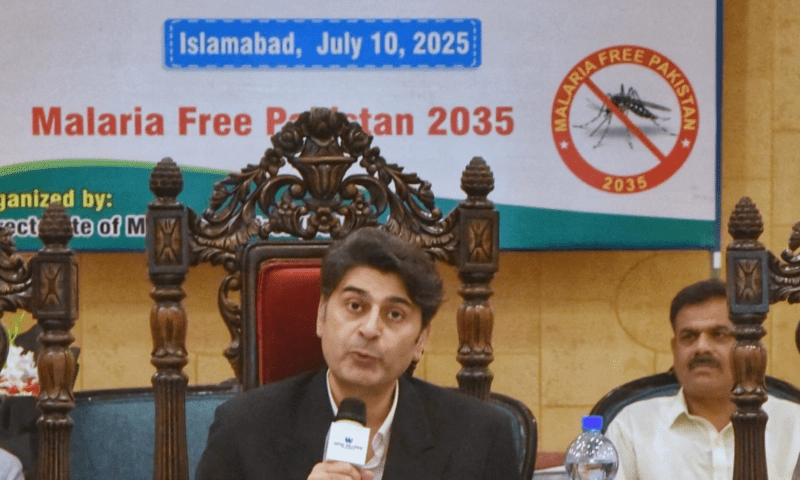
The results of the study, G6PD pilot project, were formally presented at a dissemination event hosted by the Directorate of Malaria Control (DoMC) in Islamabad, reaffirming Pakistan’s position as a regional leader in malaria elimination.
State Minister for Health Dr Mukhtar Ahmed Bharath, while addressing a gathering of national and international health experts, expressed the government’s commitment to ending malaria in the country.
“This pilot project isn’t the end, it’s the beginning,” he said. “It provides the foundation we need to take scalable, sustainable and science-based action.”
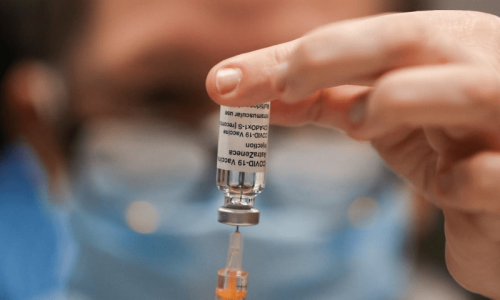
Implemented across nine high-burden districts with technical support from the Medicines for Malaria Venture (MMV), the pilot project focused on integrating G6PD testing into primary healthcare settings. The testing was critical to the safe administration of Tafenoquine, a revolutionary single-dose treatment for Plasmodium vivax malaria.
Unlike the previous 14-day Primaquine regimen, which suffered from poor patient adherence, Tafenoquine offers a simplified and more effective treatment model.
“Many patients discontinued the Primaquine course within two to three days, increasing the risk of relapse and ongoing transmission,” said Dr Bharath. “With Tafenoquine, we can change that trajectory.”
Dr Mohammad Mukhtar, Director of the Directorate of Malaria Control, highlighted the scientific and operational milestones achieved through the pilot.
“This initiative is a significant step toward strengthening malaria case management and improving treatment outcomes,” he noted.
In the aftermath of Pakistan’s devastating 2022 floods, more than 2.8 million malaria cases were reported nationwide. These staggering figures underscored the urgent need for innovative strategies, such as G6PD testing and new treatment protocols, to control and eliminate the disease.
The Drug Regulatory Authority of Pakistan (Drap) approved Tafenoquine for use in September 2024, following endorsement by the World Health Organisation (WHO). This positions Pakistan among the first countries in the region to adopt the treatment.
The dissemination event was attended by key representatives from WHO, Unicef, The Global Fund, CMU and other national and international partners. Stakeholders lauded the project as a model of technical innovation and collaborative leadership.
Dr Bharath also announced plans to host the national summit for malaria elimination in early 2026 in Islamabad. The summit aims to evaluate progress, share global best practices and foster partnerships across public, private and development sectors.
Published in Dawn, July 13th, 2025