
IMAGINE a country with a rambunctious and recently liberated media, filled with journalists sticking microphones up official noses and breaking news about flying cars which run on water. A country that is run by a dictator, whose foreign funding has dried up. Then along comes a cause for everyone to gel around, and civil society teams up with lawyers, who team up with politicians, who are all ushered in by the dictator in waiting, and they all get together in a televised circus and manage to topple the regime.
What follows is a few years of free for all, where everyone is trying to find their feet whilst some people, new to power, flex their muscles a bit too much. Judges decide the price of jams and jellies, whilst politicians in office write to their peers abroad complaining about the unregulated might of their own public servants. Meanwhile, the traditional bastions of state power teeter. Questions that nobody dared raise before are asked, and light is shone in areas which have lain in darkness for decades.
A completely new player in the power game also emerges: the television anchor. Able to say whatever they want, with few consequences, they feel they can take on the world. One of them is a particularly hard nut that some older power brokers decide to crack. When they fail, his colleagues run a direct challenge to the traditional nodes of power on their channel.
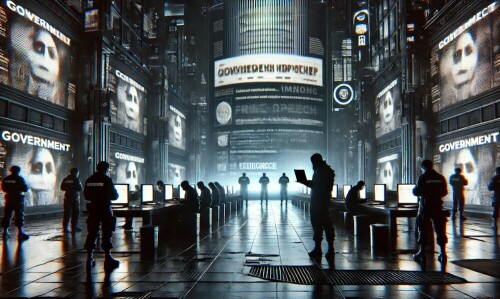
Enough is enough, decide the aging power chieftains. They shut down the channel, protests be damned. They dust off their communications centre, and start reaching out to other anchors directly, bringing them into the fold. There are helicopter rides and shooting range visits; brave-looking photos of being embedded on the front fighting terrorists. Slowly, the state propaganda line emerges, and when you cross that line you are chastised by your peers or contacted by an ever bolder chap who feels he can tell you what to do.
Months turn into years, and politicians are again brought to heel with power’s shiny new toys.
As the months progress, and a clearer strategy of the recapture of power emerges, instead of exceptional meetings with anchors who are willing to listen, they start sending out WhatsApp messages en masse to all TV persons giving a broad outline of what power thinks about every news-based issue on a daily basis. Errant anchors and journalists are no longer communicated with directly, unless they are already part of Team Power; power talks to their management instead.
Eventually, this pretence becomes too tiresome, and power’s underlings begin to communicate directly with news directors, sending them detailed headlines and explanations of how to treat all the news they have an interest in on a daily basis. Now power communicates with news managements directly only when there’s a glitch in the programme, when someone has expressed themselves with too much freedom or gone completely off-script.
Soon, these troublemakers are identified and the management told that it would be better for, and more lucrative (in terms of the state advertisement kitty), if these errant journalists were dispensed with. All the new hires in their place come from power’s WhatsApp group, now a flourishing institution in its own right.
Months turn into years, and politicians are once again brought to heel with power’s shiny new toys. Civil society campaigners are discredited through the legacy media, now entirely run like a well-oiled WhatsApp group. Just to remind the management of such media groups who the real boss is, new players are brought into the market. With shinier toys and deeper pockets, these new owners are part of power’s core crew, having come into wealth through their connections with the traditional nodes of power.
But there are still those pesky judges. The ones that were set a little too free when this circus first started. So power lies in wait. Slowly, a rift emerges from within. A rift first caused when power decides to take on a particularly troublesome judge, but fails to get him. But such is the fate of power, that the judge becomes its greatest asset. In turning on the system which nearly failed him, he exposes the other judges, leaving them without the protection of the pretence of outward unity they had until then. Power only has one playbook, so it uses it again.
Power contacts individual pesky judges, urging them to see the truth of power. Some listen and fall in line. For those who don’t, power contacts their management, convincing them of the rewards of power if the subordinates are brought into line. Power sees that the way to make pesky judges fall in line is by controlling what they get to hear and decide through the registry of each court. Power realises it’s easier to take over the registries themselves. Gradually, the same method that conquered the media emerges. Power deputes underlings to coordinate with the judges who are on board, and separate underlings to rule the registries. But all this would be unnecessary if you could just get rid of the irksome judges and select who would take their place.
So power forms a pool of willing servants from amongst lawyers. It prepares them for service by lavishing on them state largesse, fixed retainers and regular briefs; convincing them of there being only truth in power. From these lawyers will come the judges of power, squaring the circle and closing the loop. Ensuring there will no longer be any circus in this country where the ringmaster doesn’t wear power’s uniform. Ensuring there will no longer be any pesky judges, which, in turn, will ensure there aren’t any pesky anchors and politicians.
Would you like a corner plot in that country? Would you be willing to pay the price of power?
The writer is a lawyer.
X: @jaferii
Published in Dawn, July 9th, 2025