Army chief dismisses ‘factually incorrect’ claims of external input in Operation Bunyanum Marsoos


 0
0
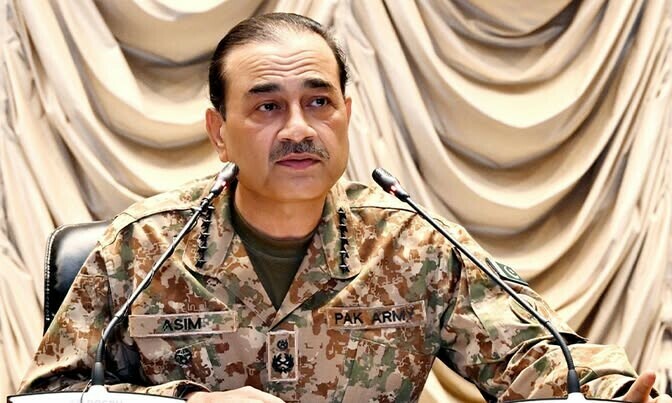

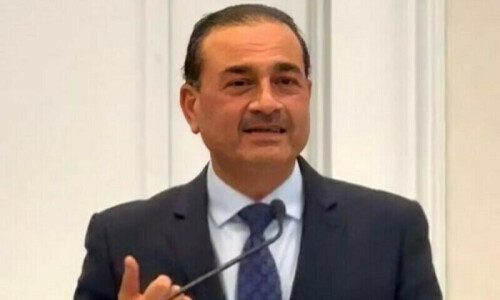
Chief of Army Staff (COAS) Field Marshal Syed Asim Munir on Monday dismissed Indian claims of Pakistan receiving external support in Operation Bunyanum Marsoos during the recent tensions with India, terming them “irresponsible and factually incorrect”.
The military confrontation between India and Pakistan came as the former blamed Islamabad for the April 22 Pahalgam attack without evidence. On the night of May 6-7, New Delhi launched a series of air strikes on Pakistan, resulting in civilian casualties. Both sides then exchanged missiles, which stretched over the week. It took a US-brokered ceasefire for both sides to finally drop their guns.
Reuters reported that the deputy chief of India’s army alleged last week that China gave Islamabad “live inputs” on key Indian positions during the conflict. India fought two adversaries during the conflict, with Pakistan being the “front face” while China provided “all possible support”, Lieutenant General Rahul Singh had said at a defence industry event in New Delhi.
“When the DGMO (director general of military operations) level talks were going on, Pakistan … said that we know that your such and such important vector is primed and it is ready for action … he was getting live inputs from China,” he said. Singh did not elaborate on how India knew about the live inputs from China.
A statement issued by the Inter-Services Publications said that Field Marshal Munir addressed the matter today while speaking at the National Defence University (NDU) in Islamabad.
He said that India’s “inability” to achieve its military objectives during Operation Sindoor and the subsequent claims signified “its lack of operational readiness and strategic foresight”.
“Insinuations regarding external support in Pakistan’s successful Operation Bunyanum Marsoos are irresponsible and factually incorrect and reflect a chronic reluctance to acknowledge indigenous capability and institutional resilience developed over decades of strategic prudence.
“Naming other states as participants in the purely bilateral military conflagration is also a shoddy attempt at playing camp politics and desperately trying that India remains the beneficiary of larger geopolitical contestation as the so-called net security provider in a region which is getting increasingly weary of its hegemonic and extremist Hindutva ideology.”
It further stated that “in contrast to India’s strategic behaviour resting on parochial self-alignment”, Pakistan had forged “lasting partnerships based on principled diplomacy, anchored in mutual respect and peace, establishing itself to be a stabiliser in the region”.
In his remarks, the army chief reiterated the country’s “principled stance”, warning that any misadventure or attempts to undermine national sovereignty or territorial integrity would be met with a “swift and resolute response”.
“Any attempt to target our population centres, military bases, economic hubs and ports will instantly invoke a ‘deeply hurting and more than reciprocal response’. The onus of escalation will squarely lie on the strategically blind arrogant aggressor who fails to see the grave repercussions of such provocative actions against a sovereign nuclear state,” the statement quoted him as saying.
“Wars are not won through media rhetoric, imported fancy hardware, or political sloganeering, but through faith, professional competence, operational clarity, institutional strength and national resolve,” the army chief concluded.
He lauded the armed forces and urged the graduating officers to remain steadfast in the values of integrity, selfless service, and unwavering commitment to the nation, the statement added.