• Easing interest rates in final quarter drive highest borrowing in three years
• SBP reports credit-to-GDP ratio lowest in region
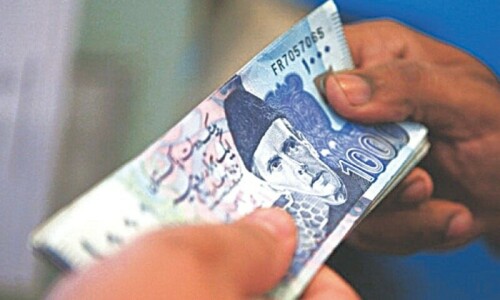
KARACHI: After three years of sluggish activity, private sector borrowing appears to have rebounded, reaching a three-year high in FY25.
According to the State Bank’s latest data released on Monday, the private sector borrowed Rs710 billion during FY25, compared to Rs513bn in FY24 and a mere Rs45.8bn in FY23 — the latter marking one of Pakistan’s worst economic years, as GDP growth turned negative.
In FY24, most of the borrowing was directed towards working capital requirements for industries such as sugar and rice, with little to no investment in new industrial ventures.
Bankers said this trend largely continued into FY25, with borrowing still skewed towards short-term working capital. However, they highlighted a shift in the final quarter of FY25, when a steep decline in interest rates encouraged greater borrowing activity.
Despite a significant cut in interest rates from 22pc to 11pc during FY25, the private sector response remained cautious. Borrowing levels still fell short of those seen in FY22, when the sector borrowed Rs1.33tr — marking a 17.4pc increase that year.
Analysts point to the political and economic turmoil following the change in government during FY23 as a key factor behind the collapse in private sector activity. That year saw negative GDP growth and minimal borrowing.
The private sector is widely recognised as a critical driver of economic development, fuelling investment, employment and business creation. However, its performance remains closely tied to the broader governance environment, which shapes its competitiveness and capacity for growth.
In a recent report, the State Bank observed that Pakistan’s credit-to-GDP ratio has been declining for decades and is among the lowest in the region. This has hindered growth, job creation and poverty reduction.
The SBP identified both demand and supply side constraints, including high borrowing costs, shallow financial markets, crowding out by government borrowing, and banks’ preference for lending to blue-chip corporates. Structural challenges, such as the energy crisis, also continue to weigh on credit expansion.
The SBP maintained a tight monetary policy through FY24, keeping the policy rate at 22pc to curb inflation, which ended the year at 24pc. Though inflation began ticking up again in May, analysts expect no sharp surge in the near term. However, banks’ continued preference for investing in government securities over private lending may limit the private sector’s ability to return to FY22 borrowing levels.
Published in Dawn, July 2nd, 2025