0
0

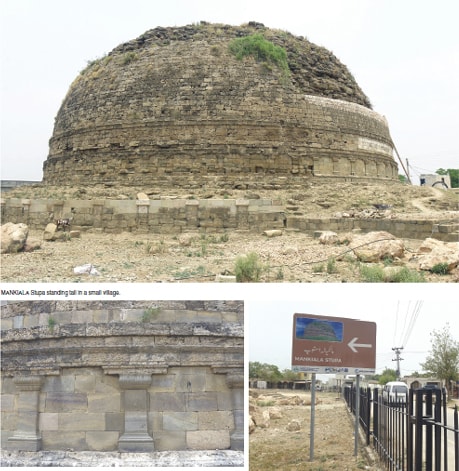
About 35km from Rawalpindi, the small village of Mankiala holds an ancient treasure — a Buddhist stupa also known as the ‘body offering’ stupa.
The archaeological site helps the region connect its roots to the Gandhara Civilisation and the golden era of Buddhism.
Mankiala Stupa is locally known as Tope Mankiala.
It was built to commemorate the spot where, according to the Jataka stories, the Golden Light Sutra, and popular belief, Prince Sattva—an earlier incarnation of the Buddha—sacrificed some of his body parts or his entire body to feed seven hungry tiger cubs.
It is said to have been constructed during the reign of Kushan emperor Kanishka, between 128–151 CE.
An alternate theory suggests that this stupa is one of the eighty-four such structures built during the reign of Mauryan Emperor Ashoka the Great to house the ashes of the Buddha.
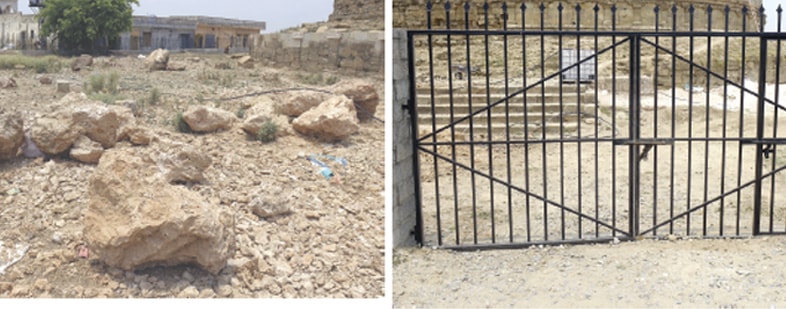
According to the Punjab Archaeology Department, it was discovered by Mountstuart Elphinstone, the first British emissary to Afghanistan, in 1808. It was first restored in 1891.
The modern village of Mankiala is believed to have derived its name from Raja Man of Manik, presumably the builder of the great stupa located on the southern side of the town.
It is worth mentioning that the town may have originated from Indo-Scythian King Manigal, and through the lapse of many centuries, came to be known as Manikpur, Manik-nagar, and finally Mankiala.
The Gazetteer of the Rawalpindi District discusses the historical value of Mankiala in detail.
It says, “It is Huta-Murta (body offering stupa), and there are many legends about the stupa. Buddha offered his body to appease the hunger of seven starving tiger cubs.”
However, it stated that General Abbot, when he examined the ruins around Mankiala, could not find evidence of any large city. But the stupa still remains to trace the past.
General Ventura, a French army officer in the army of Ranjit Singh, was the first to dig a 22.25-meter-deep trench in the centre of the great stupa in 1830.
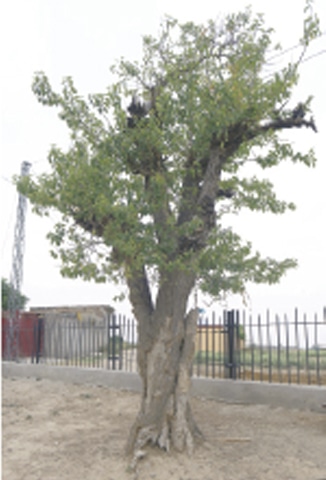
At a depth of three meters from the top, an iron box was found containing a smaller gold box with an ornamental top. The gold box contained, among other objects, a silver coin of Abdullah-ibn-Hazin, one silver coin of Yasovarman of Kanauj, and two coins depicting the sun-god.
The second deposit, found at depths between 13.7 and 19.5 metres, contained gold and copper objects, along with three Sassanian coins mixed with those of the Kushan rulers.
At a depth of 22.25 metres from the top, a small gold box was found inside a copper box. It contained one gold and five copper coins of the Kushan rulers Huvishka and Kanishka.
An official said these relics from the Mankiala Stupa are on display at the British Museum. The stupa is protected under the Antiquities Act of 1975, and anyone who violates the provisions of this Act by destroying, breaking, damaging, altering, injuring, defacing, mutilating, scribbling, writing, or engraving an inscription or sign on the structure shall be punishable with rigorous imprisonment for a term extending up to three years, or with a fine, or both.
However, the stupa had fallen into disrepair, and in 2024, a joint team of archaeologists from Pakistan and South Korea excavated the Mankiala Stupa. This collaborative initiative, “Tracing the Link between Korea and Pakistan through Gandhara Cultural Heritage,” brought together the Korea Heritage Service and the Korea Heritage Agency.
In the first phase, archaeologists focused on revealing meditative cells around the main stupa and discovered a passage leading down into one such chamber.
The archaeology department also began work to refurbish the stupa and its adjoining land to attract tourists. Cut-stone blocks are being used to restore the stupa to its original shape.
Assistant Commissioner Hakim Khan told Dawn that the total area of the stupa and heritage site measures 11 kanals and five marlas. “The federal government owns this land,” he said.
He added that Rs4 million had been allocated by the Punjab government for the restoration work, and the road leading to the stupa from Grand Trunk Road had been constructed with the help of the World Bank.
Published in Dawn, June 30th, 2025