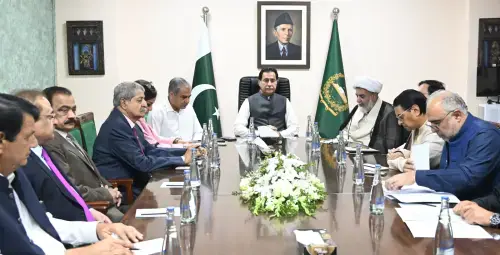
PRIME Minister Shehbaz Sharif appears relieved that the IMF did not turn down Pakistan’s request to exempt fertilisers and pesticides from new taxes in the recently announced budget. “We had made it clear that we will not impose taxes on agriculture [inputs], particularly on fertilisers and pesticides, as this sector is already under pressure,” he told a cabinet meeting recently. According to media reports, the lender had wanted the federal excise duty to be doubled from 5pc to 10pc on fertilisers besides imposing a levy of 5pc on pesticides. The two levies would have yielded Rs30-40bn in tax revenues, increasing the cost of critical inputs for growers, especially the smallholders. The 12pc year-over-year reduction in the urea off-take during the winter crop cycle this year compared to the previous one shows that input prices have played a major role in the tumbling crop sector, which contracted by 6.8pc, restricting farm sector growth to 0.56pc and overall GDP expansion to 2.6pc against a budgeted target of 3.6pc for the outgoing year.
With industry declining in Pakistan due to several factors, including tight fiscal conditions, the push for moderately higher GDP growth next year hinges on a rebound in agriculture, especially the crop sector. Pakistan is pursuing an economic growth rate of 4.2pc during the next year, a target that cannot be met unless commodity sectors expand by 4.4pc, driven by a 4.5pc rebound in agriculture and 3.5pc expansion in large-scale manufacturing. Besides, agriculture continues to play a pivotal role in economic resilience and rural livelihood, contributing 23.5pc to the national GDP and employing over 37pc of the labour force. Given its importance for the economy and employment, it is crucial to unleash the true potential of agriculture by reducing input costs, encouraging mechanisation and modern irrigation methods, providing cheap credit, and increasing investments in the development of new seed varieties to boost yields. These measures are necessary to revive the farm sector and help small farmers, in view of the impact of climate change on agriculture and the recent government decision to exit the wheat market.
The ‘relief’ provided by the IMF to the farmers also underlines the fact that the Fund is not averse to foregoing its harsher revenue conditions provided the government is able to put together a credible tax plan by broadening the base, and effectively taxing the untaxed and under-taxed areas of the economy to meet the core funding programme goal of debt sustainability. The resistance within the ruling PML-N to making retailers, real estate, big farmers, professionals like lawyers and doctors, etc share the burden, is unfortunate. The state can hardly go on sustaining itself unless everyone starts paying their taxes irrespective of the source of income. Delaying action could be suicidal.
Published in Dawn, June 24th, 2025