What if the UN Charter fails? A world without rules is closer than we think
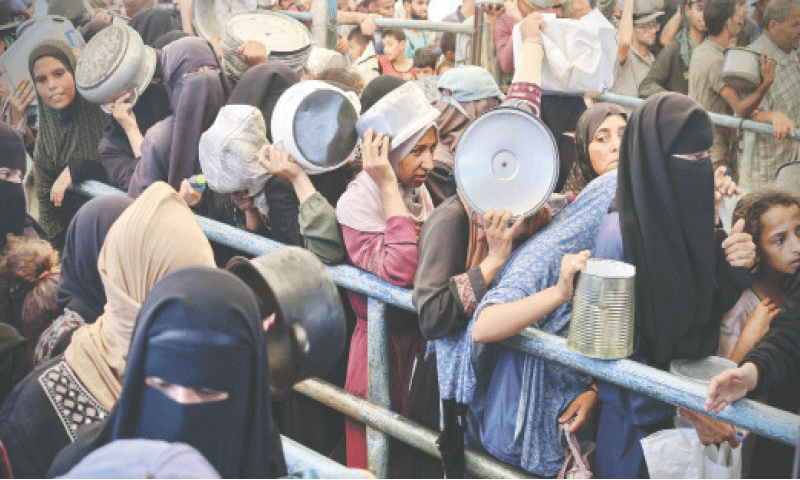
RIGHT now, something very dangerous is unfolding, not just in Gaza or Sudan, but in our international system. We are witnessing the slow unravelling of a promise made nearly 80 years ago — “that no country should again have unchecked power to dominate, destroy, or displace”.
That promise was enshrined in the United Nations Charter in 1945, which came out of the horrors of two world wars and the atrocities of the Holocaust. Countries around the world came together, not only in hope, but in fear of what humanity could do when left without rules.
The Charter’s mission was simple, but profound: To prevent war, protect countries and their people and promote peace, justice and human rights. Today, that mission is being gate-crashed by powerful countries with weapons and agendas and we have to reflect on this as the same kind of bystander behavior that existed during the Holocaust. Silence then cost millions of lives. We are seeing the same lives lost today.
The Charter that built a fragile peace
In 1945, 50 nations gathered in San Francisco to create a framework for peace. Leaders like US President Franklin D. Roosevelt and UK Prime Minister Winston Churchill had seen firsthand what silence and complicity could do – the wreckage of world war, genocide and aggression left unchecked.
The UN Charter was clear — no country could use force to seize another. Every person had the right to safety and self-determination, not occupation, not oppression.
“We the peoples of the United Nations are determined to save succeeding generations from the scourge of war, which twice in our lifetime has brought untold sorrow to mankind…”— Preamble to the UN Charter, 1945
It laid the foundation for a world where diplomacy, not tanks and bombs, should be the first response — a world where national budgets favored cooperation and understanding over militarisation, but that framework is now cracking.
A world without accountability
When international law is violated; when innocent people are bombed; land is occupied; UN resolutions are ignored — and no consequences follow — what is left to stop others from doing the same? Today, we are witnessing the collapse of accountability.
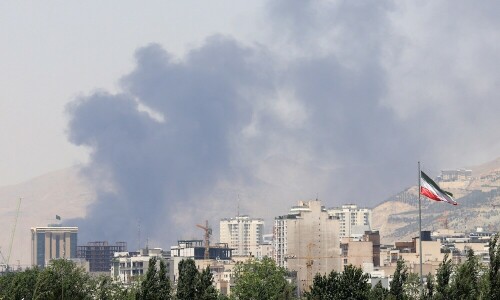
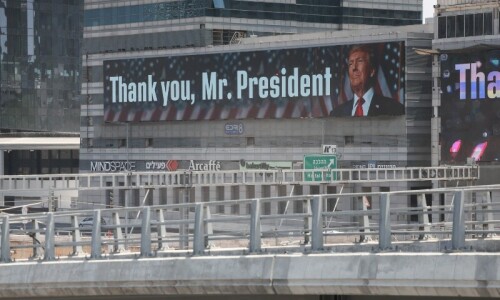
Israel continues its military operations in Gaza, despite international condemnation and warnings from the International Court of Justice. The US and its allies fund and arm conflicts across the world and China is right to ask why some countries seem to operate outside the Charter altogether, while others are held to it. This is not just about one country. It is about a principle – that no-one is above the law; because if some are, then no-one is safe.
What if the UN didn’t exist?
Imagine a world without a UN Charter. No agreed rules. No accountability. No Geneva Conventions. No international courts. No peacekeepers. Just power, money and force; an international version of Lord of the Flies. Some might say we’re already close to that now or we are living it.
The UN Charter still exists on paper, but its enforcement depends on the political determination of its most powerful members. Too often, those members have vested interests in the very wars they are meant to help end. What we’re left with is an institution full of values, but robbed of its teeth. Full of speeches, but lacking enforcement.
What if we spent on peace like we do on war?
Here’s a confronting reality — the — S is now urging its allies to spend up to 3.5 percent of GDP on weapons. Billions are poured into defence contracts, surveillance, drones and nuclear arsenals, but what if we invested even half that in peace, diplomacy, education, reconciliation, climate action and justice?
What if we gave mediators the airtime we give to generals? What if ceasefire talks were funded like war rooms? What if we sent food, not fighter jets, to vulnerable communities?
Peace is never passive. It takes planning, people and funding, just like war does, but right now the scales are tipped toward destruction… and it’s people and our planet who pay the price. Could peace be our most powerful defense?
The choice ahead
We must ask — what kind of world are we leaving behind? A world where the strong crush the weak with no consequences? Where the cries of families buried under rubble are drowned out by greed, power, and control?
Published in Dawn, June 23rd, 2025