WASHINGTON: Chief of the Army Staff (COAS) Field Marshal Asim Munir arrived in Washington on Sunday for a five-day official visit aimed at reinforcing military and strategic ties between Pakistan and the United States, diplomatic sources confirmed.
The visit, which sources described as “primarily bilateral in nature”, is not officially linked to the US Army’s 250th anniversary celebrations on June 14, despite its timing.
Field Marshal Munir did not attend the military parade, but some sources speculated that he spent the last two days at the US Central Command’s headquarters in Tampa, Florida. The Pakistani embassy in Washington, however, refused to confirm or deny this claim.
The sources said the army chief’s visit aims to reinforce military and strategic ties between Pakistan and the US, with meetings expected with senior US officials, including the Secretaries of Defence and State and senior US military commanders.
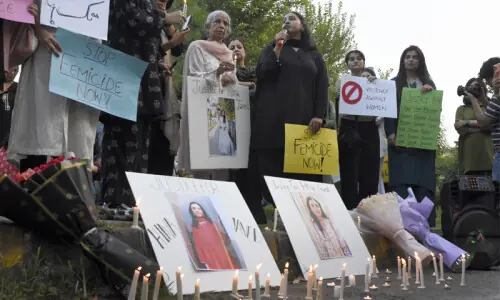
PTI supporters protest outside embassy ahead of army chief’s arrival
Meanwhile, several PTI supporters staged a protest outside the Pakistan embassy on Saturday afternoon, calling for the restoration of what they described as “unfettered democracy” in Pakistan.
The demonstration came ahead of the COAS’s arrival. “We believe the army chief is in Washington, and that’s why we’re here,” said one of the protest organisers, linking the demonstration to the COAS’ presence in the US.
The Pakistani embassy declined to confirm or deny the visit at the time of the protest.
The army chief’s trip comes at a particularly delicate time, following Israeli airstrikes in Iran.
Michael Kugelman, a Washington-based South Asia analyst, said the visit is complicated by the regional tensions.
“Pakistan wants to cultivate US support but has condemned the Israeli strikes and is working to strengthen ties with Tehran,” Mr Kugelman noted. “For Gen Munir to be in the capital of Israel’s closest ally and Iran’s primary adversary at such a tense moment could lead to some uncomfortable conversations.”
He added that the unfolding Middle East crisis may also limit how fully US officials can engage with the visiting Pakistani delegation.
Mr Kugelman said counterterrorism cooperation will likely dominate the agenda, and Field Marshal Munir may try to build on recent improvements in bilateral ties following the India-Pakistan ceasefire. However, broader efforts to reframe the security partnership would remain a “hard sell”, he warned.
Shuja Nawaz, a distinguished fellow at the Atlantic Council’s South Asia Centre, underscored the strategic imbalance in US regional priorities.
“Washington sees Pakistan in the China camp but as a useful counterterrorism base,” Mr Nawaz said.
“It sees greater trade and markets for its technology and defence materials in India. This makes an unequal situation.”
Published in Dawn, June 16th, 2025