Kamal stresses need for self-sufficiency in healthcare infrastructure
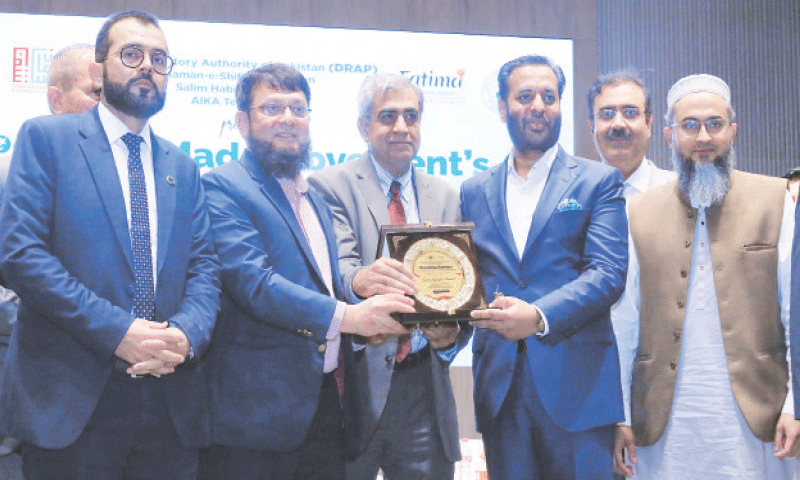
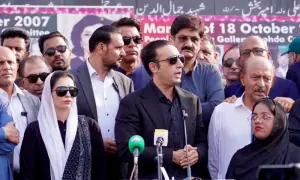
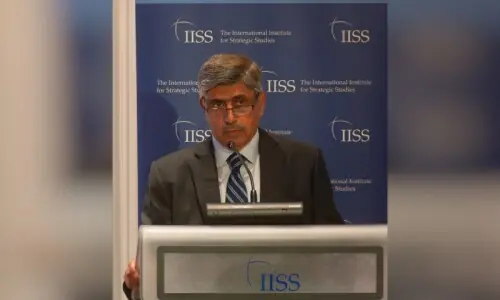
KARACHI: Federal Health Minister Mustafa Kamal has emphasised the urgent need for self-sufficiency in healthcare infrastructure.
“We cannot continue to depend on imported devices forever. The solution lies in encouraging local production, and the government will extend complete regulatory support for this transformation,” he said.
He expressed these views while speaking as the chief guest at a conference — Pakistan Made Movement — held at Salim Habib University on Saturday.
The event, held in collaboration with the Drug Regulatory Authority of Pakistan (Drap), the Healthcare Devices Association of Pakistan (HDAP), Saman-e-Shifa Foundation, and the Special Investment Facilitation Council (SIFC), brought together regulators, manufacturers, academia, and policymakers to discuss pathways for strengthening local medical device manufacturing.
Regulators, academia, manufacturers and policymakers discuss steps to strengthen local device manufacturing at Pakistan Made Movement conference
At the conference, industry representatives demanded significant tax concessions and ease of doing business to kickstart local production.
In his speech, Mr Kamal while highlighting the flaws in the country’s healthcare system said that the primary healthcare system has collapsed, hospitals are overwhelmed, and 78 per cent of diseases are waterborne due to lack of attention.
He emphasised that even in major cities like Karachi, people are forced to drink contaminated water, and the sewage system is dysfunctional.
“Sewage is mixing with drinking water and someone is consuming it. Just like we install electricity systems, we must also install water treatment plants. We are investing billions in curative infrastructure but ignoring preventive healthcare. Prevention is the only way out,” he said.
He warned that unless Pakistan controls its surging population, even improved medical infrastructure would not suffice.
Mr Kamal, who had served as the mayor of Karachi from 2005 to 2010, said that as a former city mayor he had seen all these problems closely.
“Simply building hospitals and bringing equipment is not enough, we have to focus on preventive measures,” he said.
He announced that a comprehensive framework will be provided to provinces to prevent diseases.
Quoting the World Health Organisation, the health minister noted that 10pc of medicines in Pakistan are substandard, and immediate attention is being given to this issue by the federal government.
He mentioned that an app was being developed to verify the quality, price and expiration of any medicine through QR codes.
Drap Chief Executive Officer Dr Obaidullah Malik told the gathering that Pakistan’s medical device manufacturing sector was still in its infancy but held potential, adds APP.
“You can’t manufacture MRI machines overnight. Start small, grow gradually, and work together,” he advised.
He urged the pharmaceutical industry to take the lead in building a new ecosystem for medical technology and lamented the disconnect between academia, industry, and regulators in Pakistan
Former HDAP Chairman and CEO of Hospicare, Masood Ahmed, welcomed Drap’s recent efforts to streamline registration of devices within three months, calling it a good start toward regulatory facilitation. However, he stressed that the biggest hurdle remains the 18pc sales tax on medical devices.
“This must be reduced to one percent just like pharmaceuticals if we want to promote local manufacturing,” he said.
The Saman-e-Shifa Foundation and Salim Habib University commend the government’s strategic recognition of the medical device sector as a cornerstone for industrial growth, health security, and technological advancement, as evidenced by the measures outlined in the Finance Bill 2025-26, and present their recommendations to the
minister, emphasising the critical need for coordinated action and sustained collaboration.
Published in Dawn, June 15th, 2025