The sixth round of Iran-US nuclear talks is planned for Sunday, Tehran said as the two sides appear locked in a standoff over uranium enrichment nearly two months into the high-stakes negotiations.
Iran has said it would present a counter-proposal to the latest draft from Washington, criticised by Tehran for failing to offer sanctions relief in return for curbs on its nuclear programme.
“The next round of Iran-US indirect talks is being planned for next Sunday in Muscat,” Iranian foreign ministry spokesperson Esmaeil Baqaei said in a statement on Tuesday.
There was no immediate comment from mediator Oman, which has hosted some of the previous rounds, while Washington has said the talks could be held as early as Thursday.
The longtime foes have held five rounds of negotiations since April, the highest level contact since President Donald Trump withdrew Washington from a 2015 nuclear accord during his first term.
Trump has said the next meeting was expected on Thursday, although a source familiar with preparations said it would more likely be on Friday or Saturday.
Iran’s top negotiator, Foreign Minister Abbas Araghchi, will be attending the annual Oslo Forum in Norway on Thursday, his office said.
On May 31, after the fifth round of talks, Iran said it had received “elements” of a US proposal for an agreement, which Araghchi has criticised for its “ambiguities”.
Tehran has said the offer failed to include issues raised in previous negotiations including the lifting of sanctions — a key demand for Tehran, which has been reeling under their weight for years.
On Monday, foreign ministry spokesperson Baqaei said Iran would present a “reasonable, logical and balanced” counter-proposal.
‘National interests’
Trump said that the next round of talks could make it clear if a nuclear deal is possible to avoid military action.
In a key sticking point, Tehran has defended its right to enrich uranium as “non-negotiable”, while Washington called any Iranian enrichment a “red line”.
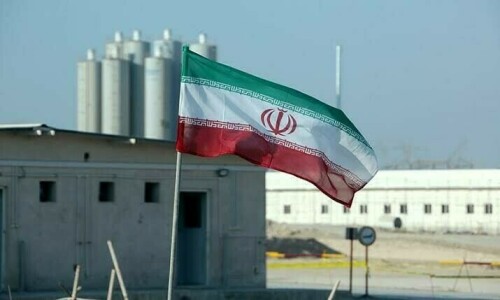
Iran currently enriches uranium to 60 per cent, far above the 3.67pc limit set in the 2015 deal and close though still short of the 90pc needed for a nuclear warhead.
Western countries, including the United States and its ally Israel, have long accused Iran of seeking to acquire atomic weapons, while Tehran insists its nuclear programme is for peaceful purposes.
In an interview published on Tuesday, Iranian deputy foreign minister Majid Takht-Ravanchi said there was no “deadlock” in the talks, and that the next round would be the first in which the parties discuss “any written material”.
“Any negotiations with an international dimension come with their own sensitivities and require a great deal of patience for them to reach a result,” he told the official IRNA news agency.
“What matters to us is that we can safeguard the national interests of the country through these talks, and that is how we proceed.” In a statement issued on Tuesday, a group of Iranian lawmakers accused the United States of turning the negotiations into a “strategic trap” in coordination with Israel.
They said Washington’s “aim is to impose demands through coercion, adopting positions that are insulting and entirely incompatible with the legitimate rights of the Iranian people.”
‘Less than satisfactory’
On Monday, the United Nations nuclear watchdog began a Board of Governors meeting in Vienna that will last until Friday to discuss Iran’s atomic activities and other issues.
The International Atomic Energy Agency meeting followed a report issued by it criticising “less than satisfactory” cooperation from Tehran, particularly in explaining past cases of nuclear material found at undeclared sites.
Iran has criticised the IAEA report as unbalanced, saying it relied on “forged documents” provided by its arch foe Israel.
On Tuesday, Araghchi reiterated criticism of a plan by European powers and the United States to adopt a resolution at the IAEA meeting that would accuse Tehran of non-compliance with nuclear obligations.
“Any ill-considered and destructive decision in the Board of Governors against Iran will be met with an appropriate response,” Araghchi said during a phone call with Japanese Foreign Minister Takeshi Iwaya.
Iran has said it would reduce cooperation with the IAEA if the resolution passed. On Saturday, Tehran announced it had obtained a trove of Israeli intelligence in a covert operation, including files related to Israel’s undeclared nuclear facilities and defence plans.
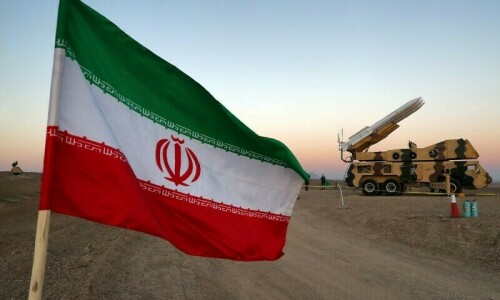
It said the information would enable Iranian forces to launch counterattacks should Israel strike the Islamic republic.
Israel — an undeclared nuclear power — has repeatedly threatened that it could attack Iranian nuclear sites in warnings that have escalated since Tehran and Washington began talks.