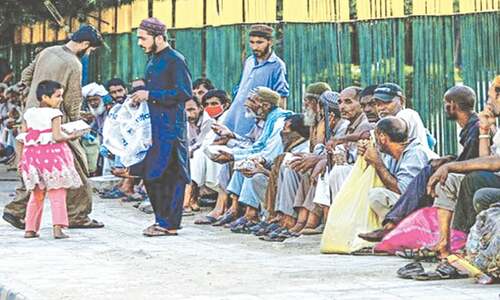
A WORLD Bank finding that nearly 45pc of Pakistanis live below the poverty line should not come as a surprise. Neither should the fact that the proportion of people living in extreme poverty has risen from 4.9pc to 16.5pc.
The poverty numbers quoted by the bank in a report are based on a survey conducted in 2018-19; they do not take into account the devastating impact of the 2022 floods or the record inflation of the last couple of years on millions of people. Pakistan has not conducted household income surveys since 2019. If a new survey is carried out, the percentage of people living below the poverty line is certain to rise further.
The bank has clarified that the increase comes in the wake of an update in global poverty lines by it, and not because of any change in the underlying economic conditions in Pakistan or elsewhere. About 82pc of the increase in the numbers living in poverty is due to the higher value of the new poverty lines, with the rest explained by price increases in Pakistan between 2017 and 2021.
However, the bank says that poverty trends remain unchanged. A bank official said that Pakistan’s poverty and resilience assessment, currently in progress, would provide the latest update on actual poverty in the country and explore the drivers and dimensions of trends in poverty and welfare over the past 20 years. In addition, the findings, due in September, would examine spatial disparities and fiscal equity.
The increase in the number of poor may have come from the revised higher poverty threshold, stagnant economic growth and a record spike in living costs in recent years, besides the impact of disaster on millions, which together must have pushed most low-income households to the borders of ‘poor’ and ‘non-poor’ under the poverty line. With socioeconomic conditions unlikely to change and public service delivery likely to deteriorate further due to falling development expenditures, chances are that new surveys will reveal worsening urban and rural poverty results.
The factors affecting an increase in poverty apart, there still is room to reverse the trend through targeted interventions and the effective use of available resources. But this will require political will, a strong policy focus and coordination amongst the different tiers of government. In this respect, we can learn a lot from China’s successful experience.
Published in Dawn, June 7th, 2025