Prime Minister Shehbaz Sharif on Thursday said that Pakistan’s recent appointment to key UN committees reaffirmed the international community’s trust in the country’s counterterrorism credentials.
A day ago, Pakistan was appointed chair of the committee established under Resolution 1988 (2011), which oversees the implementation of sanctions against the Afghan Taliban. Pakistan was also named vice chair of the Security Council’s Counter-Terrorism Committee (CTC), which monitors implementation of Resolution 1373 (2001), a core component of the UN’s global counterterrorism architecture.
Additionally, Pakistan will serve as co-chair of two important subsidiary bodies: the Informal Working Group on Documentation and the newly formed Working Group on Sanctions.
In a post on X, the prime minister said the appointments were a “matter of great pride”.
He added: “These key appointments validate the international community’s confidence and trust in Pakistan’s counterterrorism credentials as well as an acknowledgement of our strong and unwavering commitment to eradicate this global menace.
“As one of the biggest victims of terrorism, with over 90,000 casualties and more than $150 billion economic losses, Pakistan’s sacrifices in combatting this scourge have been second to none.”
The Pakistan Mission to the UN had called the appointments a “significant diplomatic development”.
“These appointments represent an acknowledgement of Pakistan’s active engagement with the United Nations system, including its constructive role as an elected member of the Security Council,” a press release had said, adding, “They are also an international recognition of Pakistan’s counter-terrorism efforts”.
Pakistan, it said, remained committed to working with the UN and fellow member states in advancing the principles and purposes of the UN Charter as well as playing its part in the global fight against terrorism in collaboration with its international partners.
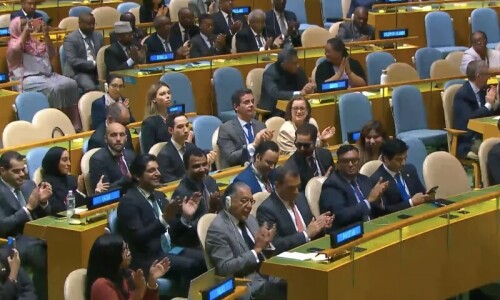
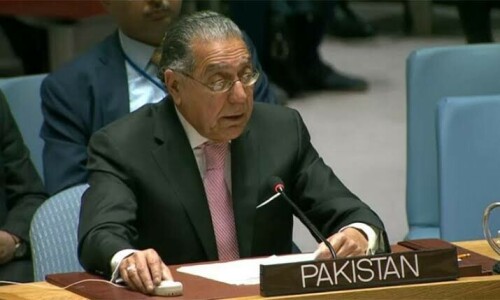
Pakistan began a two-year term as a non-permanent UNSC member on the first day of the new year. This marks Pakistan’s eighth term on the council, providing an opportunity to shape discussions on pivotal international issues, but also posing significant challenges.
Elected in June to replace Japan, Pakistan occupies one of the two Asia-Pacific seats on the UNSC. It will preside over the council in July, a key opportunity to set the agenda and foster dialogue.
While only permanent members hold veto power in the council, non-permanent members wield significant influence in terrorism-related sanctions committees, as decisions are made by consensus under established norms.
Pakistan’s term coincides with heightened tensions in conflict zones such as Gaza, held Kashmir and Syria.
The committee announcements came days after a high-level Pakistani parliamentary delegation concluded a visit to the UN headquarters in New York. The delegation wrapped up its engagements on Tuesday after a series of meetings with senior UN officials and diplomats from various member states.
During the visit, the delegation briefed UN officials on what they described as India’s escalating rhetoric and actions aimed at pushing the region towards conflict. Pakistani representatives urged the international community to take note of New Delhi’s alleged attempts to provoke a confrontation and stressed Islamabad’s commitment to regional peace and stability.
The delegation also reiterated Pakistan’s willingness to engage in comprehensive dialogue with India, including cooperation on counterterrorism, to defuse tensions and foster long-term peace in South Asia.