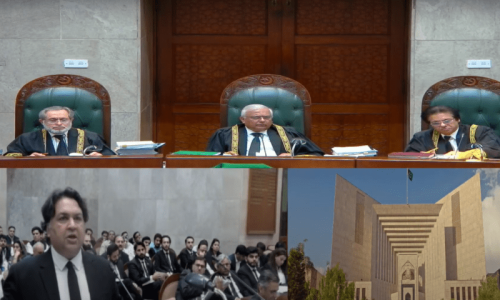
ISLAMABAD: Chief Justice of Pakistan (CJP) Yahya Afridi on Thursday signalled a shift in the composition and direction of the Law and Justice Commission of Pakistan (LJCP), explaining that previously non-official members were mostly appointed from among retired judges of superior courts, but they can now come from the bar due to the legal fraternity’s vital role in law reform.
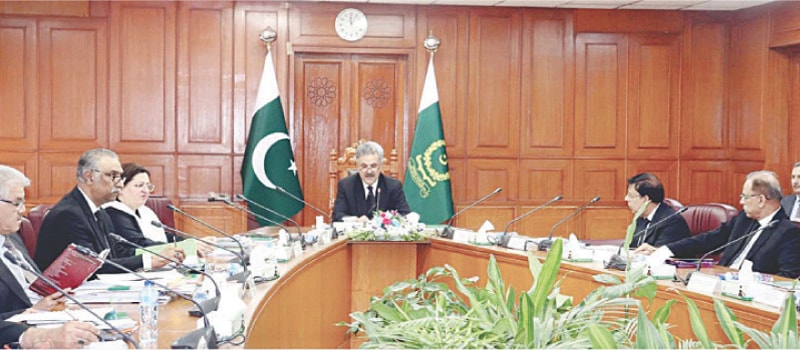
Presiding over the 44th meeting of the LJCP at the Supreme Court as its chairman, the CJP also proposed measures to rejuvenate the commission, including more regular meetings, wider publicity of its mandate to solicit law reform proposals, and augmentation of its research capabilities by engaging research associates alongside its current team.
He advocated for incremental progress on the commission’s research agenda to ensure tangible progress and practical outcomes.
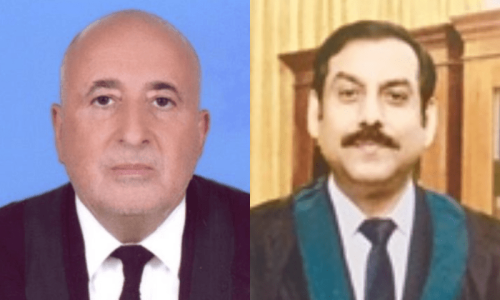
The meeting was attended by several prominent members of the legal fraternity, including Khawaja Haris Ahmed, Fazal-i-Haq Abbasi, Kamran Murtaza, Muhammad Munir Paracha — all senior advocates of the Supreme Court — and Ahmed Farooq Khattak, vice chairman of the Khyber Pakhtunkhwa Bar Council.
Participants deliberated on establishing a framework for the review of laws, focusing on identifying priority areas and engaging relevant stakeholders.
An advisory committee was formed under the convenership of the secretary of the Ministry of Law and Justice. Members of the committee include Khawaja Haris Ahmed, Muhammad Munir Paracha and Kamran Murtaza.
The committee was tasked with identifying key legal areas for review within a month, drawing on stakeholder input and public feedback.
The commission also finalised the committee’s terms of reference (ToRs).
Meanwhile, the CJP also chaired the 19th meeting of the governing body of the Access to Justice Development Fund (AJDF). The meeting was attended by the chief justices of the Lahore, Balochistan, Islamabad, Sindh, and Peshawar high courts, the law ministry’s secretary, the additional finance secretary of the Finance Division, and the LJCP’s secretary.
The LJCP’s secretary, Syeda Tanzeela Sabahat, provided a brief overview of the AJDF’s mandate and performance.
She highlighted infrastructure projects in underdeveloped regions and the provision of free legal aid through District Legal Empowerment Committees (DLECs).
Updates were also shared on litigant-oriented facilities, completed development projects, and training sessions for justice sector personnel.
The CJP also underscored the need for timely and effective utilisation of the funds released to respective high courts.
Published in Dawn, May 30th, 2025