Bangladesh court begins first trial of Hasina-era officials
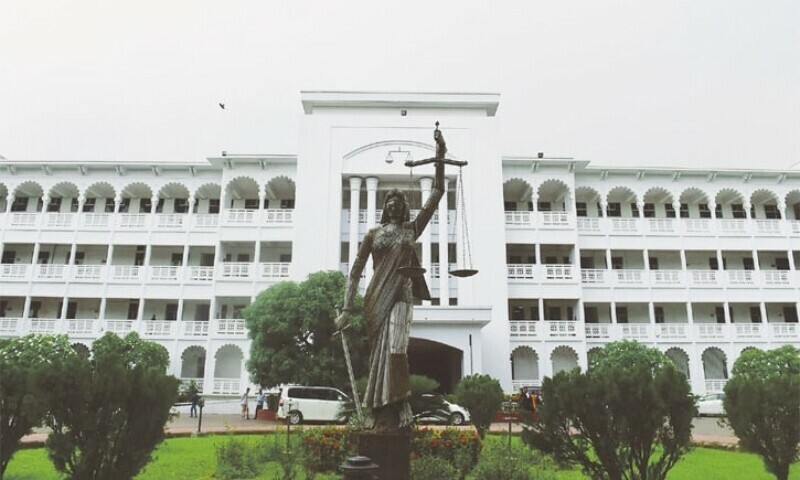
Bangladesh on Sunday began the first trial at a special court prosecuting former senior figures connected to the ousted government of Sheikh Hasina, the chief prosecutor said.
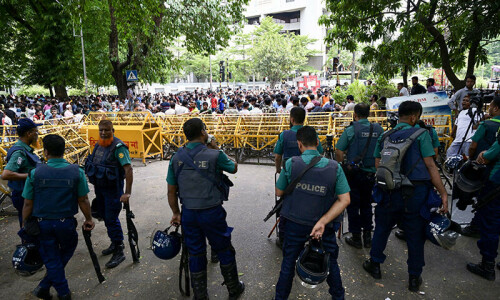
The court in the capital Dhaka accepted a formal charge against eight police officials in connection with the killing of six protesters on August 5 last year, the day Hasina fled the country as the protesters stormed her palace.
The eight men are charged with crimes against humanity. Four are in custody and four are being tried in absentia.
“The formal trial has begun,” Tajul Islam, chief prosecutor of Bangladesh’s domestic International Crimes Tribunal (ICT), told reporters. “The prosecution believes that this prosecution will be able to prove the crimes done by the accused.”
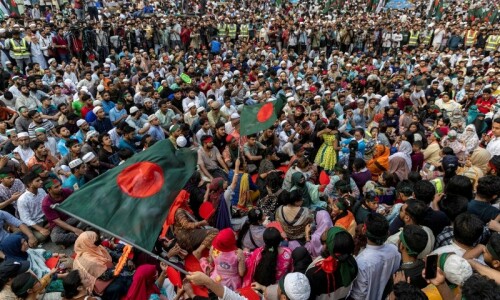
It is the first formal charge in any case related to the killings during last year’s student-led uprising, which ended Hasina’s iron-fisted rule of 15 years.
Up to 1,400 people were killed between July and August 2024 when Hasina’s government launched a brutal campaign to silence the protesters, according to the United Nations.
The list of those facing trial includes Dhaka’s former police commissioner, Habibur Rahman, who is among those being tried in absentia.
Hasina also fled by helicopter to India, her old ally. She remains in self-imposed exile, defying Dhaka’s extradition request to face charges of crimes against humanity.
‘Command responsibility’
The launch of the trials of senior figures from Hasina’s government is a key demand of several of the political parties now jostling for power as the South Asian nation awaits elections that the interim government has vowed will take place before June 2026.
Islam said the eight men were accused of “different responsibilities”, including the most senior for “superior command responsibility, some for direct orders … [and] some for participation”.
He said he was confident of a successful prosecution.
“We have submitted as much evidence as required to prove crimes against humanity, both at a national and an international standard,” he said.
Among that evidence, he said, was video footage of the violence, as well as voice recordings of Hasina in “conversations with different people where she ordered the killing of the protesters using force and lethal weapons”.
The ICT was set up by Hasina in 2009. It sentenced numerous prominent political opponents to death over the following years and became widely seen as a means for Hasina to eliminate rivals.