ICJ throws out Sudan genocide case against UAE

The top United Nations court on Monday threw out Sudan’s case against the United Arab Emirates over alleged complicity in genocide during the brutal Sudanese civil war.
Sudan has dragged the UAE before the International Court of Justice in The Hague, arguing it is supplying weapons to the paramilitary Rapid Support Forces (RSF), which has been battling the Sudanese army since 2023.
The UAE denies supporting the rebels and has dismissed Sudan’s case as “political theatre” distracting from efforts to end a war that has killed tens of thousands.
The ICJ said today it “manifestly lacked” jurisdiction to rule on the case and threw out it out.
A UAE official hailed the judges’ ruling.
“This decision is a clear and decisive affirmation of the fact that this case was utterly baseless,” Reem Ketait, aeputy assistant minister for political affairs at the UAE foreign ministry, said in a statement sent to AFP.
Before the ruling, Ketait had accused Sudan of lodging the case in a “cynical attempt to divert attention from their own brutal record of atrocities against Sudanese civilians”.
When the UAE signed up to the UN’s Genocide Convention in 2005, it entered a “reservation” to a key clause that allows countries to sue others at the ICJ over disputes.
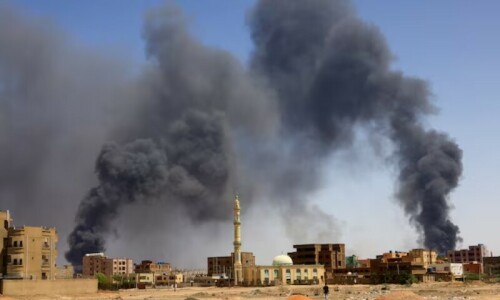
Since April 2023, Sudan has been torn apart by a power struggle between army chief Abdel Fattah al-Burhan and RSF commander Mohamed Hamdan Daglo.
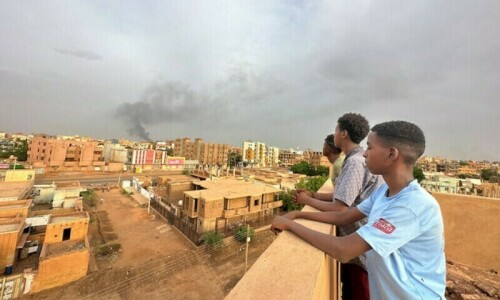
The war has triggered what aid agencies describe as the world’s largest displacement and hunger crises. Famine has officially hit five areas across Sudan, according to a UN-backed assessment.
The North Darfur region has been a particular battleground, with at least 542 civilians killed in the past three weeks, according to the United Nations.
The ICJ said it was “deeply concerned about the unfolding human tragedy in Sudan that forms the backdrop to the present dispute”.
“The violent conflict has a devastating effect, resulting in untold loss of life and suffering, in particular in West Darfur,” the court added.
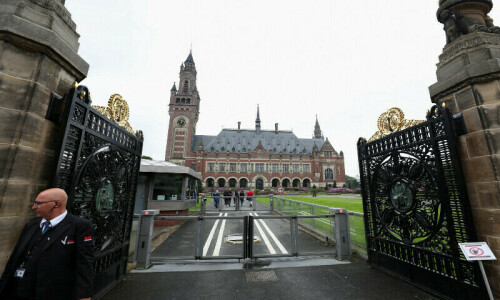
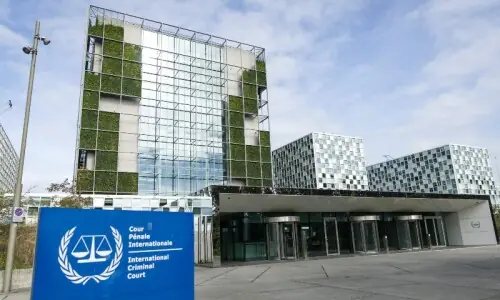
A world away from the horrors on the ground, lawyers in robes and wigs thrashed out legal arguments in hearings last month in the panelled splendour of the ICJ’s Peace Palace.
Muawia Osman, Sudan’s acting justice minister, told the court last month, “[The] ongoing genocide would not be possible without UAE complicity, including the shipment of arms to the RSF.”
“The direct logistical and other support that the UAE has provided and continues to provide to the RSF has been and continues to be the primary driving force behind the genocide now taking place, including killing, rape, forced displacement and looting,” he added.
Responding for the UAE, top foreign ministry official Reem Ketait said Sudan’s allegations were “at best misleading and at worst pure fabrications”.
“This case is the most recent iteration of the applicant’s misuse of our international institutions as a stage from which to attack the UAE,” Ketait added.
Full reparations
In the end, legal experts had said Sudan’s case may flounder on technical jurisdictional issues.
“There is clearly no basis for the court’s jurisdiction in this case,” the UAE’s Ketait told the judges.
The UAE had called for the case to be thrown out and removed from the court’s list.
Sudan argued the UAE’s reservation was “incompatible” with the purpose of the Genocide Convention, which emphasises global collective responsibility to prevent the world’s worst crimes.
Khartoum wanted ICJ judges to force the UAE to stop its alleged support for the RSF and make “full reparations”, including compensation to victims of the war.
The rulings of the ICJ, which hears disputes between states, are final and binding, but the court has no means to ensure compliance.
Judges ordered Russia to halt its invasion of Ukraine to no avail, for example, and ruled that Israel’s 57-year occupation of Palestinian land was illegal.