Fistful of water



JAWAHARLAL Nehru, the first post-independence prime minister of India, while dilating on statecraft, advised ‘muthi ko kasna nahin hai’ (don’t hold the fist tight). He may have been referring to the merits of a soft approach in dealing with myriad internal challenges, including the hundreds of princely states and their status vis-à-vis the centre. How clenched or loose Sardar Patel’s fist was in dealing with these matters is now part of history.
On our side, prime minister Liaquat Ali Khan and, later on, military dictator Pervez Musharraf both employed the punch as a symbol of state power, aimed externally on the part of the former and at internal opponents by the latter.
While we were still trying to figure out the contours of the ‘hard state’ that the establishment asserted Pakistan needs to become in the aftermath of the deplorable attack on the Jaffar Express in Balochistan in March, and while the new canals fiasco was brewing among the upper and lower riparian provinces, the Pahalgam atrocity happened in Indian-occupied Kashmir. Both sides wasted no time accusing each other of orchestrating the terrorist attacks.
In its first salvo of retaliatory actions, India announced holding the Indus Waters Treaty (IWT) in abeyance. “We will pursue the perpetrators to the ends of the earth,” vowed Prime Minister Narendra Modi. The ‘ghus kar marengay’ refrain was dug up by the media a few days later.
We need hydropower experts and legal wizards in international law.
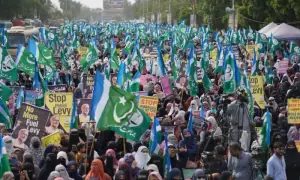
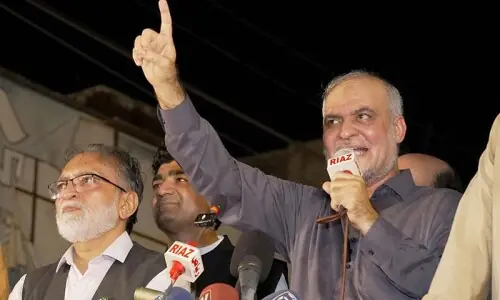
Late to the public outrage against the proposed six canals on the Indus river to irrigate the Cholistan desert in south Punjab, the PPP, the ruling party in Sindh, tried to overcompensate with bravado. Party chairman Bilawal Bhutto-Zardari, usually displaying sangfroid, broke character to warn the Indian PM, “either our water or your blood will flow in the Indus”. He was addressing a public gathering near the banks of the river in Sukkur as part of his party’s effort to wrest the canals issue from the smaller parties and rights groups.
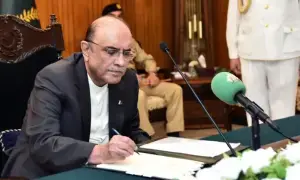
The complex interplay between externalities and internal compulsions of statecraft is not unique to Pakistan and India. That a country’s foreign policy is contingent upon its domestic choices and vice versa is well known. The rhetoric in the service of these policies and interests should also be seen in this perspective. Mr Bhutto-Zardari’s warning to Mr Modi aims to assuage his party’s domestic dilemma. President Asif Zardari’s reported assent to the canals project — thought to be the brainchild of the powers that be and the larger province of Punjab — had caused resentment even among the loyal cadres of the PPP. One way to keep on the right side of the state powers while appeasing the local vote bank is to take a hard line against India.
The IWT, which was signed between the two countries in 1960 to apportion the waters of the western and eastern rivers, was brokered by the World Bank. It is an extremely complex and technical treaty. From time to time, demands for renegotiating the IWT have emanated from within Pakistan.
Saner elements cautioned against it because, back in the 1960s, India and Pakistan were treated as equals by the facilitators of the treaty. In succeeding decades, the international standing of the two countries changed; compare their forex reserves, trade volumes, and levels of FDI.
Meanwhile, the World Bank’s role as ‘guarantor’ of the IWT has always been misunderstood. It was always meant to reduce over time. To renegotiate the treaty, we need hydrology and hy-
dropower experts. We stopped producing them decades ago. We also need legal wizards in international law. The lot we have has been losing us cases in international courts; Reko Diq, Turkish power producer Karkey, and a consortium of IPPs’ claims against us, to cite a few. This downward slide is, unfortunately, not limited to us: the World Bank does not appear to have a single legal expert with a complete grasp of the treaty. Ask the lender for a copy of a treaty, and in all likelihood, it will draw a blank.
Returning to the analogy of the fist, in the context of water or any fluid situation, leave it open, making it into an ‘oak’, an untranslatable Urdu word for the hollow of an upward-turned palm to drink, and offer it, and it can be of help even if for a short while. Tighten the fist and one is not even left with chullu bhar pani (a sip or a splash’s worth of water carried in the palm of the hand).
The writer is a poet. His latest publication is a collection of satire essays titled Rindana.
Published in Dawn, April 30th, 2025