Addressing the first Overseas Pakistanis Convention in Islamabad, Prime Minister Shehbaz Sharif paid tribute to the expatriates for their unmatched contribution to nation-building.
A mega overseas convention will be held every April to recognise the important role of the 10 million diaspora spread across 160 countries.
In an article, ‘Rethinking the diaspora’s role’, analyst Durdana Najam wrote that the state, and its various departments, view overseas Pakistanis as critical stakeholders and are ready to reset the relationship based on terms that go beyond mere transactions.
When the country’s financial health is on the line, she said, mobilising one of the most resourceful segments of Pakistanis makes strategic sense.
The growth in remittances has far outpaced the trade deficit during this fiscal year, which underlines the critical support these flows are providing to the current account.
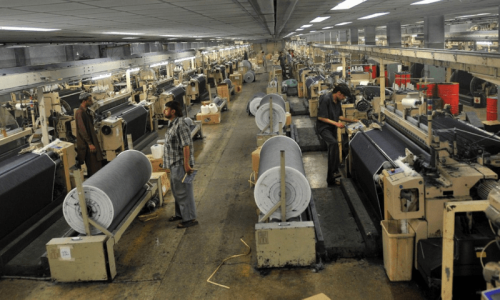
With foreign investment having bottomed, analysts argue that remittances should be channelled into productive sectors to boost output and exports
Pakistan’s real effective exchange rate, which gauges the currency’s value against a basket of foreign currencies adjusted for inflation, improved to 101.62 in March 2025 from a revised 102.25 in February, according to data released by the State Bank of Pakistan on April 17.
Following the significant improvements in the external sector, Fitch Ratings has upgraded the long-term foreign currency issuer default rating by one notch to ‘B-’ from ‘CCC+’, with a stable outlook.
The prime minister has pledged to personally oversee the investments of overseas Pakistanis in the country. “I will be your CEO. My cabinet and our business community will ensure that your investments are protected and facilitated,” he assured them. On another occasion, he added that the government will provide facilities to them for investment in the country according to their expertise.
However, media coverage of the convention did not reveal any inclination on the part of the 1,200 participants from across the world to set up manufacturing units or invest in their motherland’s farm economy, note analysts at Dawn.
Remittances have also been a double-edged sword, the analysts argued. They help us pay our burgeoning import bills and compensate for the dwindling foreign official and private inflows as well as stagnating exports. But they are largely responsible for the rapid increase in imported consumption, unplanned urban sprawls, currency volatility, anti-export bias, etc.
Even more significant, the dependence on remittances has had a major role in crowding out manufacturing and exports, leading to deindustrialisation over more than a decade.
The share of remittances in the country’s GDP has increased from one per cent in 2000 to around 9pc; more than the share of exports.
No doubt remittances are widely recognised for their significant role in achieving the current level of macroeconomic stability. Even critics agree.
In March 2025, remittances reached a record $4.1 billion in a single month. Over the first nine months of the fiscal year, remittances have jumped by 33pc, totalling $28.1bn.
In the same month, Pakistan’s current account recorded a surplus of $1.2bn, the highest ever on record for a single month, compared with a $363m surplus recorded in the same month a year earlier and a deficit of $97m in February 2025.
This takes the cumulative surplus for 9MFY25 to $1.86bn, a sharp reversal from the $1.65bn deficit during the same period last fiscal year.
The State Bank now expects to receive $38bn in remittances, up from the previous projection of $35bn this year, and hopes to raise foreign exchange reserves to $14bn by the end of June 2025 despite significant debt payments this year.
But, while the overall balance of payments during July-March remained positive, it turned negative for the fifth month during the outgoing year due to weakening foreign official and private inflows among heavy debt payments. The external sector stability is not durable, analysts say, founded as it is on factors such as a controlled trade deficit, unspoken import curbs, lower global oil prices, and most importantly, a massive and unexpected surge in remittances.
In the same period, it may be pointed out, that information technology exports surged by 23pc to record earnings of $2.83bn. And textile and clothing exports rose 9.38pc to $13.62bn in July-March FY25 from $12.44bn a year ago. But the International Monetary Fund (IMF) has now lowered the projection of the country’s GDP growth by 0.4pc to 2.6pc for FY25 from 3pc estimated in January.
It is relevant to quote here the advice of IMF Managing Director Kristalina Georgieva that countries must make the best of the new multipolar world.
With foreign investment having bottomed, analysts argue that remittances should be channelled into productive sectors to boost output and exports for a durable solution to the recurring balance-of-payments crisis by the creation of a business-friendly climate, tax reforms, policy consistency, etc.
Moreover, policymakers must also recognise that while remittances bolster the economy, true prosperity can only be achieved by creating conditions conducive to retaining our best and brightest brains, says a Business Recorder editorial.
Published in Dawn, The Business and Finance Weekly, April 28th, 2025