Pakistan requests extra 10bn yuan on China swap line, says Aurangzeb


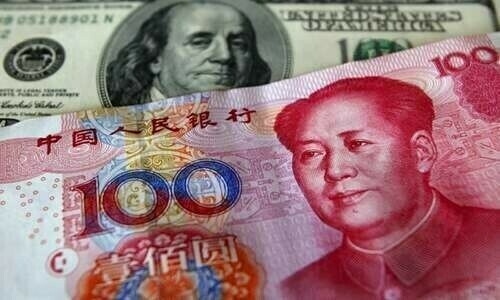
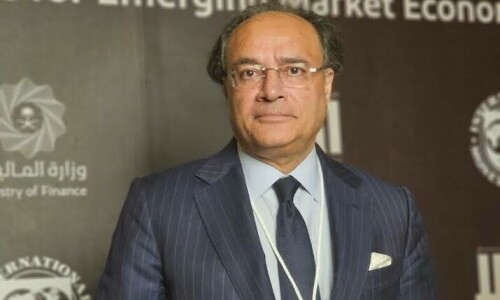
Pakistan has put in a request to China to augment its existing swap line by 10 billion yuan ($1.4bn), Finance Minister Muhammad Aurangzeb said, adding that he expected the country would launch a Panda bond before year-end.
Pakistan has an existing 30bn yuan swap line already, Aurangzeb told Reuters in an interview on the sidelines of the International Monetary Fund (IMF) and World Bank Group spring meetings in Washington.
“From our perspective, getting to 40bn renminbi would be a good place to move towards […] we just put in that request,” Aurangzeb said.
China’s central bank has been promoting currency swap lines with a raft of emerging economies, including the likes of Argentina and Sri Lanka.
Pakistan has also made progress on issuing its first panda bond, a debt issued on China’s domestic bond market, denominated in yuan.
Talks with the presidents of the Asian Infrastructure Investment Bank (AIIB) and Asian Development Bank (ADB) — the two lenders who are in line to provide credit enhancements for the issue — had been constructive, he said.
“We want to diversify our lending base, and we have made some good progress around that — we are hoping that during this calendar year, we can do an initial print,” he said.
Meanwhile, Aurangzeb expected the IMF executive board to sign off in early May on the Staff Level Agreement on its new $1.3bn arrangement under a climate resilience loan program as well as the first review of the ongoing $7bn bailout programme.
Getting the green light from the IMF board would trigger a $1bn payout under the programme, which the country secured in 2024 and has played a key role in stabilising Pakistan’s economy.
Asked about the economic fallout from the tensions with India following the killing of 26 people at a tourist site earlier this month, Aurangzeb said it was “not going to be helpful”.
After the attack, the two nations have unleashed a raft of measures against each other, with Pakistan closing its airspace to Indian airlines and suspending trade ties, and India suspending the 1960 Indus Waters Treaty that regulates water-sharing from the Indus River and its tributaries.
Trade flows between the two countries had already fallen off sharply following past frictions and totalled just $1.2bn last year.
Aurangzeb estimated growth around three per cent in the current financial year, which ends in June 2025, and in the 4-5pc range next year, with a view to hitting 6pc thereafter.
($1 = 7.2864 Chinese yuan renminbi)