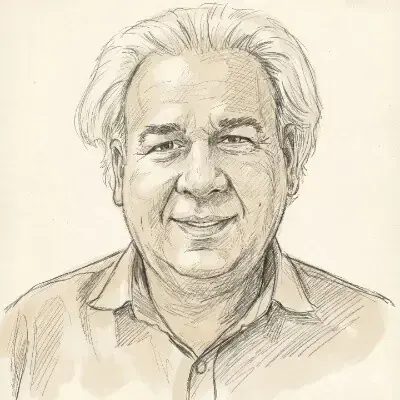
KARACHI: Former prime minister Shahid Khaqan Abbasi has said there is no better education than being in jail.
At an open question and answer session titled Nazuk Mor or New Directions with the students of the Institute of Business Administration (IBA) on Wednesday evening, Mr Abbasi while referring to his time as the prime minister, said that he had never aspired for any position.
He said that most of the time of a prime minister’s day was spent in firefighting. There’s no time to reflect because everyone’s looking towards the leader, no time to learn, so instead of being the first among equals, the PM becomes a sovereign.
“The best time to reflect is in jail. There’s no bigger education than being in jail. [Imran] Khan sahib has got time to reflect. His period as prime minister wasn’t a good one. He came [to power] through the same path that this [present] government has come. Khan sahib needs to think what he has to do.
Shahid Khaqan Abbasi says popular support is with Imran Khan; laments state of affairs in Karachi
“There’s no doubt, popular support is with him. It’s the support that came towards him because others failed. But during his tenure moral values were trampled… He has a big role to play only if he is able to learn something,” he said.
Talking about his association with Karachi, he said when he was imprisoned in 1999 by Gen Musharraf, he was kept at the University of Karachi. He was born in Karachi and went to four schools in the city. He was also in Landhi Jail for two years. He feels sad to see the state Karachi is in today.
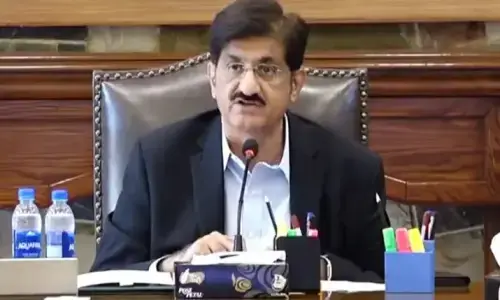
Carrying on with the argument, Mr Abbasi said the PPP is in power in Sindh for the last 17 years, but he’s surprised to know that there’s no water in Baldia Town for people to use.
“Karachi is the most critical city for Pakistan. If Karachi doesn’t work, Pakistan won’t work. The biggest problem that Pakistan is faced with is that there’s no capacity in our leadership. Politics is not a profession, it’s a responsibility.”
The former prime minister said politics is all about contribution. It’s not about taking; it’s about giving.
“Do the children sitting here in the hall know that for the first 23 years of Pakistan’s existence no elections were organised? In 1970, fair elections were held but we didn’t accept it. The constitution was made after 26 years of the country’s inception. I say, you hold one fair elections, there’s a possibility people will make mistakes. Hold another fair polls, things will get much better. In the third, people will give you an objective decision,” he said.
Mr Abbasi, who is the head of the Awam Pakistan party, said the establishment is part of the country. Everyone’s role in the Constitution is defined. The country has seen martial laws so undemocratic values have become part of the system.
“How can you fight it? The first thing that you need to do is to have moral authority. Then build intellectual capacity. The establishment means well for the country. But when it sees that it can’t trust politicians, when politicians don’t have the intellectual capacity to understand the country’s problems, then those who impose martial laws they think it’s their responsibility to set things right. The day you have moral authority and intellectual capacity, you’ll be able to stand in front of the establishment.”
The event was moderated by IBA’s Executive Director Dr S. Akbar Zaidi. After he put a couple of initial questions to the guest, the floor was opened for the students to ask questions.
In response to the first query raised by a student on his party’s ability to deal with the establishment, Mr Abbasi said what’s needed to be taken into account is that whether you want confrontation or work within the system.
“Politicians need to gain capacity and build moral authority, and then face the establishment. The decisions taken on the streets are never right… Today Pakistan needs massive reforms. Don’t you need more provinces? These things have to be discussed. Look at the water issue currently being debated. To date, no one has been able to discuss it objectively,” he replied.
He said he hasn’t made a manifesto for his party because no party implements their manifesto. “[Instead] we have made a vision document.”
Mr Abbasi said in parliamentary democracy, two-thirds majority is unnatural — a recipe for failure — because after that you’re able to amend the constitution and become a sovereign (badshah). “I have said this before: you will have to make new provinces in the country… It needs to have a national consensus, though. If it’s a sensitive matter, then devolve authority.”
Published in Dawn, April 24th, 2025