0
0

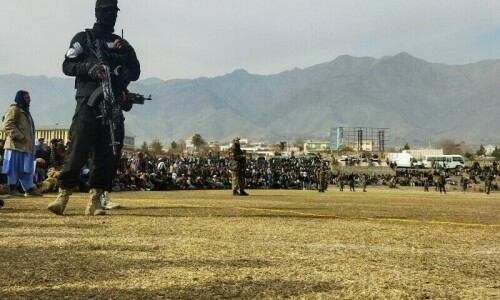
Four men were publicly executed in Afghanistan on Friday, the Supreme Court of Afghanistan said, the highest number of executions to be carried out in one day since the Taliban’s return to power.
The executions at sports stadiums in three separate provinces brought to 10 the number of men publicly put to death since 2021, according to an AFP tally.
Public executions were common during the Taliban’s first rule from 1996 to 2001, with most carried out publicly in sports stadiums.
Two men were shot around six or seven times by a male relative of the victims in front of spectators in Qala-i-Naw, the centre of Badghis province, witnesses told an AFP journalist in the city.
“They were made to sit and turn their backs to us. Relatives from the victims’ families stood behind and shot them with a gun,” Mohammad Iqbal Rahimyar, a 48-year-old spectator, told AFP.
The men had been “sentenced to retaliatory punishment” for shooting other men, after their cases were “examined very precisely and repeatedly”, the Supreme Court of Afghanistan said in a statement.
The families of the victims turned down the opportunity to offer the men amnesty, it said.
“If the family of the victim had forgiven the men it would be better, otherwise it’s God’s order, and should be implemented,” a 35-year-old man who gave his name as Zabihullah told AFP outside the stadium.
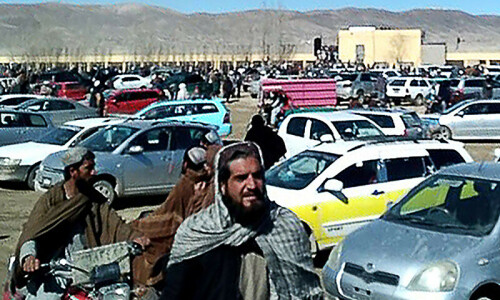
Afghans had been invited to “attend the event” in official notices shared widely on Thursday.
A third man was executed in Zaranj in Nimroz province and the fourth was in Farah city in the western province of the same name, the Supreme Court of Afghanistan said.
Amnesty International called on the Taliban authorities to halt public executions, which it called a “gross affront to human dignity”.
The previous execution was in November 2024, when a convicted murderer was shot three times in the chest by a member of the victim’s family in front of thousands of spectators, including high-ranking Taliban officials, at a stadium in Gardez, the capital of eastern Paktia province.
Corporal punishment — mainly flogging — has been common under the Taliban authorities and employed for crimes including theft, adultery and alcohol consumption.
However, all execution orders are signed by the Taliban’s ‘reclusive’ Supreme Leader Hibatullah Akhundzada, who lives in the movement’s heartland of Kandahar.
One of the most infamous images from their first rule depicted the 1999 execution of a woman wearing a burqa in a Kabul stadium. She had been accused of killing her husband.
The United Nations and rights groups such as Amnesty have condemned the Taliban government’s use of corporal punishment and the death penalty.
Amnesty included Afghanistan in countries where “death sentences were known to have been imposed after proceedings that did not meet international fair trial standards”, the non-governmental organisation said in its annual report on death sentences published in April.