0
0

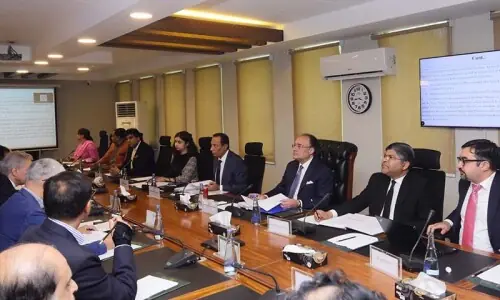
ISLAMABAD: Speakers at a conference on Wednesday stressed the importance of building a justice system that is inclusive, accountable and responsive.
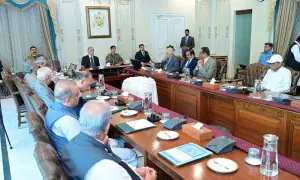
The conference titled: “From Promise to Action: Advancing SDG 16 for Justice and Reform”, was organised by the National Commission for Human Rights (NCHR) in collaboration with the European Union (EU) and the United Nations Development Programme (UNDP).
The two-day national conference which concluded here on Wednesday brought together senior officials, legal experts, and civil society members.
A statement issued here said that the conference focused on aligning Pakistan’s justice system with international human rights commitments and Sustainable Development Goal 16 (SDG 16), which promotes peace, justice and strong institutions.
The forum addressed pressing challenges across law enforcement, the judiciary, and the penal system, with particular attention to the needs of vulnerable groups including women, juveniles, and minorities.
Ambassador of the European Union Dr Riina Kionka praised the initiative, calling on institutions like the NCHR to fully embrace their role as human rights watchdogs.
“The real measure of our commitment to human rights lies not in our words, but in the impact of our actions,” she said, reaffirming the EU’s support for reforms that upheld the rule of law and fundamental rights in Pakistan.
NCHR Chairperson Rabiya Javeri Agha emphasized that justice reform required joint efforts from all stakeholders. “Governments alone cannot create justice. Civil society alone cannot ensure accountability. Donors alone cannot reform institutions. But together, through strategic collaboration, we can dismantle barriers to justice,” she said.
The conference also reflected on Pakistan’s recent progress following the NCHR’s A-status accreditation, marking the country’s fulfillment of SDG indicator 16.A.1. Building on this momentum, the dialogue explored solutions to persistent issues such as pre-trial detention, legal delays, systemic bias, and obstacles faced by marginalized communities in accessing justice.
Minister of State for Interfaith Harmony Kesoo Mal Kheal Das, underscored the moral imperative of an inclusive justice system.
“True justice is not merely the absence of crime or punishment, but the presence of fairness, the protection of human dignity, and the guarantee of equal rights for all citizens,” he said.
Dr Samuel Rizk, UNDP Resident Representative, pointed to the potential of technology to drive justice sector reform.
He cited the successful implementation of virtual courts in Khyber Pakhtunkhwa and Gilgit Baltistan, which resulted in a 130 percent increase in case hearings in KP this year. “This momentum must continue alongside people-centered reforms,” he added.
Supported by the EU and UNDP through the Huqooq-i-Pakistan II project, the conference concluded with the formation of six thematic working groups.
Published in Dawn, April 10th, 2025