0
0

ISLAMABAD: Pakistan’s headline inflation dropped to 0.7 per cent year-on-year in March 2025, marking the lowest reading since December 1965, according to data released by the Pakistan Bureau of Statistics (PBS) on Thursday.
The decline surpasses both market expectations and the Ministry of Finance’s projection, which had anticipated inflation between 1pc and 1.5pc for March. Research firm Arif Habib Limited (AHL) confirmed the 59-year low, citing State Bank of Pakistan (SBP) data.
The monthly inflation rate stood at 0.9pc, compared to a 0.8pc decline in prices in February and a 1.7pc increase in March 2024.
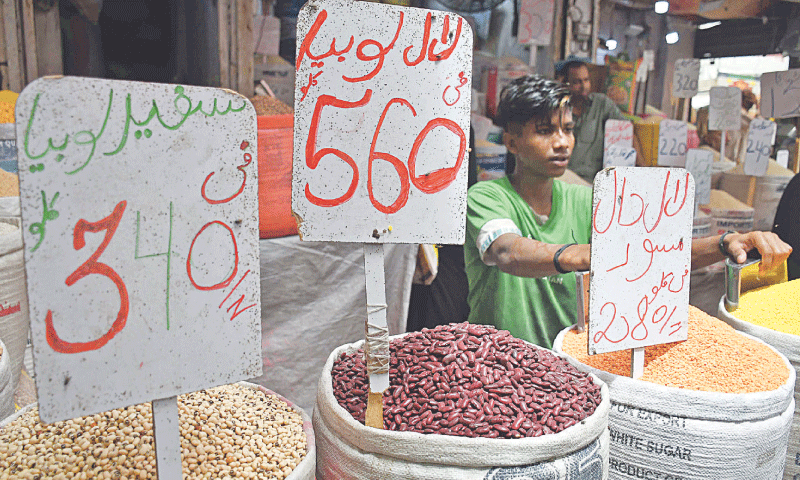
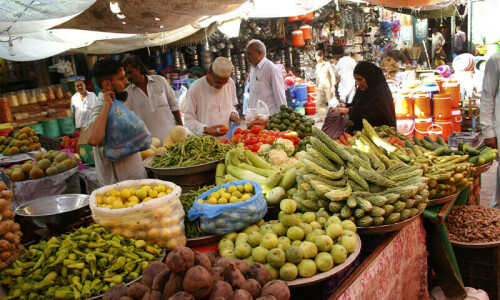
The slowdown in the inflation rate, measured by the Consumer Price Index (CPI), is primarily driven by lower prices of wheat and its by-products, perishable items like onions, potatoes, and certain pulses and a reduction in electricity charges.
These products hold significant weight in inflation calculations, making even minor price changes impactful in reducing the overall inflation rate.
The full effect of the electricity tariff cut, announced by the prime minister on Thursday, is expected to reflect in April’s inflation figures.
In contrast, sugar and edible oil prices are rising in the domestic market despite their declining rates globally. The government has permitted sugar exports, particularly to Afghanistan, citing surplus stock as the reason.
The CPI inflation dropped to 9.6pc in August 2024, marking the first single-digit figure in over three years, and a downward trend continued in the following months, except for a light spike in October.
Before that, inflation had been in the double digits since November 2021. In between, it peaked at 38pc in May 2023, driven by unprecedented food and energy prices.
Pakistan is currently experiencing disinflation, indicating a slowdown in the inflation rate. In contrast, deflation refers to a decline in overall price levels. According to PBS, average cumulative inflation over the past 50 months increased by 83pc, impacting the retail prices of all consumer items. This decline in inflation does not indicate a reduction in the cost of living.
Economic team’s efforts
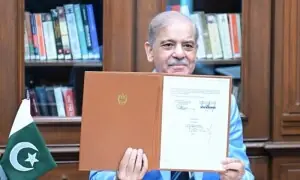
In a statement, Prime Minister Shehbaz Sharif expressed satisfaction over the continuous decline in the CPI inflation. He said that bringing the inflation down to single digits was the PML-N’s election manifesto.
The premier said that the inflation rate in the country is at its lowest level in six decades. “This year, even during the month of Ramazan, the inflation rate was recorded at its lowest level in the past several decades,” he said.
PM Shehbaz said the reduction in the inflation rate is proof of the right direction of government policies and the government’s tireless work for public welfare. He claimed that the reduction in the inflation rate also has positive effects on the lives of the common man.
In the first nine months of FY25 (July-March), inflation averaged 5.25pc compared to 27.06pc during the same period last year. Analysts attributed the decline to lower global commodity prices, stable exchange rates, a high-base effect and better agricultural outputs.
The IMF has revised its inflation forecast for FY25 down to 9.5pc from the previous estimate of 12.7pc.
Food, core inflation
In March, urban inflation stood at 1.2pc year-on-year, while rural inflation was recorded at 0pc.
The food CPI was -1.7pc in urban areas and -5.4pc in rural areas, which means the prices actually fell as compared to the previous year. In contrast, the non-food CPI was 3.1pc and 5.6pc in urban and rural areas.
Core inflation, which excludes volatile food and energy prices, was recorded at 8.2pc in urban areas and 10.2pc in rural areas in March.
Amid falling inflation, the State Bank of Pakistan has lowered the interest rate to 12pc from 22pc in successive cuts.
Urban trends
As compared to the previous year, the food items whose prices increased in urban areas included pulse moong (31.02pc), butter (23.84pc), besan (21.66pc), honey (21.02pc), milk powder (20.63pc), pulse gram (19.42pc), sugar (18.75pc), fresh fruits (18.31pc), chicken (17.20pc), meat (15.87pc), vegetable ghee (15.69pc), fish (13.42pc), mustard oil (11.81pc), milk fresh (11.20pc) and cooking oil (11.08pc).
In contrast, the food items whose prices dropped in march included onions (71.15pc), tomatoes (53.77pc), wheat (34.53pc), wheat flour (34.52pc), fresh vegetables (31.36pc), tea (17.13pc), pulse mash (15.41pc), wheat products (12.51pc), pulse masoor (12.39pc), potatoes (7.40pc) and rice (5.75pc).
In the non-food category, the items whose prices jumped included motor vehicle tax (168.79pc), footwear (31.89pc), dental services (27.20pc), medical tests (15.53pc) and drugs and medicines (15.26pc).
The items whose prices decreased included electricity charges (21.65pc), motor fuel (7.01pc), liquified hydrocarbons (3.77pc), communication apparatus (1.28pc) and washing soap/detergents/match box (0.79pc).
Rural trends
In rural areas, the food items whose prices increases year-on-year included pulse moong (29.40pc), milk powder (26.72pc), besan (21.35pc), meat (21.17pc), honey (19.97pc), pulse gram (19.94pc), fresh fruits (19.15pc), sugar (18.55pc), chicken (16.76pc), butter (16.36pc), vegetable ghee (15.92pc) and cooking oil (14.69pc).
The food items that saw a fall in food prices included onions (71.13pc), tomatoes (56.33pc), wheat flour (36.38pc), wheat (34.83pc), fresh vegetables (34.25pc), tea (15.38pc), wheat products (15.14pc), pulse mash (13.39pc), pulse masoor (7.72pc), potatoes (6.39pc) and rice (5.69pc).
In the non-food category, the items whose prices increased included motor vehicle tax (126.61pc), education (25.88pc), dental services (19.53pc), drugs and medicines (17.23pc), recreation and culture (16.43pc), cotton cloth (13.69pc), tailoring (12.71pc), plastic products (12.47pc) and stationery (12.34pc).
On the other hand, the items whose prices fell included electricity charges (21.65pc), motor fuels (7.71pc), liquified hydrocarbons (4.79pc) and washing soaps, detergents and matchbox (0.65pc).
Published in Dawn, April 4th, 2025