Torkham border crossing reopens for pedestrians after a month



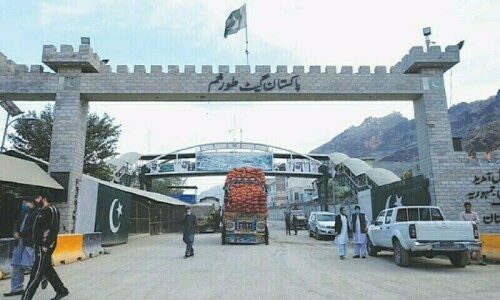
The Torkham border crossing reopened on Saturday for pedestrians after a month and thousands on both sides were in queues to cross the gate, officials said.
The Torkham border crossing reopened on Wednesday after 27 days following much-awaited parleys between jirga members of Pakistan and Afghanistan, according to a jirga leader from the Pakistani side.
The cross-border movement of people via the Torkham border crossing was abruptly suspended on February 21 after Pakistani and Afghan security forces developed differences over construction activities on both sides of the border.
The situation worsened this month when eight people, including six troops, were injured as Pakistan and Afghan Taliban forces traded fire at the border.
Afghan officials said thousands of passengers are stranded on both sides of the Torkham border due to the closure, which has caused a lot of congestion there.
The head of Afghanistan’s Nangarhar province information department asked the people to wait for at least two days so that they did not face any inconvenience due to the heavy traffic. He said the congestion would decrease in the next two or three days.
Pakistani journalist Jawad Shinwari said, “A similar situation was also witnessed on the Pakistani side as those stuck rushed to the border to cross.”
The developments come at a time when Pakistan’s special representative to Afghanistan Mohammad Sadiq met with Afghan Foreign Minister Maulvi Amir Khan Muttaqi on Saturday.
Sadiq, leading a delegation, arrived in Kabul on Friday evening for talks on bilateral issues focused on Pakistan’s security concerns over the growing violence in the country, especially in Khyber Pakhtunkhwa and Balochistan.
Pakistani officials said on Saturday that only those Afghan nationals who possessed valid visas and passports would be allowed to enter the country.
However, serious patients would cross the border in line with the old procedure.
A Khyber district resident, who works at a currency exchange shop at Torkham, told Dawn.com that the gate was reopened at 8am in the morning and there were many people on both sides.
“Pakistan is allowing only those who have passports and visas. Those who have Tazkira [ID cards] are not being allowed,” the man said. He requested not to be identified by name.
Pakistan would also previously allow Afghan Tazkira holders to cross the border crossing from its side.
The Khyber district resident further said that those patients who had entered Pakistan on medical documents and without visas were also being allowed to return.
Officials say around 100 patients and one attendant each with patients, mostly cancer patients, are allowed daily to enter Pakistan without travel documents.
On March 17, a joint jirga composed of elders and traders brokered a deal which included the reopening of the crossing, a ceasefire, and a halt to the construction of check posts on the Afghan side near the border.
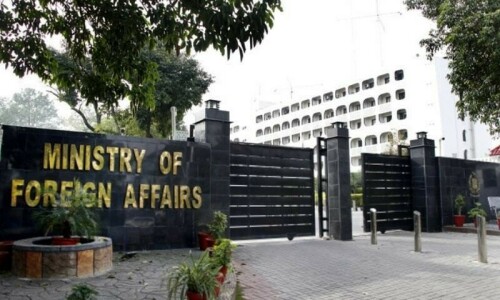
Pakistan Foreign Ministry spokesman Shafqat Ali Khan told a weekly press briefing on March 13 that the Afghan side had carried out illegal and unilateral construction activity within the Pakistani territory at two points along the Pakistan border.
On their part, Afghan Taliban officials insisted that they wanted to build check posts on their side.
Afghan Taliban officials had claimed that Pakistan had been involved in the illegal construction of towers.
Pakistani officials had clarified to the Afghan side that the towers were being built in the border terminal to facilitate traders and patients.
Sadiq meets Afghan foreign minister in Kabul
Afghan Foreign Minister Muttaqi met with Ambassador Sadiq and his delegation in Kabul on Saturday.
Bilateral relations between Afghanistan and Pakistan, political and economic cooperation, transit, and people-to-people exchanges were discussed, an Afghan foreign ministry statement said.
Pakistan’s special representative described security in Afghanistan as in the interest of Pakistan and the region and pledged to take necessary steps to provide visas to Afghans and facilitate their travel to Pakistan.
He said practical steps would also be taken to resolve existing problems in the areas of trade and transit.
The Afghan foreign minister emphasised that obstacles in transit routes and trade were not in the interest of either side and it was important that issues were not linked to each other.
The foreign minister also noted that Afghan refugees living in Pakistan should gradually return to their homeland in a dignified manner instead of being forcibly deported, according to the statement.
Both sides also emphasised holding joint meetings and delegation exchanges to resolve issues, the Afghan foreign ministry said.
Pakistan’s foreign ministry had earlier said that on the directive of Deputy Prime Minister and Foreign Minister Senator Mohammad Ishaq Dar, Special Representative Khan was undertaking an official visit to Afghanistan from March 21-23 to discuss Pakistan-Afghanistan bilateral relations.
The foreign ministry statement did not give more details.
This is the second visit of Ambassador Sadiq to Kabul in less than three months at a time when relations are at the lowest ebb due to the growing incidents of violence in the country.
Security officials insist that militant groups fighting the Pakistani state operate from Afghan soil, which the Afghan Taliban deny.
The Pakistani military and Foreign Office say that those who hijacked the Jaffar Express in Balochistan this month were in direct contact with planners in Afghanistan. The Afghan foreign ministry had denied the presence of Baloch militants in Afghanistan.