PM launches new system to ensure transparent, speedy justice



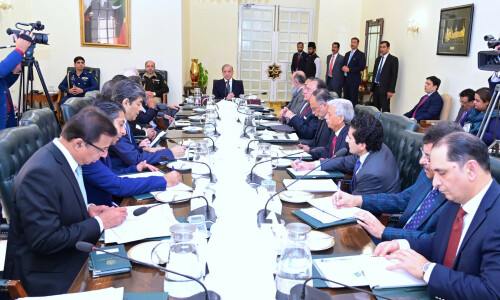
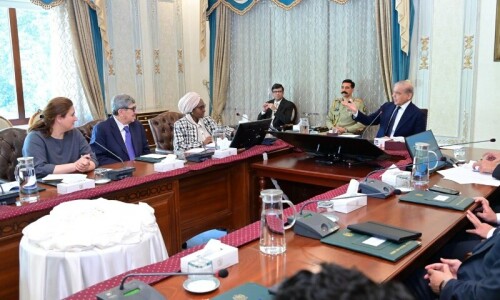
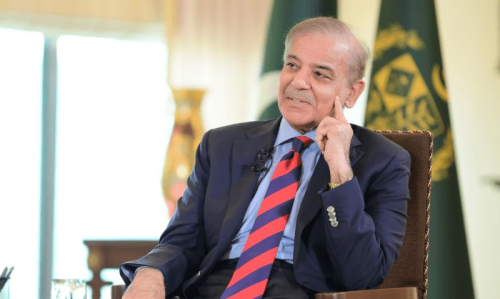
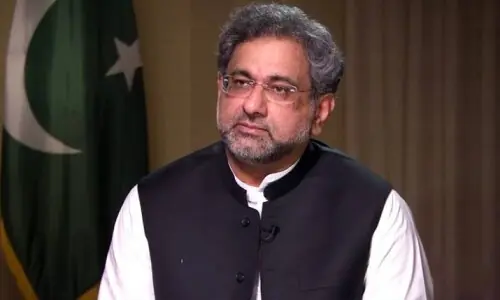
Prime Minister Shehbaz Sharif on Friday inaugurated the Case Assignments and Management System (CAMS) — a transformative initiative designed to provide transparent, efficient, and speedy justice for litigants.
CAMS is a software platform designed to efficiently track, organise, and manage individual cases within an organisation, allowing for the systematic assignment of cases to relevant personnel, monitoring progress, and ensuring timely resolution, often used in fields like customer service, legal practice, healthcare, or social work where individual issues require dedicated attention and tracking.
While addressing the inauguration ceremony in Islamabad, the prime minister highlighted the long-standing demand from applicants and litigants for a more transparent and timely justice system, which CAMS would address.
“Case Assignments and Management System was long overdue because litigants and applicants from all over the country wanted transparent and speedy justice and this initiative will go a long way to address their grievances and provide justice in a reasonable time frame,” the prime minister said.
He thanked the United Nations Office on Drugs and Crime (UNODC) and the Canadian High Commission for providing funds for the project.
The prime minister mentioned that although, in the past, a track and trace system was introduced in the Federal Board of Revenue (FBR), it did not yield the desired results, ultimately failing.
However, he emphasised that due to his involvement, the current government had successfully launched an effective and efficient system that was now benefiting the people.
“FBR is now having a trial run of faceless interaction at Karachi port, and once it is fully operational, it will then be replicated at various seaports, dry ports and other places all over the country,” he said.
He regretted that trillions of rupees had been delayed for decades due to corruption and lack of modern technology techniques.
“I have been personally following this,” Shehbaz said adding that a couple of days later, he also met the chief justice of Pakistan to request him to ensure speedy decisions on merit because trillions of rupees worth of cases were pending at the tribunal level, at higher forums, high court, and supreme court.
The prime minister pointed out that Pakistan was meant to take the lead in the world due to its tremendous natural and human resources.
“What has been lacking is ‘will to do’, had we utilised these factors earlier, Pakistan would have been transformed long ago.”
The premier expressed his resolve to recover “each penny that was due for the betterment of the people.”
He mentioned that after making the mechanism functional, an amount of Rs24 billion was adjudicated by the Sindh High Court on merit and this money will now be deposited in the national exchequer.
Minister for Law and Justice Azam Nazeer Tarar, on the occasion, informed that 98.5 per cent of the federal government’s official work was now conducted through technology via the e-business portal.
He said the prime minister had always expressed concern over delays in the judicial system, and now the federal laws had been put on a mobile app, ensuring amendments were updated swiftly.
“Our response time for amendments is now just 48 hours,” he added.
UNODC Country Representative Troels Vester highlighted that the office was committed to improving the justice system by making it faster, more efficient, and fairer for all through effective oversight mechanisms.
He extended appreciation to PM Shehbaz’s leadership in driving government reforms, particularly in modernising Pakistan’s justice sector.
Vester said this launch aligned directly with the premier’s e-office initiative, and the UNODC was grateful for the support from the Ministry of Law and Justice and its team, whose hard work had turned this vision into reality.
High Commissioner of Canada to Pakistan Leslie Scanlon said this milestone was significant for the Ministry of Law and Justice and showcased how Pakistan’s government was embracing automation, promoting digitalisation, and fostering transparency.
Additionally, she said it also highlighted the government’s commitment to environmental conservation by reducing paper waste. The prime minister also presented certificates of appreciation to the team members for their hard work.