WASHINGTON: A US watchdog report released last week reinforces the Trump administration’s stance that American aid to Afghanistan has been largely ineffective, failing to sway Taliban policies or their style of governance.
Despite nearly $3.71 billion in US expenditures since the 2021 withdrawal, the Afghan Taliban remain defiant, continuing to suppress rights, restrict media, and maintain ties with terrorist networks.
The report by the US Special Inspector General for Afghanistan Reconstruction (SIGAR) warns that US assistance “has not dissuaded the Taliban from taking US citizens hostage … or allowing the country to become a terrorist safe haven.”
The Taliban have continued to “dismantle the rights of women and girls, censor the media, and target former Afghan government officials,” the report adds.
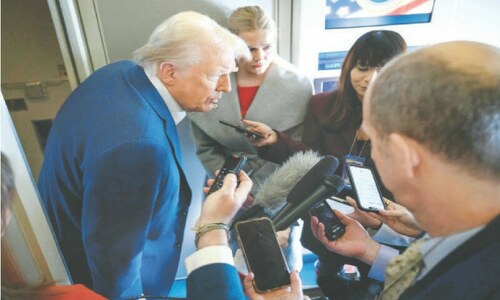
The report was sent to Congress on Friday, days after President Donald Trump ordered a 3-month suspension of all foreign development assistance to reassess its effectiveness, particularly in conflict zones like Afghanistan.
It strengthens the case for this pause, arguing that ongoing US funding lacks legal or moral justification, given the Taliban’s unchanged behaviour.
Billions spent
Since the US withdrawal, over 64 per cent of aid has flowed through UN agencies and the World Bank’s Afghanistan Resilience Trust Fund. However, SIGAR found no evidence that these funds have softened Taliban rule or prevented Afghanistan from becoming a terrorist safe haven.
The report also highlights the Taliban’s continued detention of US citizens, a direct challenge to Washington’s efforts to use financial assistance as leverage.
The report acknowledges that some humanitarian aid has helped stave off famine, but notes that broader objectives—such as counterterrorism and human rights protections — remain unfulfilled. The report questions whether continued aid serves any strategic purpose if it fails to curb Taliban repression.
Frozen assets
The SIGAR report also reignites debate over Afghanistan’s frozen central bank reserves. After the Taliban’s takeover in 2021, then-President Joe Biden froze $7 billion in Afghan assets held in the US, later transferring $3.5 billion to a Swiss-based fund for humanitarian relief. However, SIGAR notes that no payments have been released, and the fund has since grown to nearly $4 billion with accrued interest.
With aid programmes under review, SIGAR suggests Washington and Congress may consider reclaiming these assets, arguing that they have neither benefited the Afghan people nor given the US any leverage over the Taliban. Officials in Kabul have strongly opposed this idea, calling it an unjust move that harms Afghanistan’s economy.
The report, however, points out that the Taliban demand access to funds they have “no legal right to under US and international law,” yet they refuse to meet even the most basic conditions that would justify such a transfer.
Published in Dawn, February 3rd, 2025