Gazans’ joy at ceasefire dims as they visit ruined homes, dig for the dead


• Some Palestinians could not even recognise where they once lived and turned back to tents
• UN says clearing over 50m tonnes of rubble left in the aftermath of Israel’s bombardment could take 21 years and cost up to $1.2bn
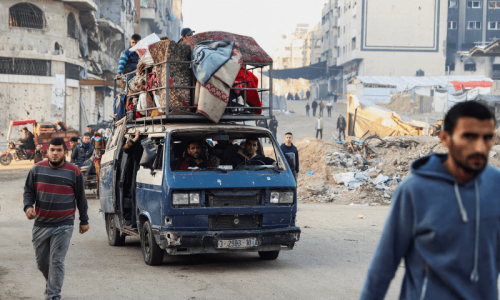
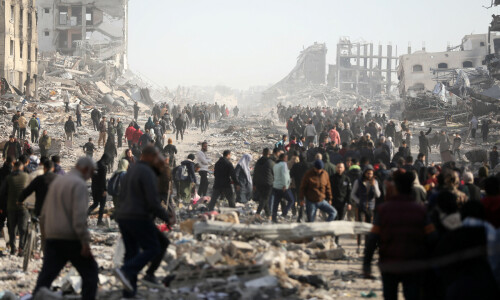
CAIRO: On foot or riding rickshaws, many Palestinians exhausted by conflict in Gaza began returning to the ruins of their homes on the third day of a ceasefire between Israel and Hamas, shocked by total destruction.
The truce took effect on Sunday after 15 months of conflict with the handover of the first three prisoners held by Hamas and the release of 90 Palestinians from Israeli jails.
Now attention is shifting to the rebuilding of the coastal enclave, which the Israeli military has reduced to vast tracts of rubble in its campaign to wipe out Hamas.
Some Gazans could not even recognise where they once lived and turned their back on shattered neighbourhoods to return to tents where they have sheltered for the past several months. Others began to clear debris to try to move back to the wreckage of their homes.
“We are cleaning the house, and removing the rubble, so we are able to return home. Those are the quilts, pillows, nothing was left at the house,” said Palestinian woman Walaa El-Err, pointing to her destroyed belongings at her bombed-out home in Nuseirat, a decades-old refugee camp in central Gaza.
She said the feeling of returning to her neighbourhood was “indescribable”. She said she’d stayed up all night on Saturday waiting for the truce to take effect the next day. But the optimism surrounding news of a ceasefire has faded.
“When I went into the camp, I teared up, as our camp was not like that, it was the best. When we left all the towers (and) homes were still untouched, and none of the neighbours had been killed,” she lamented.
In Gaza City in the enclave’s north, Abla, a mother of three children, waited for a few hours to make sure the truce held on Sunday before heading to her home in the Tel Al-Hawa suburb, demolished by Israeli bombardments and ground offensives.
The scene was “horrific” she said, as the seven-floor building had been levelled, “smashed like a piece of biscuit”.
“I heard the area was hit hard and the house could have been gone, but I was driven by both doubt and hope that it could have been saved,” she said via a chat app.
“What I found wasn’t just a house, it is the box of memories, where I had my children, celebrated their birthday parties, made them food, and taught them their first words and moves,” she said.
UN estimate
Some set up tents next to the rubble of their houses, or moved into wrecked homes, wondering when reconstruction would begin.
A United Nations damage assessment released this month showed that clearing over 50 million tonnes of rubble left in the aftermath of Israel’s bombardment could take 21 years and cost up to $1.2 billion.
To make matters worse, some of the debris is believed to be contaminated with asbestos, as some of Gaza’s devastated refugee camps, built up into cities since the 1940s, are known to have been constructed with the material.
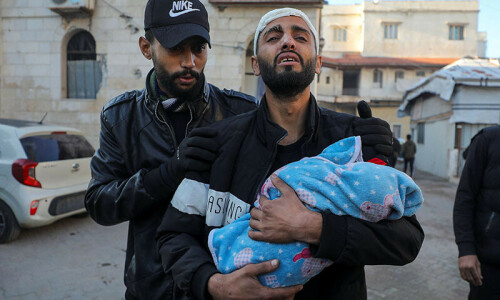
Gaza health authorities say at least 47,000 people have been killed in the conflict, with the rubble likely holding the remains of thousands more.
A UN Development Programme reports says that development in Gaza has been set back seven decades by the war.
“They (Gazans) are able to return home… It’s a bit of a stretch of the imagination, I would say, to call it homes, because mostly, particularly in the north, it’s mountains of rubble that they find. So they need help with that,” Jens Laerke, spokesperson for the UN office for the Coordination of Humanitarian affairs, told a Geneva press briefing on Tuesday.
Digging for bodies
Palestinian rescue workers continued the search for remains of Gazans buried under the wreckage of their houses and along the roadsides, locating at least 150 bodies since the truce went into effect, according to the Gaza civil emergency service.
Shocking images of decayed bodies spread on social media. At Shejaia cemetery, which had been flattened by Israeli tanks and bulldozers in previous months, several men dug up the ground searching for the graves of their relatives.
“I have been searching and looking for my fathers grave, my brothers grave and my brothers wifes grave, and I cant find them,” Atef Jundiya, said at the cemetery in Gaza City.
“I mean, we are relieved by the ceasefire, but at the same time, we are still searching for our martyrs and searching for our graves and cant find them,” Jundiya said.
The civil emergency service estimates that 10,000 bodies remain under the rubble, calling for heavy machinery and earth-moving vehicles to help in the extraction process, which officials expect to last for several months.
Published in Dawn, January 22th, 2025