South Korea inspects B737-800 fleet after worst plane crash



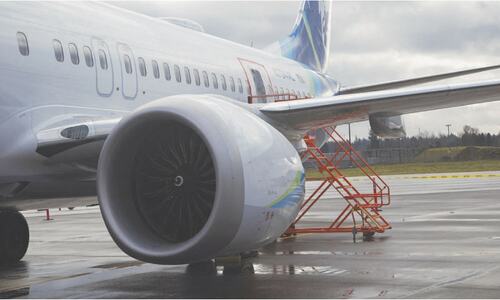
South Korea ordered on Monday a “comprehensive inspection” of all Boeing 737-800 aircraft operated by the country’s carriers, after a Jeju Air plane crash-landed and burst into flames, killing 179 people on board.
US air safety officials and staff from the beleaguered aircraft maker Boeing were arriving to join investigators probing the worst air disaster on South Korean soil, which officials initially blamed on a collision with birds.
The plane was carrying 181 people from Thailand to South Korea when it made a mayday call and belly-landing before crashing into a barrier and bursting into flames.
Everyone aboard Jeju Air Flight 2216 was killed, save two flight attendants pulled from the wreckage.
South Korea began seven days of mourning, with flags flying at half-mast and the acting president flying to the crash site in southwestern Muan for a memorial.
Acting President Choi Sang-mok, who has only been in office since Friday, said the government was making “every effort” to identify victims and support bereaved families.
Choi, an unelected bureaucrat who became acting president after his two predecessors were impeached, said a “thorough investigation into the cause of the accident” would be conducted.
He also said South Korea would conduct “an urgent safety inspection of the overall aircraft operation system” to prevent future aviation disasters.
South Korea has a solid air safety record and both black boxes from Flight 2216 — the flight data recorder and the cockpit voice recorder — have been found.
Officials have so far identified 146 victims using DNA analysis or fingerprint collection, said Deputy Minister for Civil Aviation Joo Jong-wan.
“As for the comprehensive inspection, maintenance records of key systems such as engines and landing gear will be thoroughly reviewed for 101 aircraft operated by six airlines using the same model as the accident aircraft,” he said.
“This process will be carried out intensively starting today and continuing until January 3, 2025.”
Memorial
Victims’ families camped out at the airport overnight in special tents set up in the airport lounge after a long, painful day waiting for news of their loved ones.
“I had a son on board that plane,” said an elderly man waiting in the airport lounge, who asked not to be named, saying that his son’s body had not yet been identified.
At the crash site early Monday, a middle-aged man and woman kept their gaze fixed through the fence, where remnants of the plane — seats, gates, and twisted metal parts — were still scattered across the field near the charred tail.
Soldiers carefully combed through a field of reeds next to the runway, engaged in what appeared to be a search for body parts.
The passengers, aged from three to 78, were all Korean apart from two Thais, authorities said.
Low-cost carrier Jeju Air said it “sincerely” apologised, with top officials shown bowing deeply at a news conference in Seoul.
Another Jeju Air flight using the same model aircraft experienced a malfunction linked to the landing gear and was forced to return to Seoul’s Gimpo International Airport shortly after takeoff Monday, the airline said.
The company’s share price dropped as much as 15 per cent on Monday, with anxious customers also cancelling some 68,000 flights with the airline, Jeju Air told AFP.
Criticism
A growing chorus of criticism from experts analysing dramatic video footage of Flight 2216’s landing has focused on whether airport construction could have played a part.
Kim Kwang-il, professor of Aeronautical Science at Silla University and a former pilot, said he was “quite upset” when he reviewed the video showing the plane making a skilled emergency landing but then hitting a wall.
“There shouldn’t have been a solid structure in that area at all,” he told AFP.
“Normally, at the end of a runway, there’s no such solid obstruction — it’s against international aviation safety standards,” he said.
“The structure in question caused the aircraft to crash and catch fire.”
“Outside the airport, there are usually just fences, which are soft and wouldn’t cause significant damage. The plane could have skidded further and stopped naturally. The unnecessary structure is highly regrettable.”