Govt eyes 13.5pc tax-to-GDP ratio in three years


 0
0


• Senate committee debates new tax amendment bill; finance minister stresses need for strict enforcement of tax laws
• Shibli Faraz asks whether proposed tweaks should be classified as a money bill
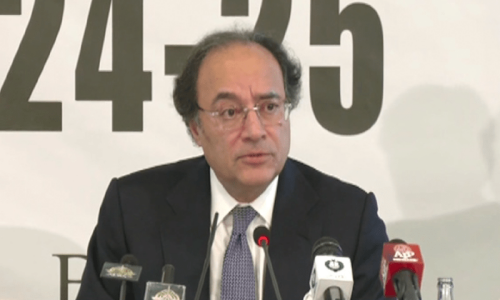
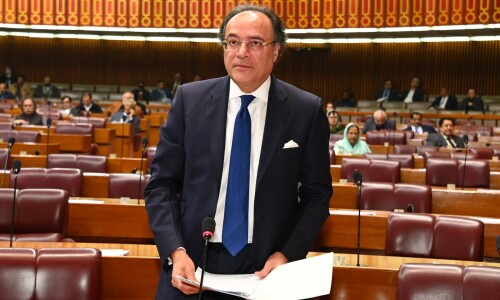
ISLAMABAD: Finance Minister Muhammad Aurangzeb on Tuesday announced the government’s plan to increase the tax-to-GDP ratio from the current 10 per cent to 13.5pc within the next three years, stressing that the proposed amendments to tax laws would improve tax collection and compliance in the country.
The minister made these remarks during a meeting of the Senate Standing Committee on Finance and Revenue, chaired by Senator Saleem Mandviwalla. The session was convened to deliberate on the Tax Laws (Amendment) Bill 2024 but was postponed due to a lack of quorum after a brief debate on sales tax.
Mr Aurangzeb underscored the need for strict enforcement of tax laws, questioning why many citizens were willing to pay taxes but reluctant to register. He emphasised that unregistered individuals would be brought into the tax net.
The finance minister also announced plans for the Federal Board of Revenue (FBR) to undergo full digitalisation to reduce human interaction and enhance efficiency. FBR’s performance will be reviewed as part of the tax transformation plan, and the second phase of “rightsizing” is expected soon.
He further stated that significant progress is anticipated in the next six months regarding the separation of the Tax Policy Unit from the FBR, a move aimed at ensuring a more transparent tax collection system. The proposed amendments, he said, are designed to ensure fair taxation based on individual incomes.
Bill classification
During the meeting, Leader of the Opposition Senator Shibli Faraz raised concerns over whether the proposed amendments should be classified as a money bill or an ordinary bill. In response, Secretary for Law and Justice Raja Naeem Akbar clarified that under Articles 73(2) and 75 of the Constitution, the bill falls under the category of a money bill.
Mr Faraz stressed the need to restore public confidence in tax authorities, asserting that no meaningful progress could be achieved without public trust. The finance minister outlined the government’s “People Process Technology” initiative, aimed at rebuilding trust and modernising tax systems.
He reiterated the government’s empathy towards the salaried class and stressed that efforts were underway to create a fair balance between different socioeconomic classes.
FBR Chairman Rashid Langrial revealed that of the 62,000 registered entities, only 42,000 are actively paying sales tax. He highlighted the ethical responsibility of paying sales tax, describing its evasion as more unethical than income tax evasion.
Mr Langrial noted that the amendments do not introduce new taxes but aim to address non-filing and under-filing issues. He explained that in cases of non-compliance, firms and their moveable goods would be seized. The disparity between income declarations and actual spending, he said, remains a significant challenge.
When Mr Faraz inquired about the potential impact of amendments on broadening the tax base, the FBR chairman predicted that the tax-to-GDP ratio could reach around 13pc over the next four to five years through increased revenues from sales tax, income tax and customs duties. He also emphasised the growing role of technology in improving sales tax registration and compliance.
The finance minister reassured the public that 95pc of citizens would not be affected by the new amendments. He also noted that provinces currently collect only 0.8pc to 0.9pc of taxes, while the FBR collects 1pc through the petroleum development levy.
Published in Dawn, December 25th, 2024