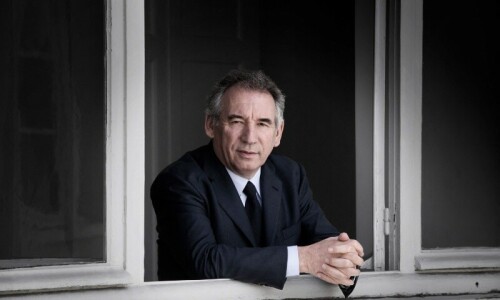
French President Emmanuel Macron named a new government on Monday evening putting together a team under Francois Bayrou, his fourth prime minister of the year, to drag the second-largest EU economy out of a political crisis.
Macron named former prime minister Elisabeth Borne as education minister in a new cabinet under centrist Bayrou, the presidency said.
Another former premier, Manuel Valls, returned as overseas territories minister while former interior minister Gerald Darmanin became justice minister.
Both Defence Minister Sebastien Lecornu and Foreign Minister Jean-Noel Barrot kept their jobs, the presidency said.
Conservative Interior Minister Bruno Retailleau, who has vowed to crack down on illegal immigration, also stayed in his post.
The difficult job of delivering a budget plan for next year falls to Eric Lombard, the new economy minister.
The inclusion of two former prime ministers indicates Macron’s desire for a heavyweight government that will enjoy stability and not share the fate of Bayrou’s predecessor Michel Barnier.
The priority for 73-year-old Bayrou is to make sure his government can survive a no-confidence vote and that it passes a cost-cutting budget for 2025.
The unexpected comeback of Valls, premier from 2014 to 2016, as the head of the overseas territories ministry indicates the importance of the post after authorities were strongly criticised for their response to the deadly cyclone on the Indian Ocean territory of Mayotte, which killed at least 35 people.
Darmanin had long been known to covet the post of foreign minister but after days of intense discussions will have to content himself with the justice ministry.
The announcement came as France observed a day of mourning for the victims in the cyclone-hit Indian Ocean archipelago of Mayotte, France’s poorest overseas territory.
Bayrou, the head of the centrist MoDem group, which is allied to Macron’s party, was appointed on December 13. Many already predict Bayrou will struggle to survive.
France has been mired in deadlock since Macron gambled on snap elections this summer in the hopes of bolstering his authority. The move backfired, with voters returning a parliament fractured between three rival blocs.