Third monkey dies of electrocution in Margalla National Park

The death of a monkey from electrocution in Islamabad’s Margalla Hills National Park has triggered urgent calls for stricter regulations and heightened public awareness regarding human interactions with wildlife, the Associated Press of Pakistan reported.
The incident occurred earlier this week involving a rhesus monkey fatally electrocuted while climbing power lines in search of food, marking the third such fatality in recent months, underscoring the growing dangers of human feeding habits.
Activists and animal organisations in Pakistan have repeatedly called for legislation to improve animal welfare and strict action against animal abuse.
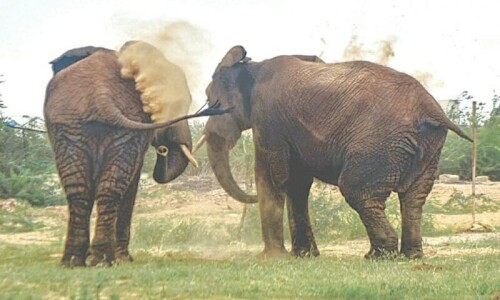
On Dec 8, an African elephant Sonia died in Karachi’s Safari Park only a few days after she was reunited with her sister Madhubala who had been living in solitary confinement. Sonia’s death alarmed authorities and activists highlighting the prevalence of animal neglect.
According to Sana Raja, a wildlife rescuer, the monkey climbed the electrical infrastructure in search of food scraps left by park visitors.
She said that human feeding has conditioned the animals to associate humans with food, pushing them into unsafe areas like roads or power lines. Sana further told APP that human feeding disrupts the instincts of monkeys.
“Monkeys are highly intelligent and opportunistic creatures. When visitors feed them, it conditions them to associate humans with food. This not only leads to unnatural behaviours but also draws them into hazardous environments, such as roads or areas with electrical infrastructure,” she said.
She added that the overpopulation of rhesus monkeys in the park was a direct consequence of human feeding habits.
“Their numbers have grown manifold over the years, causing increased competition for resources, injuries, and aggression toward humans. Many monkeys suffer severe health issues from eating trash, including fungal infections in their digestive systems,” she said.
Environmental experts have raised concerns about the broader ecological impact.
Sakhwat Ali, an environmental scientist warned, “Feeding wildlife disrupts ecosystems. Monkeys and other animals may abandon their natural diet, leading to malnutrition and aggression within populations.
“This not only affects their health but also creates an imbalance in the ecosystem, putting undue pressure on human-animal coexistence.”
Many park visitors expressed regret over the monkey deaths, admitting they were unaware of the consequences of their actions.
“I thought I was helping by sharing my snacks with them,” one visitor stated, “Now I see it’s more harmful than I imagined. I’ll think twice in the future.”
Others expressed sorrow urging the need for stricter rules.
“It’s heartbreaking. We need better education and enforcement to stop this,” said Sadia Babar, a frequent visitor to the park.
Umar Bilal, spokesperson for the Islamabad Wildlife Management Board (IWMB), said “These deaths are preventable. We appeal to the public to help us protect our wildlife by following the guidelines.”
He said the IWMB has ramped up efforts to curb harmful practices. Park rangers are intensifying patrols, distributing educational materials, and urging visitors to follow park rules prohibiting feeding and littering.
“The public must understand that their actions have consequences,” Bilal said.
“By respecting park guidelines, visitors can play a crucial role in safeguarding our wildlife and ensuring a safer environment for all species,” he added
To prevent further tragedies, conservationists and environmentalists are advocating for stricter penalties for violations, increased signage to educate visitors, installation of monkey-proof waste bins to discourage scavenging and ongoing public awareness campaigns.
As the Margalla Hills National Park has grappled with the challenges of preserving its natural habitat, the responsibility lies not just with authorities but with every visitor.
By respecting nature and its inhabitants, the delicate balance of the ecosystem can be protected for generations to come.