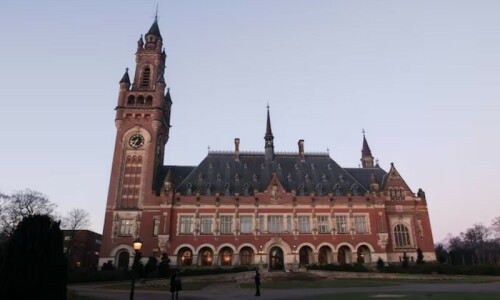
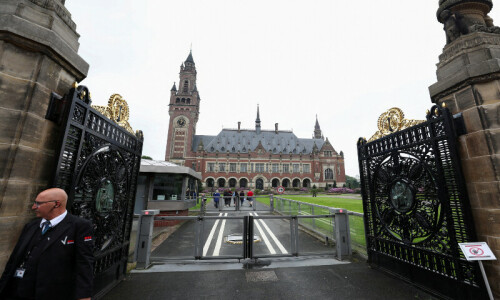
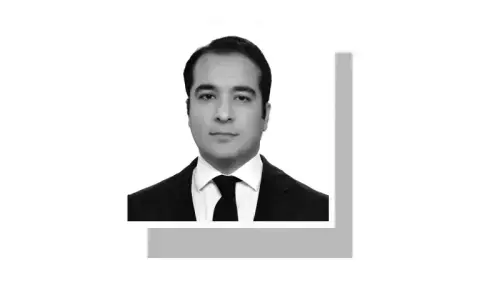
ISLAMABAD: Attorney General for Pakistan (AGP) Mansoor Usman Awan on Thursday urged the International Court of Justice (ICJ) to deliver an advisory opinion that adequately addresses the challenges posed by climate change.
“For the human race, turning a Nelson’s eye to the climate emergency is no longer an option,” emphasised the AGP during his address at the ICJ’s public hearing on climate change.
“If the lives and livelihoods are to be protected and if we want to avoid utter catastrophe, there is simply no time to lose. We are the first generation to feel the impact of climate change and undoubtedly the last generation that can do something about it,” he explained, outlining the “apocalyptic” impacts of climate change on Pakistan’s population and economy.
The AGP highlighted the devastating 2022 floods, which submerged one-third of Pakistan’s territory, impacted 33 million people, and resulted in reconstruction costs estimated to exceed $16 billion.
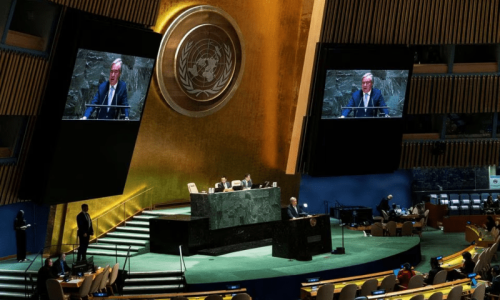
He also cited remarks from the UN secretary general’s 2022 address to the UN General Assembly, noting: “Pakistan contributed less than one per cent of global GHG emissions but its people are 15 times more likely to face death from climate-related impacts than other states.”
AGP urges ICJ to issue advisory opinion on crisis
Pakistan emphasised that the Paris Agreement under the UNFCCC serves as the primary framework for addressing climate obligations, which must align with principles of equity and CBDR-RC. These obligations encompass climate finance, mitigation, cooperation, and mechanisms for resolving disputes related to treaty obligations established within these agreements.
Furthermore, Pakistan asserted that the obligation of prevention — rooted in due diligence — operates alongside treaty obligations and forms part of applicable international law.
The AGP explained that due diligence requires a case-specific assessment of potential harm and referred to several conventions as evidence of the obligation’s application to diffuse harm, such as GHG emissions. These include the UNFCCC, the Vienna Convention for the Protection of the Ozone Layer, the Convention on Long-Range Transboundary Air Pollution, and the UN Convention to Combat Desertification.
Rejecting arguments that the UNFCCC and Paris Agreement constitute lex specialis, Pakistan contended that these treaties do not override stricter obligations under general international law.
In the context of GHG emissions, they underscored that claiming ignorance is no excuse.
Published in Dawn, December 13th, 2024