Sri Lanka’s president makes U-turn on IMF bailout


Sri Lanka’s new leader on Thursday backed a controversial bailout of the International Monetary Fund (IMF), marking a U-turn from his election pledge to renegotiate the deal secured by his predecessor.
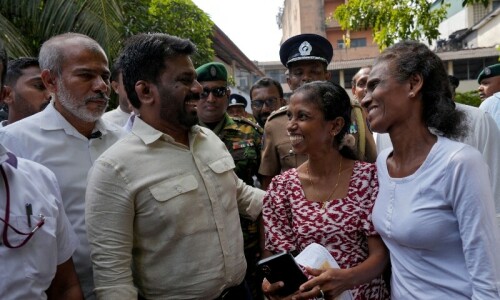
Leftist President Anura Kumara Dissanayake, who tightened his grip on power last week after winning a huge majority in the legislature following his own victory in September, vowed to maintain the IMF programme.
Sri Lanka went to the IMF for a rescue package after the country defaulted on its $46 billion external debt in April 2022 during an unprecedented economic meltdown.
The shortage of foreign exchange that left the country unable to finance even the most essential imports of food and fuel led to months of street protests and forced then-president Gotabaya Rajapaksa to resign.
The $2.9bn loan secured early last year required Colombo to sharply raise taxes, remove generous energy subsidies and agree to restructure more than 50 loss-making state enterprises.
Dissanayake’s National People’s Power party had said it did not agree with the International Monetary Fund’s debt assessment and would renegotiate the bailout programme.
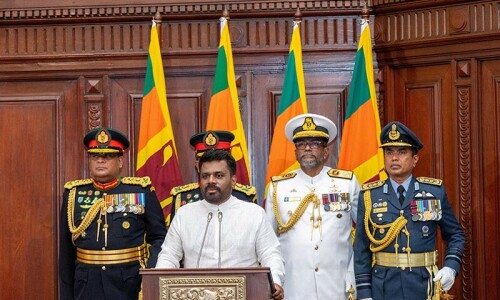
But in his first address to the new parliament, where his party enjoys a two-thirds majority, Dissanayake said the economic recovery was too fragile to take risks.
“The economy is in such a state that it cannot take the slightest shock […] there is no room to make mistakes,” he said as he ruled out negotiations with either the IMF or creditors.
“This is not the time to discuss if the terms are good or bad, if the agreement is favourable to us or not […] The process had taken about two years and we cannot start all over again,” he said.
The delayed third review of the four-year loan programme could be concluded by this weekend, with the finance ministry holding talks with a visiting IMF delegation in Colombo, he added.
Sri Lanka expects the next tranche of about $330 million following an early approval from the board of the international lender of last resort.
Dissanayake’s interim cabinet last month signed off on a controversial restructuring of $14.7bn in foreign commercial credit tentatively agreed by predecessor Ranil Wickremesinghe.
The debt restructuring is a key IMF demand to rebuild the island’s economy, which suffered its worst crisis in 2022 when it shrank 7.8 per cent.
The dissatisfaction with traditional politicians held responsible for the economic collapse was a key driver of Dissanayake’s electoral success.
In June, the government concluded a deal with its bilateral lenders to restructure its official credit amounting to $6bn, but formal agreements are yet to be signed.
Under the deal announced on September 19, private creditors holding more than half of international sovereign bonds and foreign commercial loans to the South Asian nation agreed to a 27pc haircut on their loans.
They also agreed to a further 11pc reduction on the interest owed to them. International sovereign bonds account for $12.5bn and the balance of $2.2bn is owed to the China Development Bank.