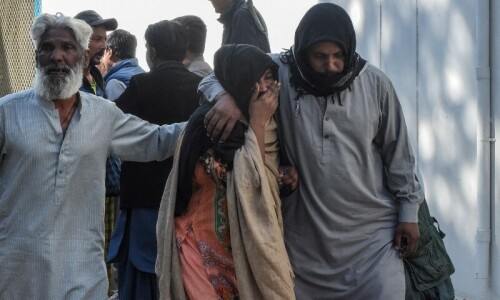
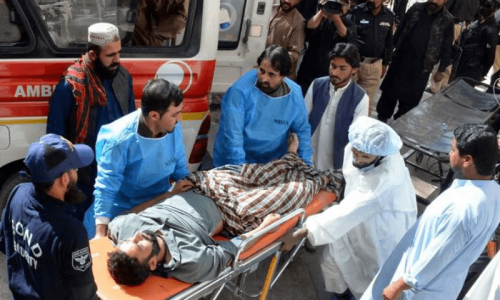
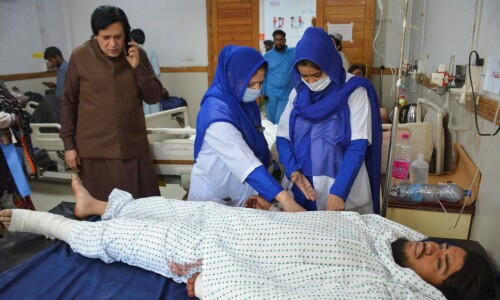
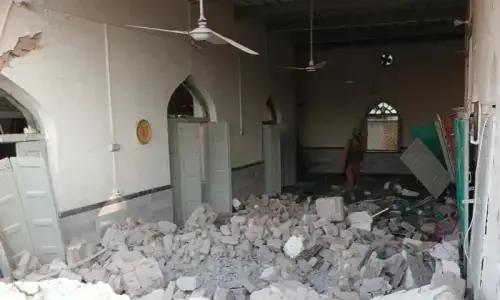
THERE appears to be no end to the stream of violent incidents occurring in Balochistan, indicating a clear failure by the state to provide security to this troubled region. Saturday morning’s suicide bombing targeting Quetta railway station is the second major terrorist attack in the province within a span of 10 days.
On Nov 1, terrorists struck Mastung, causing the death of several children, among other victims. According to media reports, security personnel were the main targets of the latest tragedy, though there were also a significant number of civilian victims.
At least 26 people were martyred in the brutal act, which has been claimed by the banned Balochistan Liberation Army. Bombing a public transport hub is a clear act of terrorism, and by employing such deplorable tactics, separatist groups have shown themselves to be just as vicious as other violent non-state actors.
At this time, Balochistan faces threats from violent separatists, as well as religiously inspired outfits. Over the past few months, there have been several high-profile terrorist attacks, but the administration has yet to come up with a solid counterterrorism approach. Apart from Saturday’s bombing and the Mastung atrocity, 21 miners were massacred in Dukki last month. The provincial CTD believes the BLA was involved in the Dukki attack.
Meanwhile, in August, several apparently coordinated attacks rocked the province. There have also been numerous grisly murders targeting labourers, including two separate incidents in Panjgur in September and October. In many of these attacks, workers from Punjab have been murdered by terrorists.
According to the Pips think tank, there were nine terrorist attacks in Balochistan last month — the second highest tally nationally after KP — which resulted in 30 deaths. The organisation says that the banned TTP is also trying to find a foothold in the province’s Pakhtun areas.
The people of Balochistan are caught between various strands of militants who are growing increasingly bloodthirsty, and the heavy-handed response of the state, which often hauls away innocent people in the name of fighting terrorism. They deserve better; mainly, a state CT policy that respects human rights and also succeeds in neutralising the militant threat to the public and security personnel.
Lasting peace can only come to Balochistan through short-term law-enforcement operations and long-term strategies that can address the poor socioeconomic situation in the province that fuels separatist sentiment. Moreover, the province’s popular leaders must be allowed, through an unhindered democratic process, to formulate and execute public policy. The immediate need is to counter the various violent actors causing insecurity. And if foreign elements are involved in fuelling unrest, they must be identified and confronted. The people of Balochistan need to be protected from terrorist groups, and the growing tide of militancy must be checked.
Published in Dawn, November 10th, 2024