Economy is on the mend: Aurangzeb


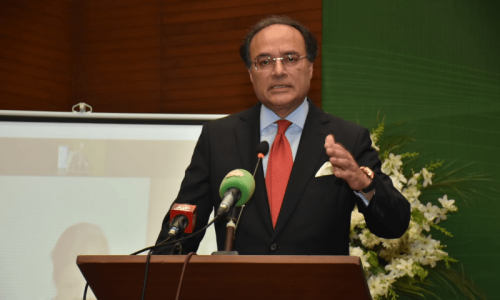
KARACHI: The country’s latest macroeconomic indicators reflect the positive developments that are reshaping its economic foundations in line with benchmarks set by international agencies for better ratings, said Finance Minister Mohammad Aurangzeb on Wednesday.
Addressing the eighth edition of ‘The Future Summit’, jointly organised by Unity Foods and Nutshell Conferences Group, he said a stable rupee, improved foreign exchange reserves, declining inflation and a reduction in interest rate were all signs of a booming economy.
“Pakistan’s credit rating has improved and further improvement is expected this year,” he added.
Macroeconomic stability, with improvements in twin deficits (fiscal and current account) are reshaping the economy, the minister observed.
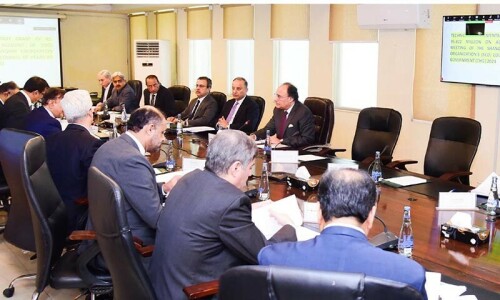
He said food inflation is also decreasing in the country. For any issues or obstacles, tough decisions are made, he said, adding that the Economic Coordination Committee reviewed the prices of chicken and pulses.
Minister confident credit rating will improve further
Despite global price drops and cheaper fuel and transportation costs, the prices of pulses have increased by 60 per cent and chicken by 15 per cent.
He said the government has been getting a positive feedback for its economic reforms.
“The government needs to fix issues like taxes, energy, finances and pensions. Pakistan’s past has not been perfect and the country sometimes got off the track.”
He said reforms were never glamorous, but were unavoidable for good governance. Less human involvement also improves customer service, he added.
If reforms were easy, these would have been done years ago, the finance minister said.
Mr Aurangzeb said there was a need to develop bankable and viable projects to attract investment. Foreign direct investment (FDI) should ideally boost exports; otherwise, currency challenges will arise. Steps were needed to direct FDI towards the export sector and the country should aim to enter the international capital market.
The minister said that even before the policy rate was lowered, the Karachi Interbank Offered Rate (Kibor), the main benchmark for the private sector, had already dropped. Now banks can lend to the private sector at lower costs, he added.
Appeal to private sector
The minister said the private sector needs to grow its business and increase productivity.
He stressed the private sector needs to take the lead in research, without relying on the government. He questioned the impact of government research institutions, saying that had they been effective, agriculture would have fared much better.
“The government will support the private sector in research,” he said, adding that he believes things improve when the government steps back. He recalled that when the government stopped regulating the rice and maize trade, there were no scandals in those sectors.
He said rapid population growth is a threat to the country since 40 per cent of children below five years of age are suffering from malnutrition.
Along with other speakers, Yousuf Hussain, President of the Overseas Chamber of Commerce and Industry also addressed the Summit and said that OICCI has developed a policy to enhance its role in Pakistan’s economy.
Published in Dawn, November 7th, 2024