0
0

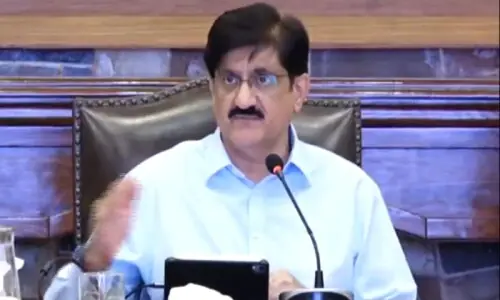
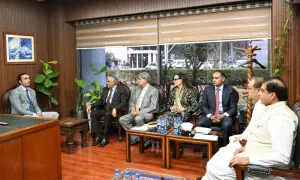
KARACHI: Representatives of different governmental organisations, civil society activists, media personnel, academia and lawyers at a meeting emphasised the need for finalising provisions of the ‘Sindh Women Agricultural Workers Act’ to safeguard women farmers’ rights.
The meeting of the Provincial Stakeholders Alliance for Women Agricultural Workers in Sindh was organised by the Awaz CDS-Pakistan and Nari Foundation in collaboration with the Sindh Human Rights Commission (SHRC) at a local hotel on Tuesday.
SHRC Chairman Iqbal Detho highlighted the importance of enforcing provincial labour laws in line with constitutional provisions and International Labour Organisation (ILO) conventions, to which Pakistan is a signatory.
He noted that Pakistan has ratified 34 ILO treaties and called for the implementation of Convention 138, which addresses the minimum age for employment; and Convention 182, which addresses the worst forms of child labour.
“Our provincial labour framework must fully embrace and implement fundamental work principles,” Mr Detho said while stressing the importance of non-discrimination policies, equal pay for equal work, freedom of association, collective bargaining rights, gender equality measures, and comprehensive social security protections.
The SHRC chairman urged departments of Social Security and Social Welfare to take proactive steps to protect workers’ rights.
“These departments should play a central role in safeguarding workers’ interests,” he asserted, and reaffirmed SHRC’s commitment to work for fair and equitable working conditions for all workers in the province.
He also highlighted SHRC’s ongoing initiatives and legal reforms, noting that the commission’s strategic plan included a critical review and harmonisation of laws with ILO conventions.
“We have recommended to the labour department to expand the list of occupations categorised as hazardous labour,” he said, adding that the commission has advocated for the enforcement of minimum wages.
“The commission is working to establish safety standards for women and children in agricultural labour, especially in hazardous environments,” he added, also urging government departments to establish daycare centres in government offices to support working mothers.
Tahseen Fatima, Secretary of the Sindh Human Rights Department, mentioned the socio-economic challenges faced by women agricultural workers, and noted that the feudal system dominates agricultural labourers’ lives, leaving women particularly vulnerable. “Empowerment means addressing these systemic inequalities,” she noted.
“The Sindh Women Agricultural Workers Act represents a powerful tool to shift these unequal dynamics,” Ms Fatima said, emphasising that interagency cooperation will be crucial for advancing and protecting agricultural workers’ rights.
Riju Mill from the Labour Department presented a review of the Sindh Women Agriculture Workers Act, which aims to extend labour rights, traditionally reserved for formal sector workers, to those engaged in the farm sector.
“For the first time, the Sindh Industrial Relations Act, 2013 has recognised farm workers and fishermen as formal sector workers, allowing them to form unions,” Mill said.
He also noted the inclusion of gig and religious workers in the labour code, marking a milestone for labour equity. Mr Mill added that amendments to the law are under way to include both male and female agricultural workers, aiming to integrate them into the broader labour rights framework and address critical gaps in the sector.
Professor Ismail Kambhar of Sindh Agriculture University, Tandojam, stressed the need to educate women workers about their rights in the agricultural and poultry sectors, where working conditions remain challenging. He recommended extending the Benazir Income Support Card to landless labourers. “Women in these roles often work 18-hour days with minimal protections,” he said, calling for improved access to resources like water and land, and better safety standards.
Anwar Mehr of the Nari Foundation provided insights into the activities of the Women’s Agriculture Council in Sukkur, recounting that the council’s advocacy efforts to empower rural women in agriculture sector.
Published in Dawn, October 30th, 2024