Taliban govt assures Afghan soil won’t be used for attacks on Pakistan


 0
0


Emphasising that the Taliban government would not allow terrorist groups to use its soil against Pakistan, Afghan Chargé d’Affaires (CdA) Mawlawi Sardar Ahmad Shakeeb on Tuesday said the China-Pakistan Economic Corridor created many opportunities for the region that could benefit Afghanistan as well.
Pakistan has experienced an increase in terrorist attacks as a total of 59 of them occurred countrywide in August compared to 38 attacks in the previous month, according to a digital database maintained by the Pak Institute for Peace Studies, an Islamabad-based think-tank.
Islamabad has repeatedly conveyed its concerns to the Afghan government over the presence of terror outfits, including the banned militant Tehreek-i-Taliban Pakistan group, inside Afghanistan, saying that the militants have consistently used Afghan soil to launch terror attacks inside Pakistani territory. Kabul denies the allegations.
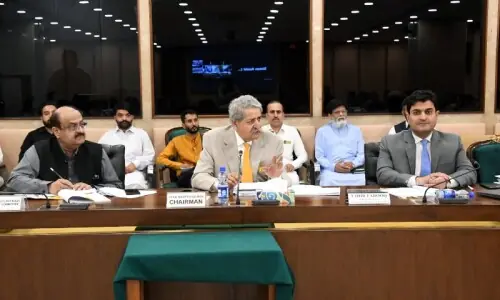
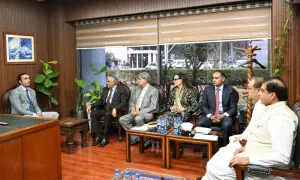
Speaking at a seminar titled “Strengthening Economic Ties between Pakistan, Afghanistan and Central Asia” organised by the Institute of Regional Studies (IRS) in Islamabad, Shakeeb said he felt that any insecurity in Afghanistan and the inability to prevent the outflow of terrorism would not allow the building of regional economic cooperation that could help bring prosperity to the people of the entire region.
Mawlawi Shakeeb also stated that Afghanistan’s involvement in the Belt and Road Initiative would not only enhance investments in its infrastructure. but also bring the regional countries closer. “We believe that trilateral cooperation among Afghanistan, Pakistan, and China can usher in a new era of regional collaboration,” he added.
Terming Pakistan as one of the leading trade partners of Afghanistan, he expressed the Afghan interim administration’s commitment to enhancing trade and investment between the two countries.
He acknowledged the recent challenges in trade and economic relations between the two countries, adding that he felt that Afghanistan was striving to revitalise economic relations.
Besides security-related issues, Mawlawi Shakeeb highlighted Western sanctions, frequent closures of crossing points, limited customs facilitation, frequent checking of loaded vehicles and sudden and unilateral increases in tariffs as major obstacles to trade flows.
He underlined the need for the two countries to invest in trade infrastructure, streamline customs processes, strengthen trade facilities, develop transportation links, build mutual trust and enhance diplomatic dialogues to achieve long-term trade benefits.
While calling for greater collaboration on economic policies and expansion of transportation and transit projects between Pakistan and Afghanistan, Mawlawi Shakeeb emphasised the desirability of sustained diplomatic engagement among regional countries and joint efforts for peace and security to provide a sustainable foundation for regional economic cooperation.
He also underpinned the need to refrain from imposing economic restrictions and other policies that hindered regional economic cooperation.
The Afghan CdA highlighted the importance of Afghanistan as a bridge between South and Central Asia. He shared that the Afghan interim administration had already begun work on the Turkmenistan-Afghanistan-Pakistan-India gas pipeline and added that Kazakhstan had expressed interest in joining the project.
He also shared that Afghanistan was working towards implementing projects such as the Trans-Afghan Railway, CASA-1000 and other regional initiatives.
IRS President Ambassador Jauhar Saleem also underscored the importance of peace and stability in Afghanistan for intraregional trade and economic prosperity.