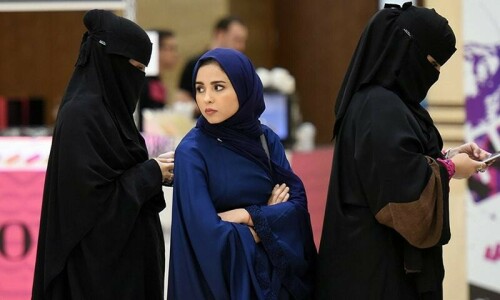
France hijab bans in sports ‘discriminatory’: UN experts


United Nations rights experts on Monday slammed decisions in France barring women and girls who wear the hijab from sports competitions as “discriminatory”, demanding they be reversed.
France invoked its strict rules on secularism to ban its athletes from wearing religious symbols, including the hijab, during the Paris 2024 Olympics.
France’s football and basketball federations have also opted to exclude players wearing the headscarf from competitions, including at the amateur level.
These decisions “are disproportionate and discriminatory, and infringe on their rights [of French athletes] to freely manifest their identity, their religion or belief in private and in public, and to take part in cultural life,” said a statement signed by eight independent UN experts.
“Muslim women and girls who wear the hijab must have equal rights to participate in cultural and sporting life, and to take part in all aspects of French society of which they are a part,” they said.
The statement was signed by the UN special rapporteurs on cultural rights, on minority issues, and on freedom of religion and belief, and members of the UN working group on discrimination against women and girls.
They are independent experts appointed by the UN Human Rights Council, but who do not speak on behalf of the United Nations.
France’s laws on secularism are intended to keep the state neutral in religious matters while guaranteeing citizens the right to practice their religion freely.
Among other things, they prohibit pupils and teachers in schools as well as civil servants from wearing “ostentatious” religious symbols.
However, the experts insisted that “the neutrality and secular nature of the state are not legitimate grounds for imposing restrictions on the rights to freedom of expression and freedom of religion or belief”.
“Any limitations of these freedoms must be proportionate, necessary to reach one of the objectives stated in international law (safety, health and public order, the rights and freedoms of others), and justified by facts […] and not by presumptions, assumptions or prejudices,” they said.
“In a context of intolerance and strong stigmatisation of women and girls who choose to wear the hijab, France must take all measures at its disposal to protect them, to safeguard their rights, and to promote equality and mutual respect for cultural diversity. “