In a first, SpaceX ‘catches’ booster of Starship megarocket

BOCA CHICA: SpaceX successfully “caught” the first-stage booster of its Starship megarocket on Sunday as it returned to the launch pad after a test flight, a world first in the company’s quest for rapid reusability.
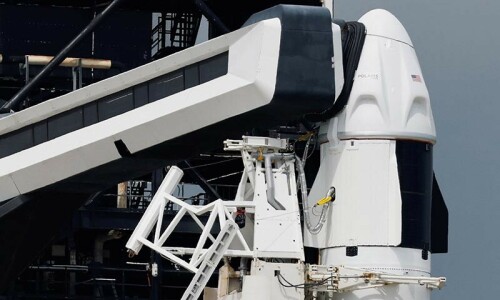
The “super heavy booster” had blasted off attached to the Starship rocket minutes earlier, then made a picture-perfect controlled return to the same pad in Texas, where a pair of huge mechanical “chopsticks” reached out from the launch tower to bring the slowly descending booster to a halt, according to a livestream from Elon Musk’s SpaceX company.
“Folks, this is a day for the engineering history books,” a SpaceX spokesperson said in a voiceover on the company’s livestream, after the booster was safely in the tower’s grasp and company staffers had erupted in cheers.
“The tower has caught the rocket!!” SpaceX founder Musk posted on X.
Liftoff occurred at 7:25am (1225 GMT) in clear weather. While the booster returned to the launchpad, the upper stage of Starship was due to splash down in the Indian Ocean within the hour.
During its last flight in June, SpaceX achieved its first successful splashdown with Starship, a prototype spaceship that Musk hopes will one day carry humans to Mars. Nasa is also keenly awaiting a modified version of Starship to act as a lander vehicle for crewed flights to the Moon under the Artemis programme later this decade.
SpaceX said its engineers have “spent years preparing and months testing for the booster catch attempt”. Had the conditions not been satisfied, the booster would have been redirected for a splashdown in the Gulf of Mexico, as in previous tests. Instead, having been given the green light, the returning booster decelerated from supersonic speeds and the powerful “chopstick arms” embraced it.
‘Fail fast, learn fast’
The large mechanical arms, called “Mechazilla” by Musk, have generated considerable excitement among space enthusiasts.
Starship stands 397 feet tall with both stages combined, about 90 feet taller than the Statue of Liberty. Its Super Heavy booster, which is 233 feet tall, produces 16.7 million pounds (74.3 Meganewtons) of thrust, about twice as powerful as the Saturn V rockets used during the Apollo missions.
SpaceX’s “fail fast, learn fast” strategy of rapid iterative testing, even when its rockets blow up spectacularly, has ultimately accelerated development and contributed to the company’s success.
Published in Dawn, October 14th, 2024